Four independents join Aleem’s IPP in Gilgit-Baltistan

• New alliance could influence govt formation
• HRCP questions Election Commission’s handling of re-polling decisions
• Results still awaited in three constituencies
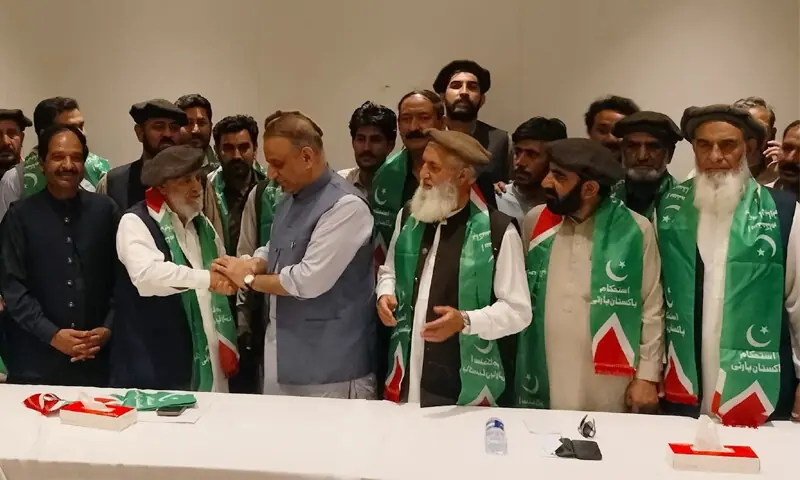
GILGIT: Four independent candidates, who recently won in their constituencies, joined the Istehkam-i-Pakistan Party (IPP) after a meeting with party president Abdul Aleem Khan.
The members include Anwar Ali, elected from GBA-23 Ghanche-II; Dr Asad Shafiq, elected from GBA-24 Ghanche-III; Muhammad Dilpazeer, elected from GBA-15 Diamer-I; and Aman Ali Amir, elected from GBA-21 Ghizer.
Mr Khan, who is also a federal minister, announced the development on his social media account and congratulated the members.
“Representation of Istehkam-i-Pakistan Party in the Gilgit-Baltistan Assembly for the first time will be a welcoming development. With hard work and honesty, the party will fully participate in the development of Gilgit-Baltistan,” he said.
During the recent general elections held on June 7, the IPP fielded 16 candidates from 16 constituencies in GB; however, none succeeded in winning.
These four independent members of the GB Assembly could play a significant role in the formation of the GB government.
The PPP won 11 seats, the PML-N six, and independents four. Meanwhile, two PTI-backed candidates and one MWM candidate also won the elections.
The results of three constituencies will be announced on June 17 (today).
Thirteen members are required to form a government. However, the second-largest party in the GB elections, the PML-N, has invited the PPP — its coalition partner in the Centre — to form the government.
HRCP voices concern
Meanwhile, the Human Rights Commission of Pakistan (HRCP), which observed the recent Gilgit-Baltistan elections and had withheld its assessment pending recounting processes and the final consolidation of results, has expressed serious concern over the Election Commission’s decision to suspend re-polling in five constituencies shortly after ordering it and to proceed with the announcement of final results.
According to a statement issued by the HRCP on Monday, the initial decision to hold re-polling had prompted some opposition parties and candidates to allege that recounting and related measures could be used to influence electoral outcomes and shape the formation of the government.
The commission said that abrupt changes of this nature risk reinforcing existing perceptions of political interference and undermining public confidence in the electoral process and its administration.
Published in Dawn, June 17th, 2026