Punjab draws excess water as Sindh and Balochistan face severe shortages
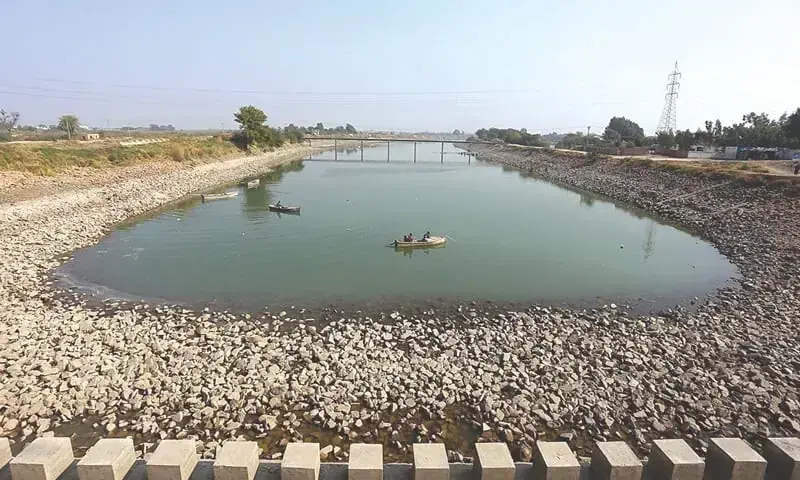


LARKANA: Water shortages in Sindh and Balochistan are deepening as Punjab continues to draw excess water, threatening the downstream provinces’ agricultural activities and drinking water supplies.
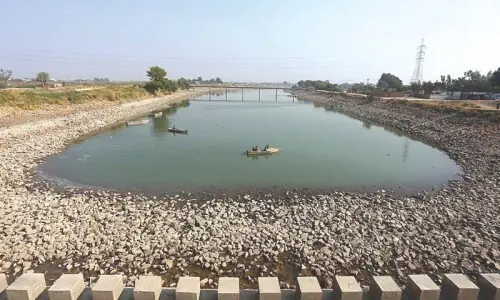
According to data from the Sukkur Barrage Control Room on Wednesday, the total upstream inflow at Sukkur Barrage was recorded at 50,620 cusecs, while the total withdrawal stood at 32,120 cusecs.
Irrigation department sources and representatives of growers and millers stated that the combined water allocation for Sindh’s seven canals is 53,200 cusecs. With the actual supply at just 32,120 cusecs, Sindh is facing an overall shortage of 21,080 cusecs, or 39.6 per cent.
In contrast, upstream barrages and canal systems in Punjab continue to withdraw water well above their allocated share. Against an allocation of 44,000 cusecs, Punjab is currently drawing 53,394 cusecs — an excess of 9,394 cusecs, or 21.35pc. This continued over-withdrawal is directly reducing water availability downstream.
Barrage and canal breakdowns
The water distribution data across key canal systems paints a critical picture:
Right Bank Canals (Sukkur Barrage): North West (NW) Canal: Receiving 2,100 cusecs against an allocation of 4,260 cusecs (50.7pc shortage).Rice Canal: Receiving 5,300 cusecs against an allocation of 8,700 cusecs (39.1 pc shortage).Dadu Canal: Receiving only 860 cusecs against an allocation of 5,997 cusecs, marking the most critical deficit at 85.7 pc.
Left Bank Canals & Kotri Barrage: Nara Canal: Receiving 8,820 cusecs against an allocation of 13,037 cusecs (32.3 pc shortage).Khairpur Feeder East: Receiving 1,440 cusecs against an allocation of 2,150 cusecs (33pc shortage).Rohri Canal: Receiving 10,530 cusecs against an allocation of 15,541 cusecs (32.2pc shortage).Khairpur Feeder West: Receiving 1,160 cusecs against an allocation of 3,525 cusecs (67.1pc shortage).Kotri Barrage: Receiving 11,905 cusecs against an allocation of 26,900 cusecs (55.74pc shortage).
Impact on Balochistan
Under the 1991 Water Apportionment Accord, Balochistan is entitled to 2,200 cusecs through the North West Canal. However, because the total supply in the NW Canal has dropped to 2,100 cusecs, Balochistan is receiving less than its allocated share.
Prior to the 1991 accord, Balochistan’s share was 451 cusecs. In light of the Indus River System Authority (Irsa) Accord, Sindh now routes the revised 2,200 cusecs to the neighboring province. Flows are monitored at the Garang Cross Regulator, located at RD-102 of the Khirthar/North Western Canal near the Sindh-Balochistan border, which serves as the primary inter-provincial control and measurement point.
Official demands for equitable distribution
Well-placed sources confirmed that irrigation officials formally communicated the severe deficit on Wednesday to the chief engineer of the Barrage Management Unit.
The correspondence highlighted that the 85.7pc shortage in the Dadu Canal and the 50.7 pc shortage in the NW Canal are severely impacting the districts of Larkana, Shikarpur, and Qambar-Shahdadkot, alongside downstream areas in Balochistan.
The communication — which was also sent to the secretary irrigation Sindh, secretary (technical) irrigation, and the director of regulation —called for immediate steps to ensure equitable distribution. Officials warned that the current scarcity poses an acute threat to seasonal crops, particularly rice production.
Agro-economic threat to Larkana
The water crisis threatens a vital economic hub. According to Khair Muhammed Shaikh, president of the Larkana Chamber of Commerce and Industry (LCCI), Larkana Division is a leading rice-producing region.
“Larkana District alone produces around 242,000 metric tons of rice annually. The division contributes approximately Rs90 billion per year in foreign exchange from rice production alone. Furthermore, out of 650 rice mills in Sindh, nearly 500 are located in the Larkana region, underscoring its central role in agro-processing and trade.”
Published in Dawn, June 11th, 2026