Karachi's K-IV water project in focus as Sindh CM meets World Bank official

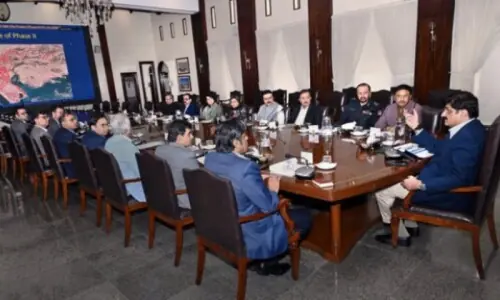
Sindh Chief Minister Murad Ali Shah on Friday met with World Bank Country Director Bolorma Amgaabazar to review progress on Karachi’s water supply, infrastructure development projects, and the K-IV augmentation scheme.
According to a press release issued by the Chief Minister House, Murad said the Sindh government, with the World Bank’s support, aims to establish a “modern and sustainable water supply system for Karachi”.
He added that the K-IV project is vital for meeting the city’s future water requirements.
CM Murad directed the authorities concerned to “remove all technical and administrative hurdles in the K-IV project and ensure its timely completion”.
He emphasised that effective water management and transparent governance were essential in view of Karachi’s rapidly growing population.
During the meeting, the chief minister and the World Bank country director also discussed water metering, urban improvement works in informal settlements, and ongoing reforms in the Karachi Water & Sewerage Corporation (KWSC).
Provincial ministers Nasir Shah and Jam Khan Shoro, Mayor Karachi Murtaza Wahab, senior government officials, and World Bank representatives attended the meeting.
Earlier, the chief minister had directed authorities to ensure that work on the project continues at an accelerated pace while carefully managing construction activity in densely populated areas with existing utility lines.
“Karachi’s expanding population requires a modern and efficient water supply system. We must ensure that all ongoing projects are completed on time and to the highest quality standards,” he said.
Originally launched in the early 2000s to address Karachi’s chronic water shortage, the K-IV project has faced multiple revisions, cost escalations, and bureaucratic delays over the years. Despite renewed federal attention in recent years, concerns have persisted over funding and implementation timelines.
The project — designed to provide a sustainable supply of 650 million gallons per day (MGD) to Karachi in three phases — is being jointly executed by the Sindh and federal governments. The Water and Power Development Authority (Wapda) is currently implementing Phase I, which aims to supply 260 MGD to the city.
The project faced another setback last year when the federal government allocated only Rs3.2 billion in the budget against the required amount of Rs40bn for the scheme.
In February, Planning Minister Ahsan Iqbal set December 2026 as the new deadline for the project’s completion and directed the authorities to expedite work on it.