Resettlement plan sought for people before ML-1 execution
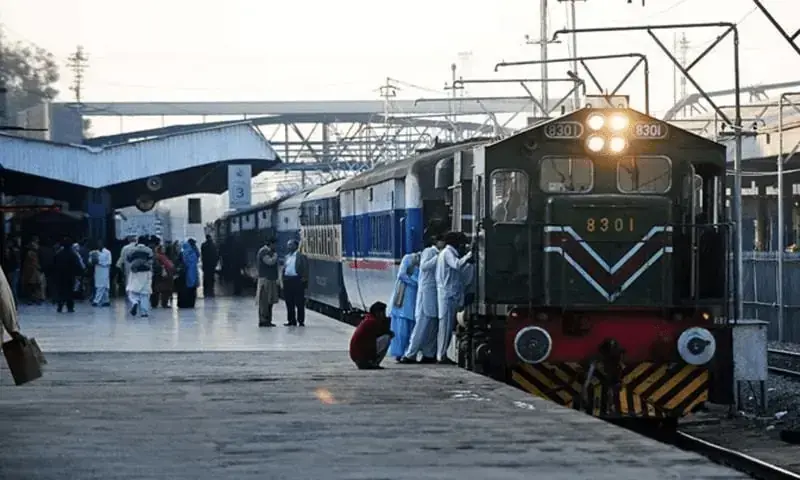

KARACHI: Rights activists and community representatives have demanded that the government announce a comprehensive resettlement plan before carrying out any eviction or demolition drive in connection with the Karachi-Peshawar Main Line (ML-1) railway expansion project and warned that the enforcement of the railway Right-of-Way (ROW) principle should not become a pretext for acquiring excessive land from the poor families living along the tracks.
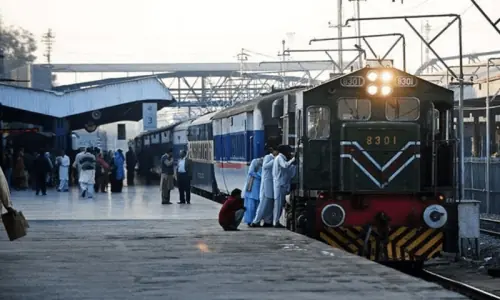
The ML-1 project is seen as a game-changer as it aims to upgrade and modernise the key infrastructure to enhance freight and passenger connectivity from Karachi to Peshawar. The work on the project is expected to begin in July 2026 from the Karachi Port.
The issue was highlighted on Tuesday at a press conference at the Karachi Press Club, where the ML-1 Affectees Action Committee also called for physical surveys of the settlements along the railway land, the publication of maps identifying affected areas, a clear definition of the railway’s ROW, a transparent list of affected families, and an environmental impact assessment of the project.
Speaking to journalists, Zahid Farooq of the Urban Resource Centre said that it is the constitutional responsibility of the state to provide housing facilities to every citizen. But due to the failure of government housing policy, slums have emerged in every major city of Pakistan, including katchi abadis along railway land.
Rights groups fear forced evictions of people living in katchi abadis on pretext of railway’s Right-of-Way; demand physical survey of settlements, environmental impact assessment of project
He said that the Sindh Katchi Abadi Act was passed by the provincial assembly in 1987, through which the Sindh Katchi Abadi Authority was established to grant ownership rights to slum settlements. However, such settlements continue to face demolition threats.
Speaking about the ML-1, he said the ROW of the track is operational and there is currently no obstruction anywhere within it. However, he warned that along both sides of this track, under the pretext of railway ROW and without clearly defining safety boundaries, Pakistan Railways could acquire excessive land and displace the people.
He explained that in Karachi, along 80 per cent of the railway track’s sides, upscale and relatively posh residential and commercial plazas, petrol pumps, and industrial units exist, where the distance from the railway track ROW ranges from 20 to 60 feet. Only 20pc of the area consists of slums, which are located at approximately the same distance. Yet in this 20pc area, Pakistan Railways is attempting to acquire more land in the name of ROW.
Speaking on this issue, Nasir Mansoor of the National Trade Union Federation said that state policies had historically been anti-poor and consistently shaped in favour of the elite. He stressed the need for unity among the working classes, saying that affected people must collectively organise to defend their rights and, if necessary, be prepared to resist what he described as “unjust actions” by the state.
Similarly, Vice Chairman of the Human Rights Commission of Pakistan Qazi Khizer emphasised that all potentially affected communities must be taken into confidence, kept informed and meaningfully included in all stages of decision-making regarding development-related interventions.
In this regard, a statement issued by the ML-1 Affectees Action Committee said that development must not come at the cost of forced displacement. The committee demanded the physical survey of the settlements along the railway lands, saying that the drone survey done by the government is not sufficient. It also demanded publication of maps identifying affected areas, along with a clear and uniform definition of the railway ROW. It also called for the release of a transparent list of affected families, an environmental impact assessment of the project and the announcement of a comprehensive resettlement plan.
Zeenia Shaukat of the Knowledge Forum Pakistan, president of ML-1 Affectees Action Committee Mahboob Elahi and Chairman of the All Pakistan Alliance for Katchi Abadis Karachi Division Haji Khan Badshah also spoke.
Published in Dawn, May 20th, 2026