New Israeli law sets military tribunal for Hamas fighters linked to October 7 attack


 0
0
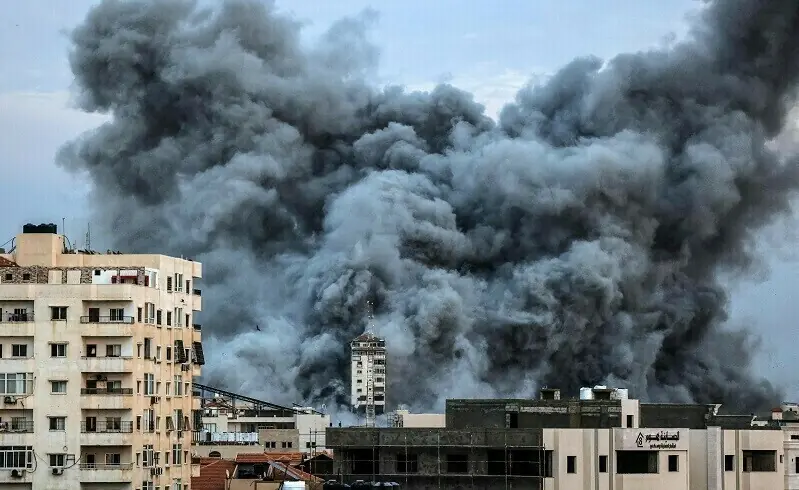

Israel’s parliament passed a law late on Monday establishing a military tribunal to try hundreds of Palestinian fighters linked to the October 7, 2023 attack on Israel.
The surprise attack, led by elite “Nukhba” force fighters from the Palestinian group Hamas, killed at least 1,200 people. The fighters also took 251 hostages back to Gaza.
Israel responded by launching an assault on the enclave that killed more than 72,000 Palestinians, mostly civilians, and left much of Gaza in ruins.
Israel has been holding an estimated 200-300 fighters — the precise number is classified — captured in Israel during the attack, who have not yet been charged.
The special military court established by the law, to be presided over by a three-judge panel in Jerusalem, could also try others captured later in Gaza and suspected of participating in the attack, or of having held or abused Israeli hostages.
The new law was backed by a wide majority 93 of the Knesset’s 120 lawmakers, in a rare show of Israeli political unity.
No trial date
Lawmakers from both the governing coalition and the opposition authored the bill, meant to ensure all assailants are brought to justice under existing Israeli criminal statutes for what it describes as crimes against the Jewish people, crimes against humanity and war crimes.
Proceedings will be public, with major hearings broadcast live. While defendants will attend only key hearings in person and all others by video, surviving victims will be allowed in-person access, according to the new law.
Ya’ara Mordecai, an international law expert at Yale Law School, said the new law raised some concerns about due process, given the military court setting, as well as a risk of atrocity proceedings turning into politicised or symbolic “show trials”.
Knesset member Yulia Malinovsky, one of the bill’s authors, claimed that the legislation ensures a fair and lawful trial.
“They will be sentenced by Israel’s judges, not by the street or by what we all feel,” Malinovsky said before the vote.
“At the end of the day, what makes us great is our spirit, our resilience, ability to cope and withstand this immense pain.”
Option of capital punishment
Israel’s penal code includes capital punishment for some of the charges. If handed down, a death sentence would trigger an automatic appeal on behalf of the defendant, according to the new law.
The last person executed in Israel was Adolf Eichmann, an architect of the Nazi Holocaust, hanged in 1962 after being captured in Argentina by Israeli agents. Military courts in the occupied West Bank can sentence Palestinian convicts to death but have never done so.
A separate law passed by Israel in March, making death by hanging a default sentence for Palestinians convicted in military courts of deadly attacks, drew criticism at home and abroad and is expected to be struck down by the Supreme Court.
Hamas Gaza spokesperson Hazem Qassem said the new law “serves as a cover for the war crimes committed by Israel in Gaza”.
The International Criminal Court is probing Israel’s conduct of the Gaza conflict and has issued arrest warrants for Prime Minister Benjamin Netanyahu and former Defence Minister Yoav Gallant, as well as three Hamas leaders who have all since been killed by Israel.
Israel is also fighting a genocide case at the International Court of Justice. It rejects the allegations as politically motivated and has argued that its war is against Hamas, not the Palestinian people.