0
0

Taxes, subsidies and incentives are the mantra during budget time; the plight of the common folk dominates the airwaves during election season.
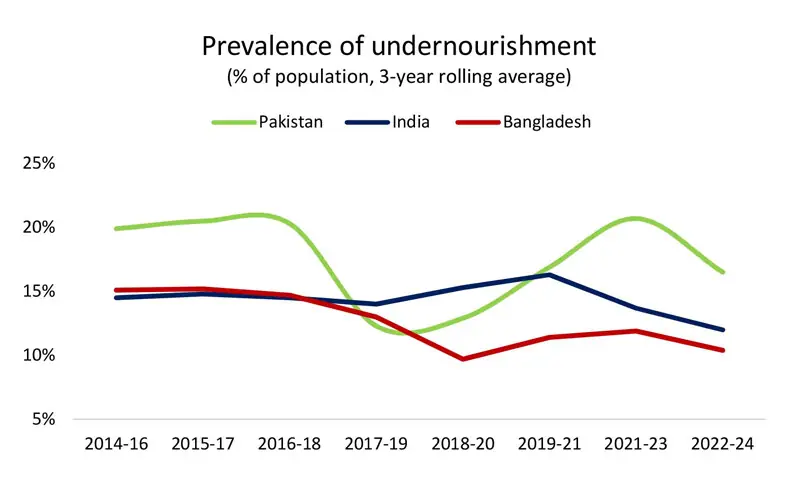
The UN Food and Agriculture Organisation — the Asian Development Bank’s (ADB) data source — revises its historical series with each annual publication as new survey data becomes available, so figures across different report editions cannot be directly compared. Even so, the trend and regional comparison clearly indicate that up to two out of 10 Pakistanis are not getting adequate nutrition, worse than both India and Bangladesh, which sit at 12pc and 10.4pc respectively.
The government just announced a fresh fuel hike that seems to be about meeting tax targets under the Internatioanal Monetary Fund programme rather than about higher international oil prices due to the US-Israeli attacks on Iran. Indirect taxes, especially those on fuel, are regressive because the burden falls disproportionately on those already struggling to eat.
The ADB, meanwhile, is financing the expansion of Pakistan’s cash transfer programme, registering an additional 2.4m eligible families and funding the first few quarters of transfers paid to the female head of household. The evidence is consistent that when women control household income, nutrition is among the first things that improve.
The budget should do the same by shifting focus away from rent-seeking sectors to becoming sensitised to the needs of the masses.
Published in Dawn, The Business and Finance Weekly, May 11th, 2026