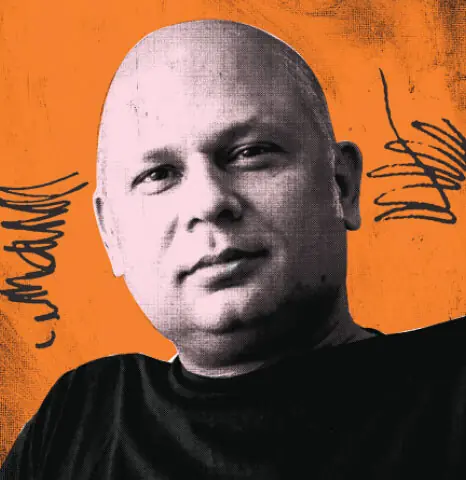
Boris Becker – Inside
By Boris Becker
HarperCollins
ISBN: 978-000876902-4
342pp.
As I walked past Ike’s cell, I looked in.
No Ike. Just this Zac.
He had his back to me. Like he was looking around. Taking something. Planting something. So I spoke up.
‘Hey, hey, this is Ike’s cell. What are you doing in here?’
He came straight at me.
‘Who the **** are you?’
Former tennis champion Boris Becker recounts his dramatic fall from grace and the lessons he learned behind bars in a new memoir
My name is Boris. This is Ike’s cell. You’re not Ike. So what are you doing in here?’
I had my tray of food in my hand. That didn’t feel like much to have between us. He was bigger than me, maybe mid-thirties. His hands were clenched and coming up fast.”
At first glance, this passage seems lifted from a novelisation of a Hollywood classic, or a page from an upcoming thriller set in the American prison system. But it is neither. The Boris in this story is very real — Boris Becker, the German former World No 1 tennis player, who won six Grand Slam titles along with an Olympic gold medal.
The excerpt is taken from Inside, which chronicles the sportsman-turned-author’s time in prison in 2022 following bankruptcy charges. Becker was sentenced to jail for two and a half years in the UK for hiding assets and loans that were required to be disclosed to creditors and the bankruptcy trustee, though he was released after only eight months. In the book, Becker not only reflects on the naivety that led to his incarceration but also recounts his experiences first in HM Prison Wandsworth and later in HM Prison Huntercombe.
Before picking up this book, one might expect Becker to discuss life after tennis — how he has stayed fit and relevant over the years and his views on the modern game. Instead, his prison experience forms the core of the narrative, a subject that comes as a surprise, especially since the cover offers no hint of the ordeal within.
The book offers an unflinching account of Becker’s time behind bars — how he managed to stay safe among hardened criminals and how incarceration reshaped him as a person. He credits his former girlfriend-turned-third wife, Lilian, for her strength on the outside, while also detailing the harsh realities of two of the UK’s toughest prisons.
Imagine watching Escape from Alcatraz or The Shawshank Redemption, but with Becker in place of Clint Eastwood or Tim Robbins. Replace the supporting cast with Becker’s real-life acquaintances, and you have the makings of a compelling Hollywood drama, where things that should only happen in prison happen.
While Becker is candid in the first half of the memoir — accepting responsibility for his fall from grace — he also names those he believes contributed to his downfall. He questions his lawyers’ competence at times and sometimes blames himself for trusting the wrong people. Not only does he talk about his version of the events, but he also blames his very first Grand Slam win at Wimbledon for everything bad that happened to him, because that’s when his life changed.
The second half shifts focus to prison life: how he adapted to an unfamiliar environment, bonded with inmates from around the world, and found unlikely sources of support within prison walls. He reveals the many odd jobs he did to survive in prison, such as teaching inmates, working in the gymnasium, and even translating from German to English for two German felons.
Readers may be surprised to learn that Becker was incarcerated at the same time as the British-Italian fraudster Giovanni Di Stefano, or that he learned of Queen Elizabeth II’s death while behind bars. He was most excited when he heard that tennis star Novak Djokovic remembered his former coach and even invited his family to Wimbledon while Becker was incarcerated.
Every chapter in this memoir begins with excerpts from letters Becker received during his imprisonment — reminders of the support he continued to enjoy from fans worldwide, and which helped him endure his ordeal. The narrative is interspersed with flashbacks to pivotal moments in his tennis career — from his historic Wimbledon triumph in 1985 to his later defeat by German compatriot Michael Stich in a Grand Slam final. These memories serve as both escape and reflection, helping him maintain his sanity during confinement.
At the time of this book’s publication, Becker is trying to get his life on the right track as a free man. But what were the circumstances that led to his deportation from England after his release from prison and his arrival in Germany? That’s something worth the reader’s time. The situation has been explained in a very dramatic manner, just as Becker described his time spent in a prison cell or playing chess. Add to that a football tournament among prisoners, and the book occasionally feels like a cinematic experience reminiscent of Sylvester Stallone’s Victory, rather than the account of a fallen sports icon grappling with financial missteps.
Inside is more than just a survival story; it is a deeply personal narrative delivered with striking honesty by a man who has seen life at its highest and lowest. Becker confronts his mistakes head-on, while also speaking candidly about his relationships — his former wives, his partner, his friends who stood by him and his sons, who did not abandon him during his darkest days.
The book also includes a selection of photographs — some featuring fellow inmates, others capturing moments of support and solidarity. Ultimately, it delivers a simple but powerful message: it is never too late to start again. Becker may have lost everything at one point, but he did not lose hope. He found light in life’s darkest moments — and if he can, perhaps anyone can.
The reviewer is a broadcast journalist who also writes on sports, film, television and popular culture. X: @omair78
Published in Dawn, Books & Authors, May 10th, 2026