Senators demand accountability over delays in completion of K-IV project


 0
0
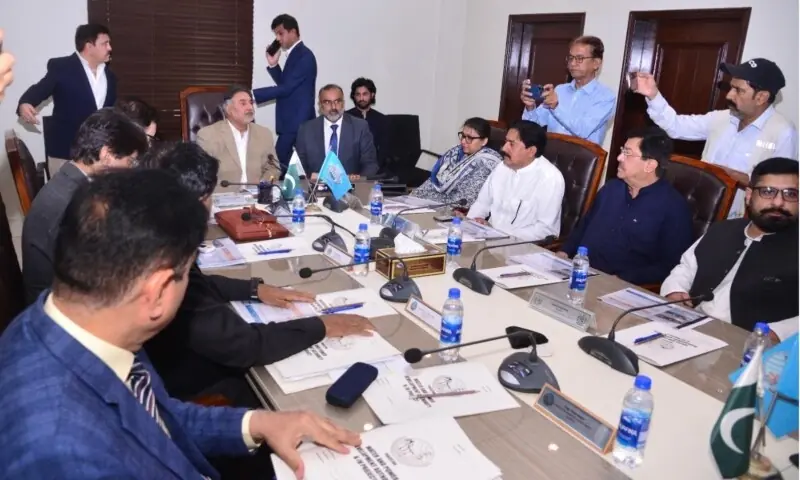

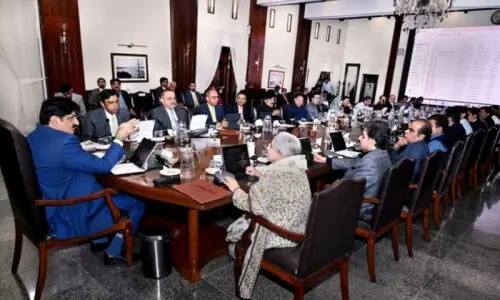
KARACHI: The Senate Standing Committee on Water Resources on Monday raised concerns over delays and escalating costs of the long-awaited Greater Karachi Water Supply Scheme, better known as K-IV, with lawmakers demanding accountability for a project now more than two decades in the making.
Chaired by Jam Saifullah Khan, the committee, which met at the project’s engineer office, was briefed on the planning, design and execution of the project, which aims to supply 650 million gallons daily (MGD) of water to the country’s largest city. During the meeting, one of the senators and committee members questioned why the scheme, first conceived over 20 years ago, had yet to be completed.
A statement issued after the meeting said that the officials attributed much of the delay to prolonged litigation during the project’s early phase, when it was overseen by the Karachi Water and Sewerage Board. Fourteen cases in the high court had stalled progress, they said, adding that coordination issues among stakeholders also hindered implementation before federal authorities assumed control in 2020.
“The project is now being executed by the Water and Power Development Authority (Wapda), which began construction work in September 2022 after revising the design and cost structure. The scheme is divided into three components: water transfer from the Indus River to Keenjhar Lake, onward supply to Karachi, and distribution within the city,” the statement quoted the briefing to the committee members.
Senate Standing Committee on Water Resources holds meeting to discuss progress on city’s long-delayed water supply scheme
Originally estimated at Rs25bn, the project’s cost has risen sharply to Rs171bn. Officials attributed the increase to currency depreciation and revisions in project planning over time. They noted that the original estimate of $710m, equivalent to Rs126bn at the time, would now exceed Rs200bn at current exchange rates, though the approved cost stands at Rs171bn.
Despite the cost escalation, Wapda officials told the committee that progress had accelerated. Around 90 per cent of work on a 260 million gallons per day pumping station has been completed, while overall progress on the 650 MGD system stands at about 60 per cent. Pipeline infrastructure is nearing completion, with more than 127km of the 128km main line already laid.
According to the briefing, the statement said that around 27pc of the project’s installations are imported, including pipelines sourced from China as well as pumps and motors from Germany, while filtration plant components have also been procured from abroad.
“However, concerns remain over oversight and compliance,” said the statement. “The lawmakers referenced objections raised by the World Bank regarding occupational safety standards and project supervision. The committee directed authorities to submit details of contractors and consultants involved, and indicated that the World Bank’s country director would be invited to a future session.”
Members, including Senator Qurat-ul-Ain Marri, pressed for greater transparency as Karachi continues to face chronic water shortages. The committee sought assurances that, if funding is secured, the project could be completed by December 2026.
Other members of the committee at the meeting included Zameer Ahmed Ghumro and Aslam Abro, while Additional Secretary Ministry of Water Resources Mehr Ali Shah, K-IV Project Director Gul Mir Khan, Karachi Water and Sewerage Corporation Chief Operating Officer Asadullah Khan and other officials also attended the meeting.
It may be noted that the much-awaited project, launched in early 2000 and already face much delays, faced another setback last year in June when the federal government allocated only Rs3.2 billion in the annual budget for 2025-26 against the required amount of Rs40bn for the scheme, sparking fears that the city may have to wait for “another 10 years” or more for the completion of the plan.
Officials associated with the project and experts expressed deep frustration over the paltry allocation, warning that the funding shortfall has derailed any realistic timeline set for the project’s completion.
Published in Dawn, May 5th, 2026