WASHINGTON: Seeking to bolster his argument that he does not need lawmakers’ permission to continue the Iran war since a legal deadline arrived on Friday for coming to Congress about the conflict, US President Donald Trump emphasised a ceasefire had already ‘terminated’ hostilities against Iran.
In a letter to congressional leaders on Friday, Trump said there has been no exchange of fire with Iran since the ceasefire. “The hostilities that began on February 28, 2026, have terminated,” he added.
Under the War Powers Resolution of 1973, a US president must terminate military action within 60 days of notifying Congress unless lawmakers authorise the operation. The Trump administration formally notified Congress on March 2 following joint US-Israeli strikes launched on February 28, setting up a May 1 deadline.
The US president faced a legal deadline that could determine the future of US military operations against Iran, even as his administration signalled that it could rely on a controversial legal interpretation to bypass congressional approval.
Writes to congressional leaders as 60-day deadline ends
At the same time, administration officials now argue that the May 1 deadline may not apply, claiming that a ceasefire with Iran — in place since April 7 — effectively ended ‘hostilities’ under the law. A senior official told reporters the conflict had ‘terminated’ for ‘war powers’ purposes, allowing the White House to continue operations without seeking congressional approval.
US Defence Secretary Pete Hegseth reinforced that position during congressional testimony on Thursday, saying the statutory clock “pauses or stops in a ceasefire.” The claim triggered sharp pushback from lawmakers and legal experts, who argue that the War Powers Resolution contained no such provision.
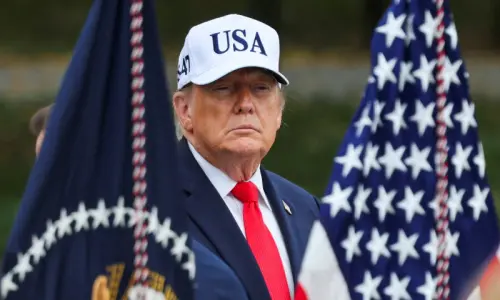
Trump himself has said he will not seek Congressional authorisation for military action in Iran under the War Powers Resolution, describing those calling for it as “not patriotic”.
Arguing against the need for authorisation under the law, which requires a US president to seek approval within 60 days of deploying troops, Trump said, “many presidents… have gone and exceeded it. It’s never been used.”
“Nobody’s ever sought it before, nobody’s ever asked for it before, it’s never been used before, why should we be different?”
“Most people consider it totally unconstitutional,” he added. “Also, we had a ceasefire, so that gives you additional time … We’re in the midst of a big victory.”
The War Powers Resolution was enacted in the aftermath of the Vietnam War to prevent presidents from engaging in prolonged military conflicts without legislative oversight. It requires presidents to either obtain congressional authorisation or withdraw forces within 60 days, with a possible 30-day extension in limited circumstances.
Published in Dawn, May 2nd, 2026