Worst times for organised labour unions in Pakistan: Mutahidda Labour Federation
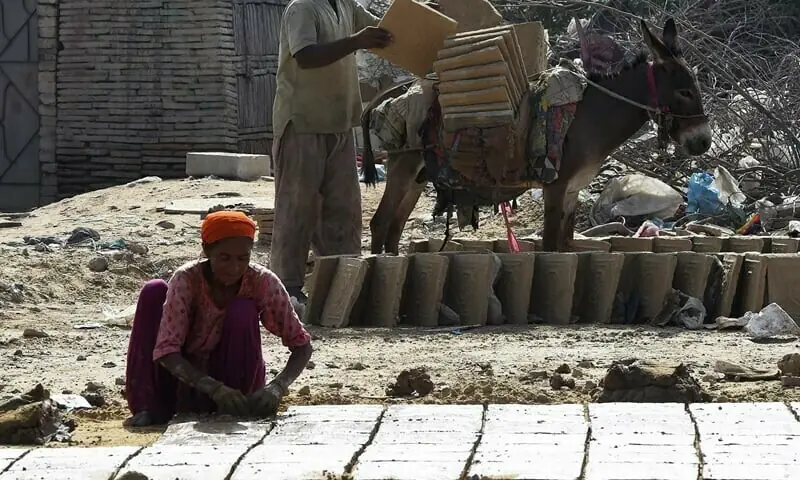
LAHORE: The labour/trade unions have been facing the worst crisis since long as the number of organised workers is very discouraging among the total registered and unregistered workers, leading to denial of their rights, including the minimum wage. Labour leaders see the current situation as the worst in the history of Pakistan and want the government to take up all labour-related issues, especially of the labour unions that have no say in the system dominated by capitalists and feudals.
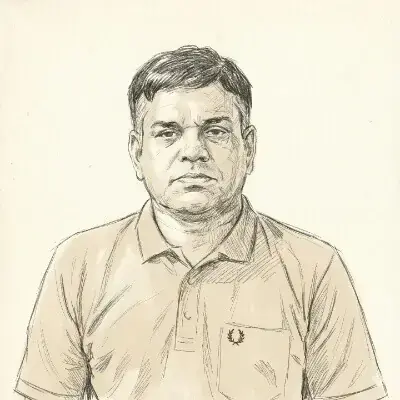
“Look at Punjab—the country’s biggest province—where 600 trade unions are registered. Of these, 200 have the status of CBA (Collective Bargaining Agent) whereas the number of organised workers in Punjab is about one percent only,” says Hanif Ramay, the secretary general of the Mutahidda Labour Federation.
“In one of the country’s most organised industrial estates, Quaid-e-Azam Industrial Estate in Lahore, comprising 400 industrial units, only one labour union is working actively. And the rest of the industry has no active labour union,” he says while talking to Dawn with reference to May Day.
Due to inactivity of labour unions in Punjab, he adds, there is no effective system to check the labour laws violations and highhandedness of the industrialists with the workers. With lack of attention allegedly on the part of the government, the industry owners, especially in the informal industrial sector, continue to deprive the workers of their rights openly without any fear.
600 trade unions are registered in Punjab but only one per cent workers are active
“In the recent past, a leading food company engaged in the bakery, sweets and dairy business, dismissed various workers for making a labour union of about 700 workers in Lahore for uniting workers to raise voice against labour laws violations. At this, the office-bearers of the union approached the government. An inquiry was held and a report submitted to the government revealed various labour laws violations and denial of rights to the workers in the factory,” Mr Ramay says.
According to him, most of the trade unions’ office-bearers have lost their jobs on account of making or activating unions or uniting workers against those denying them of their rights.
“The situation is evident from the fact that only 20pc workers are getting salaries as per notified minimum wages (Rs40,000 or so per month) whereas the remaining 80pc working in the informal industry are being victimised in all respects of their rights,” Mr Ramay explains, adding that the workers’ applications related to death and marriage grants are facing delay for 2/3 years.
As far as the Employees Old-age Benefits Institution (EOBI) pension is concerned, this is just Rs11,500 per month for the retired workers. “Is this pension justified in the current situation?” he asks.
Widespread violations in textile sector
Recently, a research conducted by the Labour Education Foundation, in collaboration with a Netherlands-based rights body, Arisa, unearthed widespread labour rights violations in the textile recycling industry, which is being promoted by major fast fashion brands as a pillar of sustainability.
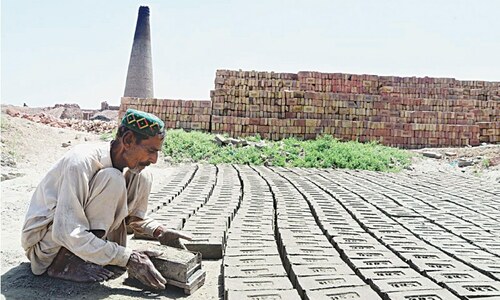
The study revealed a stark contradiction at the heart of the global fashion industry. The research examined 20 leading brands. Despite selling garments made with recycled textile materials, most of these companies have little to no insight into the working conditions or wages of labourers handling textile waste in their supply chains. Field research conducted, including Faisalabad and Karachi, uncovered harsh realities in the largely informal textile recycling sector. Workers reported grueling schedules of up to 12 hours a day, seven days a week, often without formal contracts, payslips, or job security. Payments are frequently made in cash, with wages insufficient to meet basic living expenses.
As per the report, health and safety conditions are equally alarming. It says labourers face constant exposure to dust, heat, and hazardous chemicals without proper ventilation or protective equipment, leading to respiratory problems, skin and eye irritation, and other illnesses. It also points out that the use of machinery without adequate training further heightens the risk of serious injuries to workers.
“I see the current situation of labour in Pakistan as worse than as it was in Chicago in 1886 when workers protesting faced violent repression from police, leading to a bomb blast and deaths of several workers. At the moment, the workers are openly being denied many of their rights as listed in the labour laws. And this all is because of the government, patronising the capitalists,” says Muhammad Akbar, one of the most senior labour leaders and activists, who participated in the movement in the 1960s, while talking to Dawn.
According to him, at the moment, there are no trade unions, no rights to workers and no implementation of the labour laws, rules and regulations.
“The basic thing that must be ensured for the basic workers’ rights is the provision of minimum wage. And this is a failure on the part of the government,” he continues while lashing out at the government.
He also criticises the government for introducing Punjab labour code that, according to him, was approved without consultation of the labour unions, activists and other stakeholders.
“We just want the government to implement labour laws in letter and spirit instead of only talking . We also want the government to consult with us on the new Punjab labour code and go for its revision, keeping in view our proposals,” Akbar demands.
Informal sector – a major problem
Punjab Labour & Human Resource Department Secretary Danish Afzaal claims that the government is making all-out efforts to ensure provision of all rights to the workers.
“Though there are some gaps, the sitting government has done a lot for ensuring minimum wage to workers as per notification. I can say that all major industries in Pakistan are following the labour laws, including the minimum wage to the workers,” he maintains while speaking to Dawn.
“The problem, however exists, in the informal industry which is being monitored and surveyed through labour inspections by the official teams.”
The officer claims that due to the government’s attention, the number of registered workers in the social security contribution (paid by the industry owners at the rate of 6pc of the total minimum wage to the government for workers’ medical treatment etc in social security hospitals) has increased by 150,000.
“The total number of the registered workers in Punjab has now increased to 1.2 million,” he said.
Afzaal says under the CM’s Rashan programme, 1.2 million workers are being given Rs3,000 each month across Punjab. Besides this, labour inspections are being documented through a system prepared by the Punjab Board of Information Technology. The home-based workers, for the first time, are being given a legal cover just like formal workers.
“But despite all this, still there is room for improvement for which we are trying hard for the workers’ rights,” the secretary says.
Published in Dawn, May 2nd, 2026