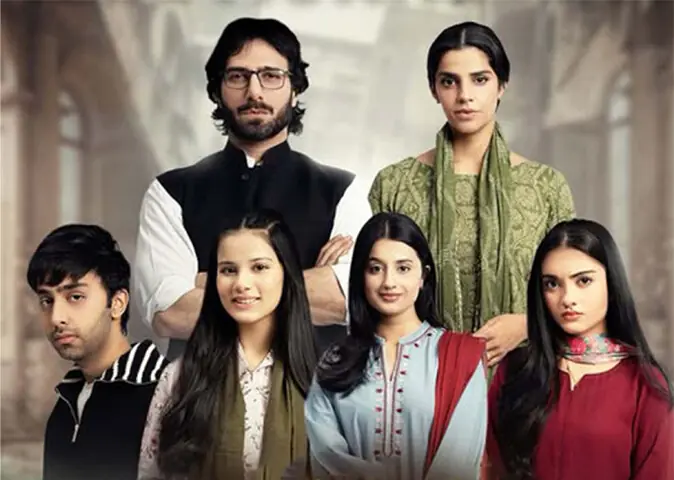
At first glance, the drama serial Kafeel appears to be a story about a disempowered woman, domestic emotional abuse and a struggling mother. But look closer. This isn’t just entertainment — it is a chilling, clinical case study of intergenerational trauma masquerading as a Pakistani drama.
We have been taught to consume such stories as masala — something to cry over and then forget once the next episode airs. But what if I told you that millions of viewers are not just watching the protagonists Jami (Eemad Irfani) and Zeba (Sanam Saeed)? They are watching their own fathers, their own mothers and echoes of their childhood selves. Kafeel is not a drama; it is a mirror of the dysfunctional family system hiding in plain sight across our homes.
At its core lies one narcissistic, self-absorbed, and irresponsible father — Jami. His emotional unavailability isn’t passive; it’s destructive. He doesn’t just make mistakes, he weaponises irresponsibility. His wife Zeba, a victimised mother trapped in learned helplessness, becomes the silent enabler. Together, they create a pressure cooker that warps each of their four children in profoundly different ways. From parentification to phobias, from internalised guilt to behavioural mimicry — let’s take a mental health deep dive into Kafeel.
The Father – Jami (The Malignant Source)
Jami is the epicentre of the family’s pathology. He perfectly fits the archetype of the “covert narcissist” — lazy, entitled, deeply insecure, yet charming in public. His gaslighting is textbook: he blames Zeba for his own failures and makes her feel responsible for his inability to work and provide for his family. He doesn’t need to be physically violent; his emotional and financial abuse is enough to trap and damage the entire family.
But here is the nuance Kafeel bravely offers: Jami himself did not emerge from a vacuum. His own patterns are the result of a dysfunctional family set-up that he was born into. His siblings used him as a caretaker for their ageing parents, while they provided financial support from abroad. He was never pushed to complete his education or pursue a career and this turned him into an entitled, stunted adult. This does not excuse his behaviour – but it explains it, which is the first step away from blind hatred and towards breaking cycles.
Don’t call Kafeel just a family drama. It’s a bravely written and produced psychological case study disguised as entertainment
The Mother – Zeba (The Victim and The Enabler)
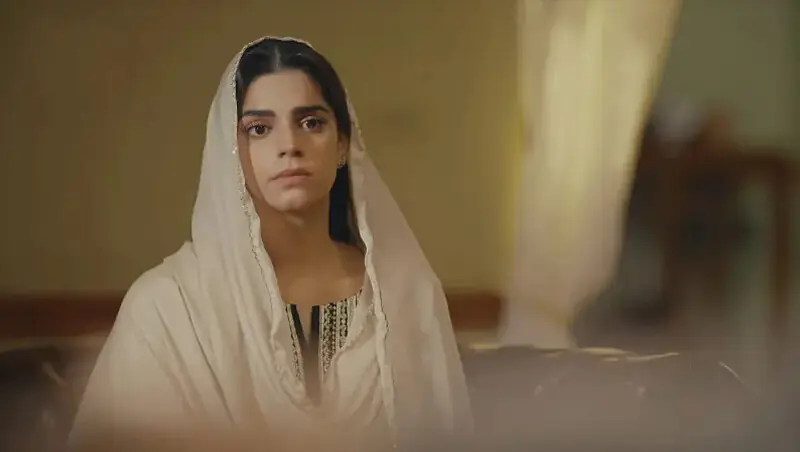
Sanam Saeed’s portrayal of Zeba is heartbreaking because she plays her character not as weak but as exhausted. Zeba was conditioned to be ‘sweet, obedient and naive’ and her silence is not passive — it’s a trauma response called learned helplessness. After years of being oppressed, she has given up fighting back. Her decision to stay with Jami “for the children” is the very thing that damages them the most.
Yet Kafeel offers a quiet, powerful arc: her midlife enlightenment. This makes sense, as midlife is often when early-life trauma knocks again, begging to be resolved. Zeba’s slow awakening is a gift to every woman watching Kafeel who still believes it is too late for her.
The Four Wounded Children – A Psychological Breakdown
Each child is a unique case study of how a child adapts to survive a narcissistic, abusive parent. It’s a masterclass in the ripple effects of a dysfunctional family system.
1. The Eldest Son – Subuk (Aashir Wajahat): The Parentified Child
Subuk was forced to grow up overnight and become the emotional and financial support his mother needed and the father figure his sisters lacked. His low self-esteem doesn’t come from failure but from the immense pressure of holding a broken family together. This is called role reversal trauma — and it often follows children into adulthood in the form of chronic anxiety, an inability to relax and a compulsive need to fix everyone around them. No one in the drama ever tells him that he is just a child or that he shouldn’t have to carry such a burden.
2. The Eldest Daughter – Javeria (Nooray Zeeshan): The Blame Sponge
Javeria has learned that the only way to feel safe is to over-control herself and take responsibility for everything. She blames herself for the family’s fights, financial problems and even her father’s moods. This is a classic survival mechanism: if she can fix what’s ‘wrong’, maybe the chaos will stop. She becomes a people-pleaser with zero self-worth — hallmark signs of growing up with a volatile, unpredictable parent. In therapy, we see Javerias everywhere: brilliant, kind women who apologise for existing and believe that love is something they must earn through suffering.
3. The Middle Sister – Zoya (Haya Khan): Confident but Phobic
Zoya shows us how trauma can become somatised — locked into the body’s nervous system. Her fear of sharp objects (aichmophobia) is not irrational; it is a conditioned response to her father, who threatens the family with a knife frequently. Her confidence is a mask. Underneath, her body remembers the terror. This is one of Kafeel’s most brilliant threads: trauma does not always look like sadness. Sometimes it looks like a strong, sharp, seemingly put-together daughter who cannot hold a kitchen knife without her pulse skyrocketing.
4. The Youngest Daughter – Tania (Hania Ahmed) — The Mimic
The youngest child is the most chilling example of how abuse normalises pathology. Tania has learned that, in this family, there are no real consequences for bad behaviour, because her father models it daily. By using “my father does it too” as an excuse, she is not being inherently manipulative; she is mirroring the survival tactic she has observed. If the most powerful person in the house can get away with anything, why can’t she? This behaviour is a learned adaptation to a dysfunctional environment, and it highlights the danger of normalising toxic traits. Without intervention, Tania is at the highest risk of becoming like Jami in her future relationships — not because she is evil, but because she associates power with this way of being.
Intergenerational Trauma
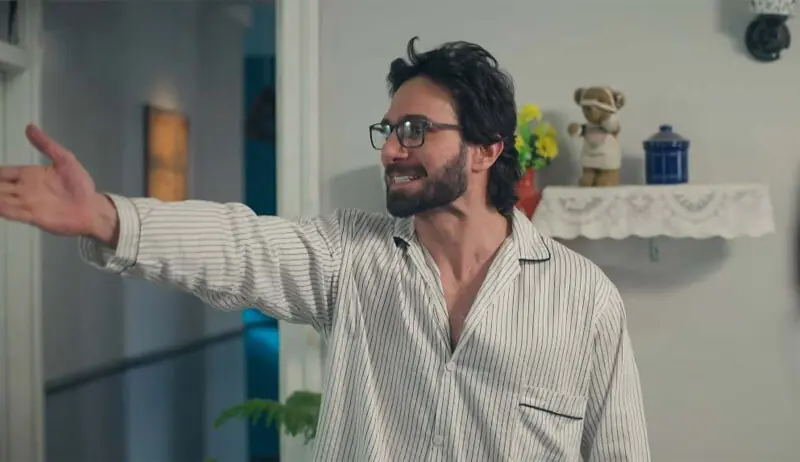
One of the most upsetting moments in the series is when we see Subuk begin to mimic his father’s aggressive behaviour. In that moment, we see the future. The abused becomes the abuser. The drama masterfully shows that, without intervention, children will carry their parents’ patterns into their own relationships, perpetuating the cycle for another generation.
This is why Kafeel is so important. It is not just a story; it is a warning. It is a call for self-awareness, for breaking the cycle and for prioritising mental health over societal pressure. We cannot heal what we refuse to name.
But here is the truth that Kafeel doesn’t show — or hasn’t yet — because dramas rarely do: the cycle can be broken. A narcissistic father does not have to define your future. A victimised mother does not have to be your blueprint. Parentification, guilt, phobias and mimicry are adaptations, not life sentences. With the right support — therapy, self-awareness and healthy boundaries — each of these wounded children can reclaim their mental health.
Intergenerational trauma is powerful, but not necessarily a destiny. Healing begins by naming the wound and choosing to stop passing it down. Kafeel warns us, but your life can prove that your story ends differently.
Why Kafeel is Essential Viewing
Kafeel is not a drama; it’s a psychological case study disguised as entertainment. It shows that abuse is rarely just a slap. It is the slow, silent erosion of a person’s will, and the insidious poisoning of the next generation.
This drama is a mirror for every household where one broken parent created four differently broken children. Kafeel exposes the mental health legacy of a toxic father. It forces us to ask a difficult question: how many of our “family dramas” are actually multi-generational trauma centres?
None of this analysis would be possible without the bravery of writer Umera Ahmed, the brilliance of director Meesam Naqvi, and the courage of ARY Digital for airing this raw and uncomfortable story. Mainstream Pakistani dramas often romanticise toxic relationships or resolve complex trauma with a single emotional scene. Kafeel refuses to take that shortcut. It trusts its audience to sit with the messiness, to recognise the subtle signs of narcissistic abuse and to understand that healing doesn’t happen in one episode.
This is not just good television. This is responsible storytelling. And it deserves recognition.
The writer is an integrative therapist and founder of Khudi Wellness. She can be reached at shah.n.sarwat@gmail.com
Published in Dawn, ICON, April 26th, 2026