‘Political realism’ serves as an important framework for how nation-states conduct themselves to guarantee their continued existence and security. This perspective posits that the international order is essentially anarchic, lacking a central authority. Accepting this reality compels states to develop strategic responses to stabilise their position and fulfil their existentialist purpose in a competitive environment.
Over time, in this regard, political realism has evolved into several branches, as perceptions of anarchy and the drivers of state behaviour continue to evolve. ‘Classical realism’ focuses on the inherent drive within human nature for power, while ‘neorealism’ emphasises the external constraints imposed by the global structure that influences human nature.
‘Neoclassical realism’ bridges these ideas by looking at how domestic factors and individual leadership influence a state’s reaction to external pressures. Meanwhile, ‘liberal realism’ attempts to find a middle ground, by acknowledging the role of international norms even within an anarchic system.
Realism has remained a vital subject of academic study and practical statecraft for centuries. However, significant tensions exist within these various realist frameworks.
Neorealism, for example, is divided into two competing perspectives: ‘defensive realism’ and ‘offensive realism.’ Defensive realists argue that states should pursue only a limited amount of power to maintain their security, as an excessive build-up might provoke others and trigger a conflict. Offensive realists, on the other hand, contend that true security is only achievable by becoming the dominant power in the system, leading states to maximise their influence whenever possible. The current global reality reflects a complex struggle between these two neorealist strategies.
While neorealism seems to have the upper hand overall in explaining the behaviour of nation-states in an anarchic world, as evidenced by Pakistan’s strategic recalibration, defensive realism is paying more dividends
While neorealists as a whole prioritise the raw competition for power and survival, liberal realism argues that international norms and shared frameworks can mitigate conflict despite an anarchic environment. But liberal realism is receding because its proponents still seem to be rooted in a previous and eroding world order. Recent global trends suggest that it is the neorealist school of thought that is now the primary driver of nation-state behaviour.
Ideology is secondary to all this. According to prominent political neorealists such as the American political scientist Kenneth Waltz, it does not matter whether a state is a liberal democracy, an autocracy or a dictatorship. It is likely to act in a neorealist manner because it is constrained by the ‘anarchic structure’ of the international system. This forces states to engage in similar patterns of behaviour, regardless of their internal beliefs.
Neorealists maintain that states should be viewed as rational actors that respond to tangible military and economic realities rather than moral or ideological crusades. Ideologies can be adopted, replaced and discarded accordingly. Let’s explore this through two examples.

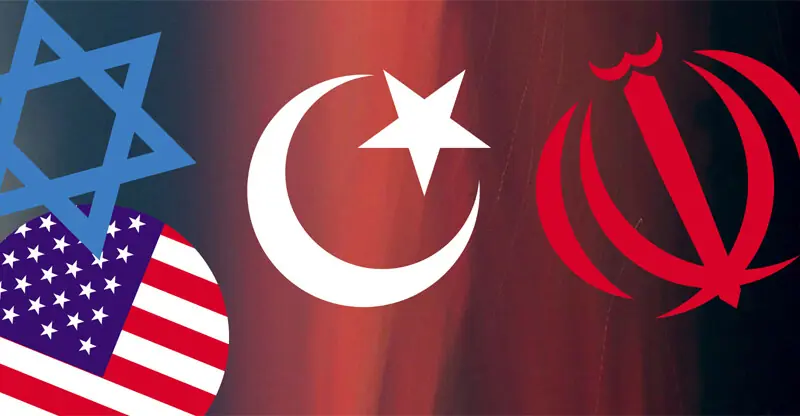
For decades, Israel has functioned as an offensive realist actor. On the other hand, Pakistan, particularly in recent years, has demonstrated a move toward defensive realism. Until the 2000s, Israel’s offensive realism was primarily rooted in its identity as the ‘sole liberal democracy in the Middle East’, framed as being locked in an existential struggle against hostile Middle Eastern autocracies. This ideological narrative served as the catalyst for Israel’s offensive realist posture.
However, from the 2010s, this narrative began to mutate. The mutation was driven by the persistent challenge posed by Iran to Israel’s strategic ambitions, alongside the recent security implications of Saudi Arabia formalising a defence pact with a nuclear-armed Pakistan. As efforts to effect regime change in Tehran faltered, Israel’s narrative shifted. The emphasis moved away from it being a ‘democratic outpost’ toward a broader civilisational struggle.
Israel began to portray itself as a bulwark against violent Islamism to protect Judeo-Christian heritage. The ‘ideology’ transitioned from the promotion of ‘regional democracy’ to the fulfilment of a ‘sacred biblical mission.’
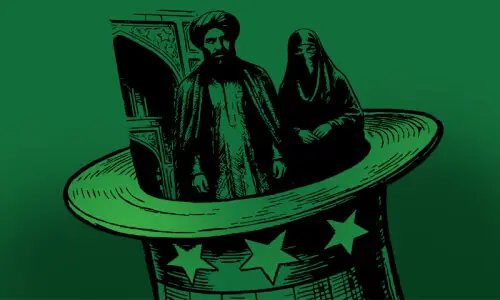
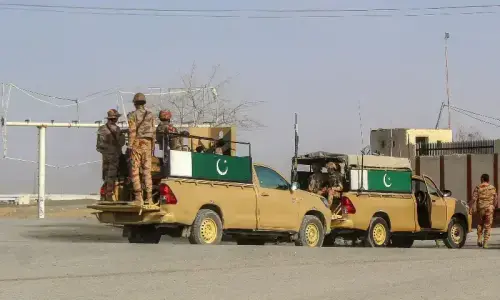
Pakistan can be characterised as a defensive realist state, as its primary strategic objective is the preservation of its territorial integrity and sovereignty, rather than the expansion of its power or territory. While Pakistan experienced periods of offensive realism, most notably during the 1980s when an Islamist ideology was employed as a smokescreen, the subsequent blowback necessitated a change in approach.
Pakistan has accelerated its transition toward a defensive realism approach. This strategy involves solidifying strategic partnerships with China and Saudi Arabia while maintaining pragmatic, functional relations with offensive realists, such as the United States. Pakistan’s ideological narrative in this context has evolved as well. The previous Islamist rhetoric has been sidelined in favour of pragmatic nationalism. This move allows Pakistan to maintain essential global ties while effectively stonewalling the offensive realism of India.
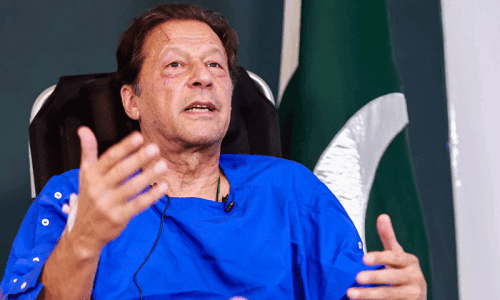
This has necessitated experimentation with internal hybrid political systems. While a previous iteration (2018-2022) proved unsuccessful, the current hybrid model is viewed by the state as being more compatible with its defensive realist strategies. Not only is ‘Islamism’ being gradually filtered out from the country’s ideological surface, the tenets of liberal democracy, too, are being constrained because they are seen as poorly suited to the state’s current defensive realist objectives.
Neorealism is very much in the driving seat of contemporary geopolitics. The recent diplomatic manoeuvres on the global stage by Pakistan, and its rising stature as a prominent player in international politics can be used as an excellent example to demonstrate that defensive realism has proven to be more effective than offensive realism.
The latter seems to be coming apart, as exemplified by the recent foreign policy failures of India, and the military ‘defeat’ of the US and Israel at the hands of Iran.
Published in Dawn, EOS, April 26th, 2026