Pakistan taps UN committee to reshape national food policy


• Minister outlines efforts to ensure food access amid climate, economic pressures; seeks guidance to tackle challenges
• Panel chair calls for inclusive governance, collaboration to drive change
• Interaction further provides opportunity to review upcoming CFS initiatives
ISLAMABAD: Pakistan has initiated dialogue with the United Nations Committee on World Food Security (CFS), seeking policy guidance to shape its national strategies on food security, officials said Saturday, as the country works to address challenges affecting access to food.
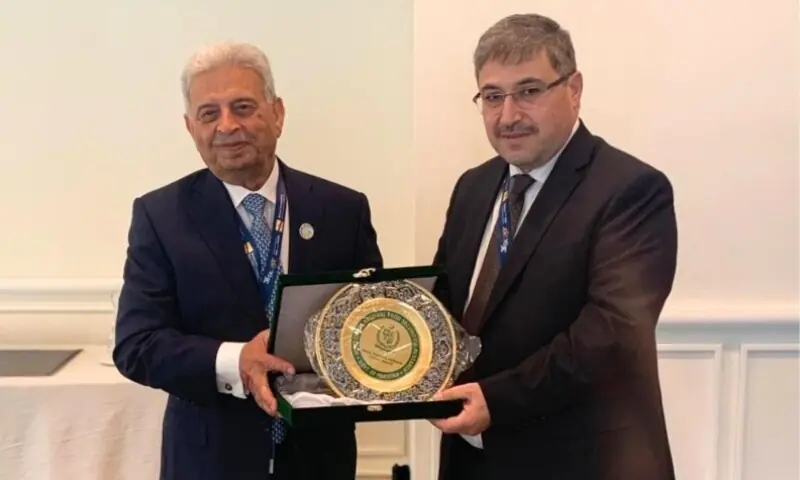
The development came during a meeting between Federal Minister for National Food Security and Research Rana Tanveer Hussain and CFS Chairperson Anas Al-Nabulsi on the sidelines of the FAO Regional Conference for Asia and the Pacific in Brunei Darussalam.
According to Pakistan’s Ministry of National Food Security and Research, Mr Hussain led the national delegation and outlined the country’s ongoing efforts to ensure food availability for its population of more than 215 million.
“Pakistan continues to advance policies and strategies aimed at ensuring access to food while responding to evolving environmental and socio-economic challenges,” Mr Hussain said during the meeting.
He also highlighted Pakistan’s active engagement in global efforts to combat food insecurity and malnutrition, while pointing to opportunities for strengthening collaboration with the CFS. The discussions focused on how international policy guidance can be adapted and implemented effectively at the national level.
Both sides emphasised the importance of strengthening the uptake and implementation of CFS policy recommendations within countries. Al-Nabulsi stressed that sustainable transformation in food systems requires coordinated action and inclusive governance.
“Transformation depends on inclusive governance and stronger collaboration across sectors, stakeholders and levels, supported by increased access to sustainable finance and stronger integration of evidence into policy and investment decisions,” Mr Al-Nabulsi said.
“This is precisely where CFS adds its value, by convening diverse actors around shared evidence and supporting coherent, voluntary policy guidance that countries can adapt to their own realities.” The talks also addressed the ongoing development of global policy recommendations on building resilient food systems. Pakistan was invited to actively participate in the process.
Officials said the meeting underscored the importance of research, innovation and technology in modernising agriculture and food systems.
Both parties acknowledged the role of universities and research institutions in advancing solutions such as precision agriculture and digital tools aimed at improving productivity, sustainability and resilience.
The interaction further provided an opportunity to review upcoming CFS initiatives, including a high-level forum on artificial intelligence, digitalisation and data, as well as continued policy work on resilient food systems.
Both sides reaffirmed their commitment to continued collaboration and stressed the importance of translating global policy guidance into tangible, country-level outcomes.
The CFS is regarded as the foremost inclusive international and intergovernmental platform on food security and nutrition. It brings together representatives from governments, United Nations agencies, civil society, non-governmental organisations, indigenous groups, financial institutions, research bodies, philanthropic foundations and the private sector.
Using a multi-stakeholder approach, the committee develops policy guidance on a wide range of food security and nutrition issues. Its recommendations are informed by scientific and evidence-based reports produced by the High Level Panel of Experts on Food Security and Nutrition.
Saturday’s meeting reinforced the shared view that addressing food insecurity requires coordinated global and national action. It also highlighted the need for countries like Pakistan to integrate international expertise with local realities to build sustainable and resilient food systems.
Both delegations concluded by emphasising that stronger collaboration, evidence-based policymaking and inclusive participation will remain central to achieving long-term food security goals.
Published in Dawn, April 26th, 2026