0
0

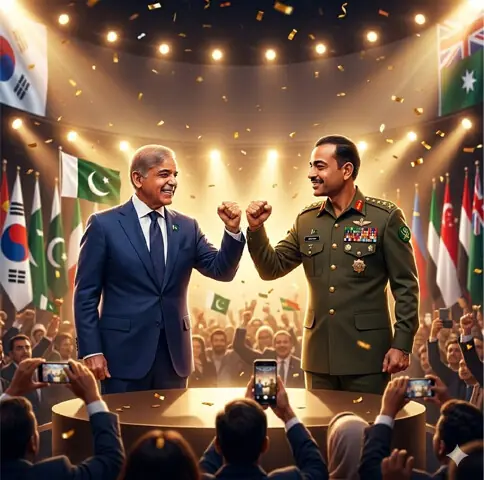
AT a moment when the world at large stands dangerously close to a potential inferno, Pakistan has emerged as one of the few states able to talk to all sides and keep diplomacy alive. Regardless of what fate has in store for the second round of peace talks, nothing can deny the simple fact that regional diplomacy is now visibly revolving around Pakistani mediation.
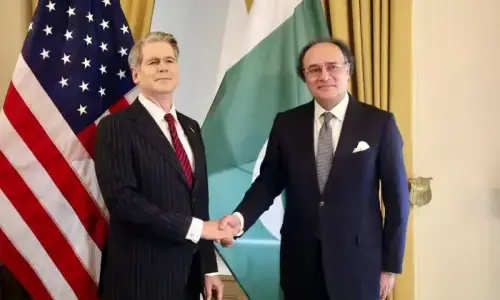
With the prime minister in Saudi Arabia, Qatar and Turkiye, the Chief of Defence Forces (CDF) in Iran, the highest officials in the United States mentioning Pakistan every day, and a string of phone calls from leaders around the world, the dramatic shift in Pakistan’s diplomatic standing is undeniable.
Facts matter. The 21-hour round of talks in Islamabad ended without a deal, but Pakistan did not walk away after that setback. That is the real significance of Pakistan’s role: not that it solved the war in one stroke, but that it kept open the only serious diplomatic corridor even after formal negotiations collapsed. This matters because the war’s costs are no longer theoretical. Pakistan’s diplomatic inter-vention should be understood not only in moral or political terms, but in financial ones as well.
No government or international insti-tution has yet issued an official dollar figure for what Pakistan has ‘saved’. Still, scenario-based calculations grounded in authentic reports suggest that if Pakistan’s mediation helps convert the fragile ceasefire into a durable settlement, the avoided losses could plausibly run from the high hundreds of billions into the low trillions. This is not propaganda; this is what macroeconomic numbers imply.
Start with global growth. The Inter-national Monetary Fund (IMF) cut its 2026 global growth forecast to 3.1 per cent, and warned that, in a severe scenario, growth could fall to 2pc. The World Bank separately warned that even in a best case scenario, the war could shave 0.3 to 0.4 percentage points off global growth, and as much as one point in a prolonged conflict.
The World Travel & Tourism Council (WTTC) data implies a world economy of roughly $113.6 trillion. On that basis, preventing a 0.3-0.4 point hit means pro-tecting roughly $341 billion to $454 billion of global output. Preventing a one-point hit protects about $1.14 trillion. Preventing the IMF’s 1.1-point slide, from 3.1pc to 2pc, implies roughly $1.25 trillion in avoided output loss. And that is only the macro layer, mind you.
Pakistan’s importance in the crisis is not accidental. It has managed to present itself as credible to Washington, acceptable to Tehran, relevant to Gulf capitals, and increasingly necessary to wider regional diplomacy that now also involves Turkiye and Egypt. Pakistan’s value lies in being politically connected, militarily serious, diplomatically flexible and geographically impossible to ignore.
Still, the broad argument must remain grounded. Pakistan has not yet ‘saved the world’ because the war is not formally over. However, the credit Pakistan deserves today is not for a completed peace, but for preventing diplomatic collapse and preserving the one path that may lead us somewhere better. For a country that has long been described as fragile, indebted and peripheral, it is a stunning reversal.
Qamar Bashir
Islamabad
Published in Dawn, April 19th, 2026