AN HIV outbreak among children should have been a turning point for Taunsa’s main public hospital. Instead, an investigation by the BBC suggests that little has changed.
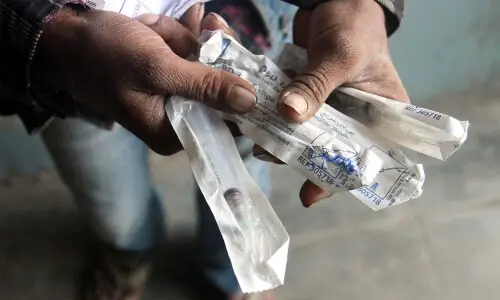
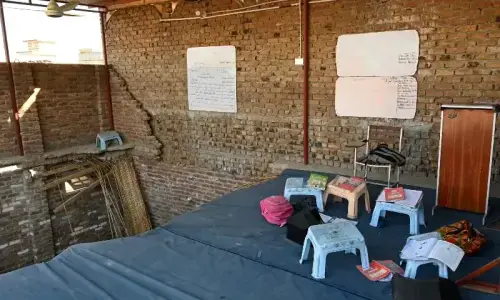
Undercover footage from the Tehsil Headquarters Hospital, filmed about eight months after the government’s crackdown in March 2025, shows syringes being reused, injections administered through clothing, and unqualified volunteers treating children with contaminated vials — each lapse a potential death sentence.
HIV is not like any other infection. It is a lifelong, incurable virus that weakens the immune system, leaving children vulnerable to repeated illness and dependent on continuous treatment to survive.
The scale of the crisis in Taunsa is staggering. At least 331 children tested positive for HIV between November 2024 and October 2025, with infections continuing even after official intervention. Fewer than one in 20 parents tested positive, pointing strongly towards transmission within healthcare settings. Some children have died; others now face a future defined by a preventable infection.
Why do these practices continue? As explained to the BBC by a paediatrician, the reasons lie in how the system functions. In many settings, injections are preferred even when they are not needed because patients expect them and doctors go along. At the same time, hospitals face shortages of medicines and supplies, with staff required to make limited stock last the month. In such an environment, cutting corners is routine, even when it is dangerous.
Weak infection control training and the tolerance of unqualified personnel adds to the risks. In effect, the system begins to normalise malpractice.
The Punjab government has cited screenings, treatment centres, auto-disable syringes, and action against quack clinics as its response. Yet its questioning of the investigation and maintaining that no conclusive link to the hospital has been established is tough to reconcile with what the footage clearly shows.
The redeployment of officials previously under scrutiny further weakens confidence.
Tragically, Taunsa is not the first. The outbreak in Ratodero in Sindh in 2019, where hundreds of children were infected and new cases still emerge, offers a troubling parallel.
We cannot treat these outbreaks as one-off incidents. Preventing another outbreak requires consistent enforcement of infection control, reliable medical supplies, stricter limits on unnecessary injections and transparent accountability. Without these, the conditions that enabled this crisis will persist.
Published in Dawn, April 16th, 2026