Naseem Shah’s long road to fulfilling his promise as Pakistan’s pace spearhead
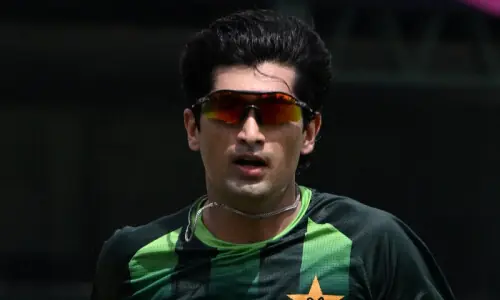
In the soft autumn light of Rawalpindi, where the stands once erupted for a boy barely old enough to drive, Naseem Shah returned to the ground that first announced him to the world.
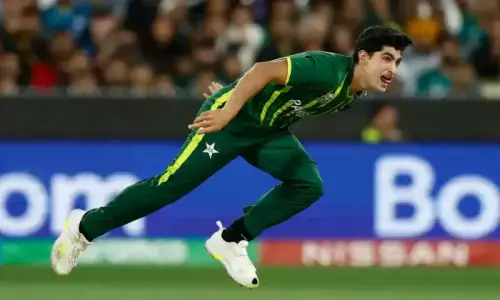
Seven months had passed since injury forced him off the field. When he returned in the opening Twenty20 International against Sri Lanka last week, the ball still left his hand with its familiar menace.
Three wickets for 36 runs in four overs. A first-ball breakthrough. Pace touching the mid-140s. The crowd remembered. So did Pakistan.
Now three months short of his 24th birthday, Naseem has taken 155 wickets in 93 international matches. His tally includes 60 in Tests at an average of 35.13 and 60 in ODIs at 25.91, with a strike rate of 28.3. The figures speak of promise fulfilled in flashes, and of potential still waiting to fully blossom.
“I feel I’m yet to play my peak cricket,” he told PCB Digital this week. “Whatever cricket I’ve played so far, especially Test cricket, I think I lacked a few things.”
The admission carries the weight of a career lived at high velocity. Born in Mayar, Lower Dir, in February 2003, Naseem was thrust into international cricket at 16. His Test debut against Australia in Brisbane in November 2019 came before many of his peers had finished school.
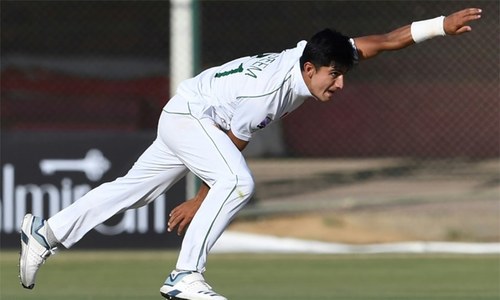
Three months later, on the Rawalpindi pitch that would become part of his legend, he claimed a hat-trick against Bangladesh. At 16 years and 359 days, he became the youngest bowler to achieve the feat in Test cricket.
The country took to the slight teenager who charged in with raw aggression and an action that drew comparisons with the great fast bowlers of the past.
His early years were a whirlwind. He claimed a five-wicket haul against Sri Lanka at 16, followed by consecutive five-fors in ODIs — 5-33 against the Netherlands in August 2022 and 5-57 against New Zealand the following January. He became only the sixth Pakistan bowler to achieve the feat of taking five wickets in consecutive ODI innings.
In white-ball cricket, Naseem appeared a natural — sharp with the new ball, capable of making the old one reverse and increasingly adept at reading a batter’s intentions. Fast bowling, he now reflects, is “all about aggression and smartness”. The two, he believes, must go hand in hand.
Yet the body that produced such pace has repeatedly let him down. A back injury early in his career cost him more than a year, and shoulder problems followed.
The most painful setback came during the 2023 Asia Cup match against India, when he suffered a tendon injury that required surgery. He watched the World Cup from the sidelines as Pakistan’s campaign unfolded without one of its most threatening bowlers.
“You go back to zero whenever you are injured,” he said. “Sometimes it doesn’t even allow you to go for a run, let alone going through the motions of the game. The rehabilitation programme then becomes important. It is also critical how well you understand your body during those times.”
The latest setback came during the Pakistan Super League earlier this year. A back injury, suffered just as he was rediscovering his rhythm, ruled him out of the tournament and kept him away from the national side for seven months.
During that period of rehabilitation, involving early mornings, carefully planned strengthening exercises and mental adjustment, his understanding of fast bowling began to evolve. The teenage firebrand has become a young man who speaks of awareness, match situations and variations beyond raw speed.
“When you are young you know how to bowl fast,” he explained. “But the important thing is to have sense of what you are trying to do. There are many fast bowlers in the world who bowl 140-plus, but they are not consistent. One or two matches and injuries come.”
He has learnt that bowling at 150 kilometres per hour counts for little if runs flow freely and the body breaks down after a handful of matches. Consistency, execution at 70 or 80 per cent of maximum effort and the ability to surprise a batter with a slower ball after a verbal exchange are among the lessons injury has taught him.
In modern white-ball cricket, where pitches often favour batters and the demands of the game require constant innovation, he believes bowlers must continue to evolve.
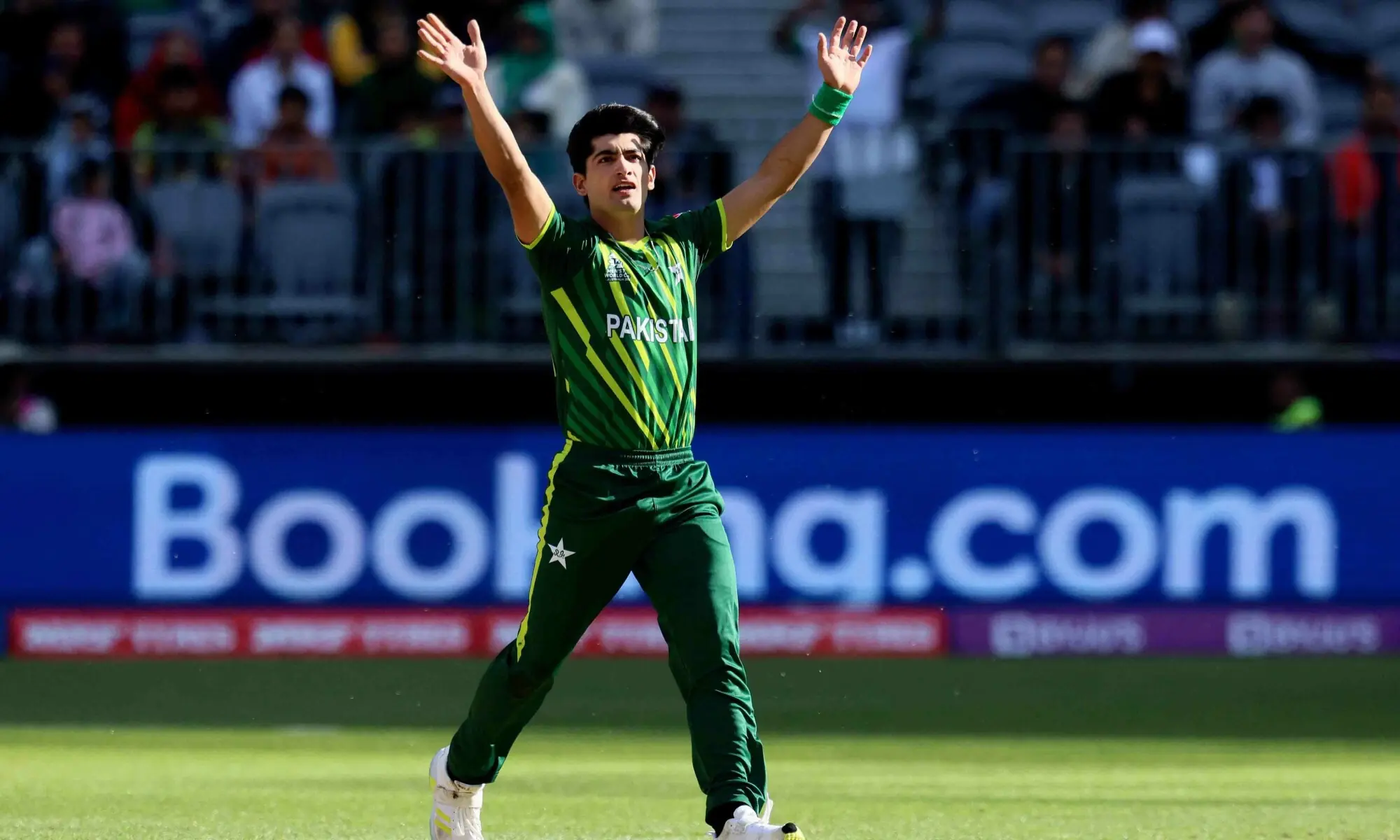
His return against Sri Lanka offered an encouraging indication of what lies ahead. In the first T20I, he unsettled the top order before finishing the innings with precision.
In the second, although he went wicketless, he conceded only nine runs in his powerplay overs. It was the kind of disciplined spell that can make a difference in a series. Pakistan won the T20I series 2-1, with Naseem playing his part.
His attention is now turning towards the 2027 World Cup in South Africa, where Pakistan are scheduled to begin their campaign against Afghanistan on Oct 8. It would be his first senior World Cup appearance, following the disappointment of missing the 2023 tournament.
He is also part of the squad for the forthcoming ODI tri-series against England and Sri Lanka, another step in his preparations.
In 34 ODIs, he has demonstrated his ability to compete at the highest level. The challenge now is to sustain that performance over time.
“You make a goal,” he said, “and those goals keep changing with injuries and the ups and downs of a career. But I had set a goal that I want to play cricket up to a certain level. I feel my peak cricket is still ahead of me.”
Looking back, he wonders what more he might have achieved with a better understanding of pitches, his own body and the demands of the game. Looking ahead, he sees only the work that remains.
There is something compelling about the journey of the young man from the mountains of Dir. He arrived as a prodigy and has since endured the isolation of rehabilitation that fast bowlers often face.
The setbacks have been real, the absences painful and the scrutiny relentless. Yet the pace remains, the ball still moves, and his understanding of the game has deepened.
The emphasis has shifted from raw speed to longevity and impact. Pakistan need more than occasional explosive spells. They need a bowler who can deliver consistently, series after series, and take responsibility when the stakes are highest.
The 2027 World Cup is no longer a distant prospect. It is a target around which Naseem can build the next phase of his career.
For a country that has watched him rise, fall and return, the hope is that the boy who took a Test hat-trick at 16 will, as a 24-year-old, deliver the sustained excellence his talent has long promised.
The journey continues. Naseem believes his peak is still to come.