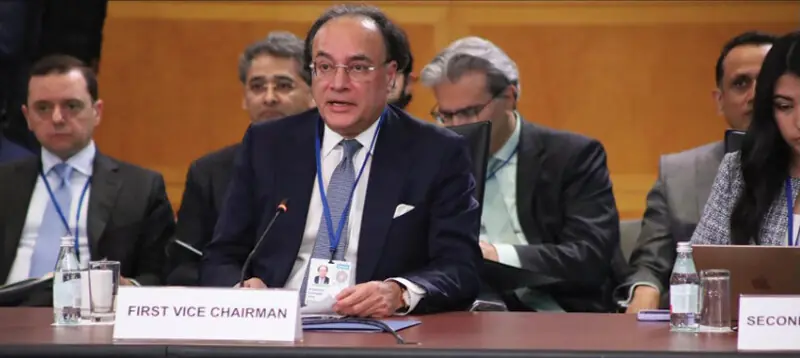
WASHINGTON: Pakistan is exploring multiple financing options, including bilateral borrowing, commercial loans and Eurobonds, to stabilise its foreign exchange reserves after the United Arab Emirates asked for the repayment of a $3.5 billion loan, said Finance Minister Muhammad Aurangzeb on Tuesday.
The development comes at a sensitive time for the country’s external account position, which is already under strain from rising global oil prices and economic spillovers linked to tensions in the Middle East.
According to official figures, Pakistan’s foreign exchange reserves stood at $16.4bn as of March 27, sufficient to cover close to three months of imports. However, the repayment requirement from the UAE has added fresh pressure on the country’s external buffers.
Earlier this month, Pakistan failed to secure an agreement with the UAE to roll over the $3.5bn facility, marking the first such failure in seven years and raising concerns about near-term financing gaps.
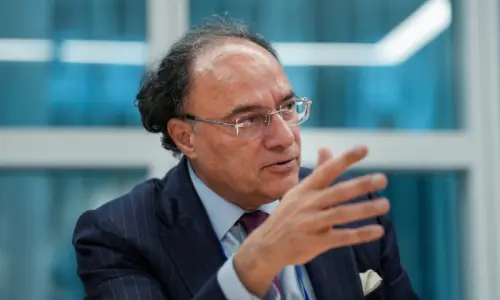
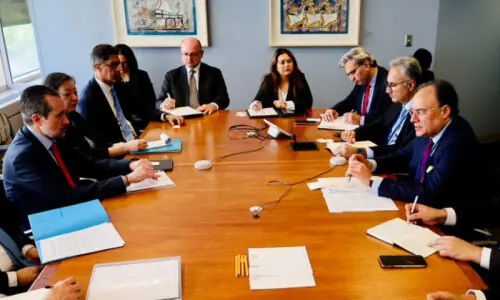
In remarks to Bloomberg and Reuters on the sidelines of the IMF-World Bank Spring Meetings in Washington, Mr Aurangzeb said Pakistan was keeping “all options on the table” to manage external financing needs. These options include Eurobonds, commercial borrowing, and loans from friendly countries.
Aurangzeb says $3.5bn UAE debt repayment adds to pressure
He declined to confirm whether discussions were ongoing with China and Saudi Arabia regarding potential financial support, although Bloomberg reported earlier that such talks were underway.
Reuters reported that Pakistan is preparing to repay a $3.5bn facility from the UAE this month, a move that could temporarily weigh on reserves and complicate compliance with targets under the International Monetary Fund programme.
Aurangzeb said the external shock from the ongoing Middle East conflict had also forced policymakers to reconsider energy security strategies. He suggested that Pakistan may consider establishing a strategic petroleum reserve and accelerating its transition to renewable energy sources.
“The shock from the ongoing war in the Middle East means we must consider structural changes,” he said, adding that energy diversification is now part of broader macroeconomic planning.
Amid these external pressures, Mr Aurangzeb emphasised that Pakistan remains firmly committed to its reform programme under the IMF and is actively pursuing early approval of a Staff-Level Agreement by the Executive Board. The approval is critical to sustaining Pakistan’s macroeconomic stability and restoring investor confidence.
Officials also pointed to Pakistan’s timely repayment of a $1.3bn Eurobond as evidence of improving credit discipline and continued commitment to meeting external obligations despite tighter financing conditions.
Pakistan’s foreign exchange position, though under pressure, remains part of a broader stabilisation effort under IMF-supported reforms.
Analysts say external financing risks remain a key vulnerability, particularly amid volatile energy prices and constrained global capital markets.
Published in Dawn, April 15th, 2026