China, Russia veto UN resolution to reopen Strait of Hormuz


 7
7
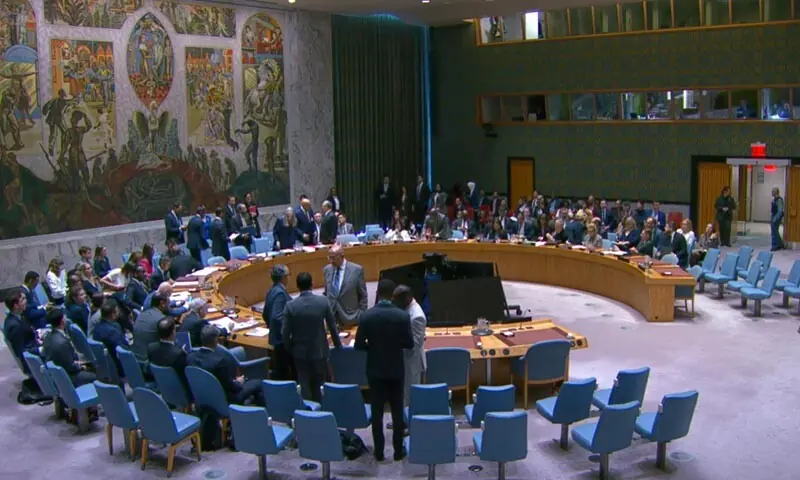

WASHINGTON: Russia and China on Tuesday vetoed a draft resolution at the United Nations Security Council for reopening the Strait of Hormuz, while Pakistan abstained.
The draft resolution prepared by Bahrain, which underwent six revisions during negotiations to bridge differences among council members, received 11 votes in favour, two against and two abstentions.
Bahrain, the Democratic Republic of the Congo, Denmark, France, Greece, Latvia, Liberia, Panama, Somalia, the United Kingdom and the United States voted in favour of the resolution.
Russia and China voted against the measure, exercising their veto power as permanent members of the 15-nation UNSC, thereby blocking its adoption despite majority support.
Pakistan and Colombia were the two countries that abstained from voting.
Drafted by Bahrain in coordination with Gulf Cooperation Council (GCC) states and Jordan, the resolution strongly urged nations using the commercial route to coordinate defensive measures — including escorting merchant vessels — to guarantee safe navigation. It also demanded that Iran immediately cease attacks on commercial ships and civilian infrastructure, including oil, gas and water facilities.
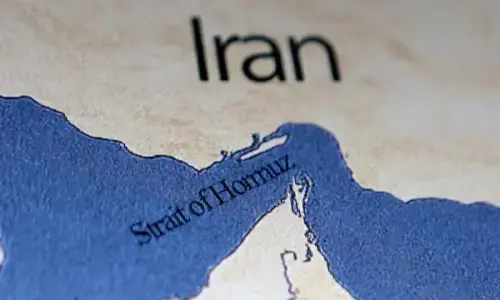
The Strait of Hormuz is a strategic maritime chokepoint through which a substantial portion of global oil shipments pass. Iran has effectively shut down the Strait of Hormuz following the US-Israel war on the Islamic republic.
Earlier versions of the draft resolution reportedly invoked Chapter VII of the UN Charter, which could have authorised the use of force. Objections from Moscow, Beijing, and several non-permanent members led to its removal.
Despite those revisions, Moscow and Beijing on Tuesday maintained their opposition, arguing that the draft failed to adequately reflect underlying regional dynamics.
The final text emphasised defensive coordination “commensurate with the circumstances,” respect for international law, and included a reporting requirement asking the UN secretary general to brief the UNSC within seven days and every 30 days thereafter on attacks and provocations affecting commercial shipping.
‘Abstention reflects commitment to dialogue’
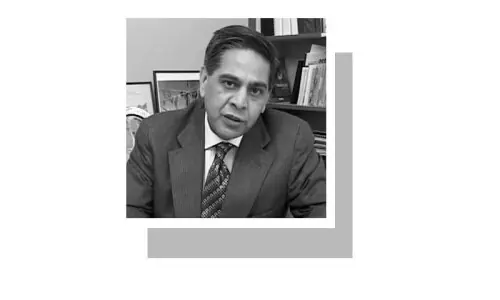
Speaking at the UNSC, Pakistan’s permanent representative to the UN Ambassador Asim Iftikhar Ahmad said Islamabad supported the resolution’s goals, particularly reopening Hormuz and restoring normal maritime passage, but he also emphasised the importance of dialogue.
“We continue to believe that time and space must be allowed for ongoing diplomatic efforts to facilitate a return to dialogue and engagement,” he said.
The ambassador highlighted Pakistan’s solidarity with regional countries and concern for the economic and humanitarian consequences of the crisis. “Pakistan supports the sovereignty, territorial integrity, political independence and security of all brotherly countries in the region,” he stated.
He also pointed to the wider economic impact of the closure of Hormuz.
“The ongoing situation in the Strait of Hormuz has resulted in one of the largest energy supply shocks in modern history. The impact is felt not only in terms of energy flows but also fertilisers and other essential commodities, thus affecting food security, cost of living and squeezing the livelihood of the most vulnerable,” he said.
Ambassador Ahmad outlined Pakistan’s active engagement in diplomacy, including hosting the foreign ministers of Egypt, Saudi Arabia, and Turkiye in Islamabad in late March, and coordinating with China on a five-point initiative covering an immediate halt to hostilities, inclusive peace talks, protection of civilians and critical infrastructure, restoration of maritime security in the strait, and reaffirmation of the UN Charter and international law.
“Our objective is clear — a permanent end to hostilities, containing the expansion of this conflict and preventing any further loss of civilian life or destruction of critical infrastructure,” he said.
While Pakistan supported the draft resolution in principle, it abstained to preserve space for diplomacy and a sustainable political solution, rather than immediate enforcement measures. The abstention reflected Islamabad’s commitment to restraint, dialogue, and constructive engagement to achieve lasting peace in the region, he said.
UAE expresses regret
The UAE mission to the UN later posted on X that the country “deeply regrets that the UN Security Council failed today to endorse a clear framework for international cooperation in ending Iran’s illegal attacks and threats to the global economy by adopting a draft resolution demanding the immediate cessation of all attacks on vessels and attempts to impede freedom of navigation in the Strait of Hormuz”.
“The Strait of Hormuz must remain open to all, and the freedom of navigation must be preserved. No country should have the power to shut down the arteries of global commerce and drive the world to the brink of economic calamity.
“The Security Council’s failure to act does not diminish the urgency of this crisis or the UAE’s resolve. We thank Bahrain for its leadership on the Security Council and for its diplomatic efforts. We will continue to push for international efforts to restore the Strait of Hormuz and work with partners to advance coordinated action to secure navigation and restore the flow of global commerce,” the post said.
Meanwhile, Iran’s UN mission posted on X that Tehran appreciated China and Russia for their “responsible conduct and today’s principled use of the veto in the UN Security Council”.
“By blocking a flawed draft, they upheld the UN Charter and prevented the Security Council from being misused to legitimise US aggression under the pretext of freedom of navigation in the Strait of Hormuz and the Persian Gulf. They stood firmly on the right side of history,” the post said.