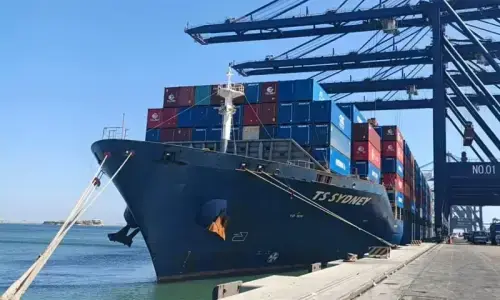
ISLAMABAD: Shipping lines have reached an agreement with traders to ensure fair pricing, advance disclosure of costs, and minimal diversion of cargo except in emergencies, in a bid to address concerns of the business community over non-transparent shipping charges and cargo handling practices.
A committee, constituted by the Ministry of Maritime Affairs, held a series of meetings to address key issues affecting trade. The committee, headed by Member Customs Operations Shakeel Shah, in consultation with all stakeholders, took key decisions on shipping charges and trade facilitation.
To ensure transparency and consistency in the application of war-risk surcharges on shipments originating from or destined for Pakistan, it was agreed that shipping lines would refrain from any undue or opportunistic pricing.
An official announcement said exporters would be informed of all applicable charges prior to booking. Shipping lines clarified that war-risk surcharges are applied only on routes passing through the Gulf/Middle East and Red Sea regions, and that they regularly issue advisories — currently being compiled for wider dissemination — to inform stakeholders.
Move aims to address concerns over non-transparent charges, cargo handling practices
The committee directed shipping lines to avoid discharging cargo at alternate ports except in cases of imminent threat or other exigencies. It was also agreed that imposing a war-risk surcharge on consignments already in transit prior to March 3, 2026, is unfair, and shipping lines would not apply such charges to those consignments.
Additionally, it was emphasised that withholding bills of lading (B/Ls) due to third-party disputes causes financial losses, delays, and operational disruptions for exporters, and such practices should be discouraged.
Circulars have already been issued to promote transparency, advising traders to report any instances of unjustified charges or withholding of B/Ls. Traders have been encouraged to submit representations to the Collector HQs (Exports & IOCO) for redressal of non-compliance with these decisions.
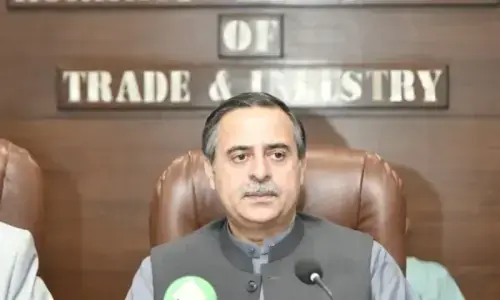
Shakeel Shah underscored the need for all stakeholders — including government agencies, shipping lines, trade bodies, and related service providers — to work collectively to ensure transparency, fairness, and facilitation of legitimate trade.
He stressed that opportunistic pricing and non-transparent, arbitrary practices must be avoided. He appreciated the role of various stakeholders in the logistics supply chain and urged all participants to act more responsibly, particularly in light of the ongoing conflict situation in the Middle East.
The committee included representatives from public and private sector entities involved in the regulation and facilitation of the maritime logistics supply chain.
Published in Dawn, April 1st, 2026