Freight, fuel hikes squeeze consumers
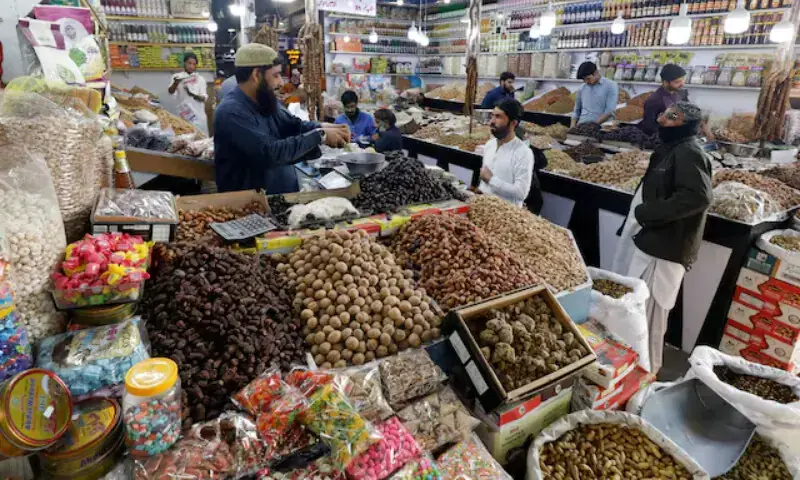


KARACHI: Prices of essential items have shown a mixed trend as the Gulf war, which started on Feb 28, pushed up transportation costs following a surge in energy prices due to disruptions.
Since shipping companies have raised freight and war risk charges, the landed cost of imported finished goods and raw materials has skyrocketed.
A random market survey before and after the outbreak of the war in the Middle East, shows that vendors of beef, mutton and chicken jacked up prices before Ramazan and during the lead-up to Eid.
The current average rate of beef (with and without bones) is Rs1,000-1,500 per kg. Beef prices had seen a Rs100-Rs200 increase ahead of Eid. The rates for veal surged to Rs1,800 per kg from Rs1,600 during Ramazan.
War-driven costs push up wholesale prices, with retail impact looming; energy shock threatens inflation spike
Mutton prices have been hovering between Rs1,800 and Rs2,750 in various cities, showing no change since Feb 28.
Consumers expected a drop in beef and mutton prices because the war had stalled exports, but high domestic demand during Eid festivities kept meat prices out of reach for many. According to meat merchants, export shipments were being sent by air.
Chicken, another most sought-after Eid item, saw a jump to Rs360-Rs500 per kg from Rs300-420 two days before the war began on Feb 28.
As per the Sensitive Price Index (SPI), the prices of Masoor, Moong, Maash and gram pulses have stayed almost unchanged at Rs220-320, Rs340-Rs460, Rs400-540 and Rs210-340 per kg, respectively, since Feb 28.
Rauf Ibrahim, who heads the Karachi Wholesalers and Grocers Association (KWGA), said the Rs55 per litre rise in diesel has had an impact of Rs5-Rs7 on wholesale prices of edible items. But retail prices have shown no impact so far due to the Eid holidays.
Cooking oil
As per SPI, the prices of branded cooking oil (five kilo pack), 2.5kg of ghee tin and one kg ghee have been unchanged at Rs2,850-3,110, Rs1,400-1,587 and Rs560-592, respectively.
A retailer at Tariq Road Market said the distributors of oil products had hinted at a jump of Rs200 per five kg/litre ghee and cooking oil cartons.
Sheikh Amjad Rasheed, a former chairman of the Pakistan Vanaspati Manufacturers Association (PVMA), said manufacturers had raised prices by Rs5-10 per kg/litre for ghee and cooking oil.
The rate of palm oil has surged to $1,220-1,240 per tonne in the international market, up from $ 1,020 before the war.
The domestic palm oil rate has gone up to Rs16,000 per maund from Rs15,000, while futures are being quoted at Rs8,000, he added.
“Ghee and cooking oil prices will not go up drastically as the country has palm oil stocks of 550,000 tonnes — enough for three months.”
Potato, onion and tomato prices also held unchanged at Rs20-70, Rs40-130 and Rs40-140 per kg.
The prices of wheat and wheat flour fluctuated amid the arrival of the new crop in Sindh. For example, a 20kg flour bag costs Rs1,810-2,710, while a 10kg bag costs Rs1,068.
Shankar Talreja of Topline Securities said a $100/barrel Brent oil price will push inflation to an average of 10.92pc, 9.33pc, 7.47pc and 8.22pc over the next four quarters.
For every $10/barrel hike, he assumes a petrol/diesel price hike of 5.5pc, a transport service hike of 3.5pc (65pc of fuel), a gas price hike of 10pc, and an electricity price hike of 3pc.
The Consumer Price Index (CPI) for March is expected to clock in at 7-7.5pc year-on-year, as against 6.99pc in February and 0.69pc in March last year.
The major contribution to YoY inflation is coming from the transport sector, according to Talreja. On a month-to-month basis, transport fares and charges are expected to rise by 18pc due to a surge in international oil prices, Talreja said.
Published in Dawn, March 26th, 2026