Pakistan among most vulnerable countries as Gulf shipping crisis jolts South Asia


 2
2
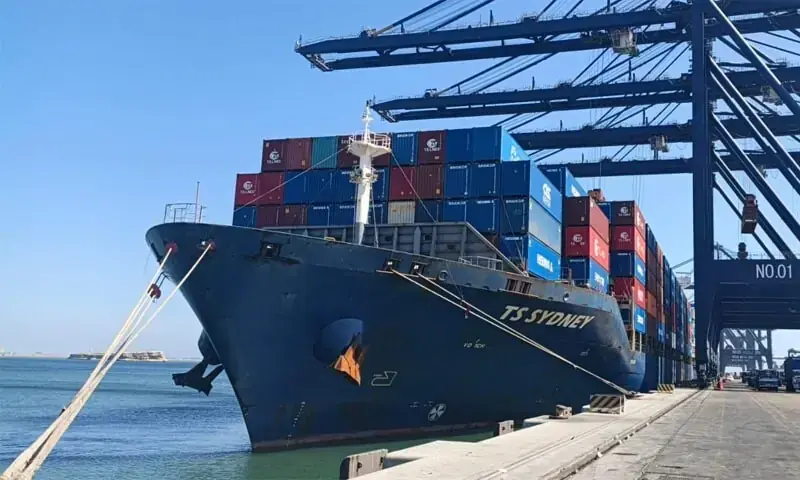

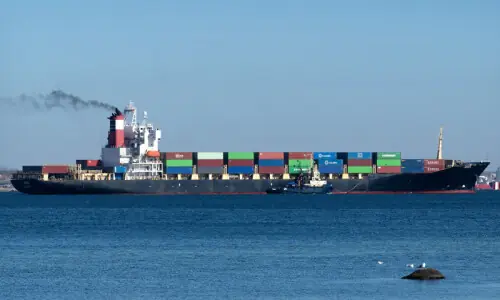
WASHINGTON: Pakistan is among the countries that could face immediate and severe energy strain if disruptions in Gulf shipping persist, according to data from energy analytics firm Kpler, the US think tank Council on Foreign Relations (CFR), and international media.
Data published by the Financial Times shows that Pakistan receives 99 per cent of its liquefied natural gas (LNG) imports from Qatar and the United Arab Emirates, making it particularly vulnerable to disruptions in Gulf energy flows.
“Pakistan’s heavy reliance on LNG from Qatar and the UAE means any shock to supplies through the Strait of Hormuz would be felt very quickly,” the Financial Times reported, quoting market analytics.
Energy analytics firm Kpler highlighted that a large share of Asia’s LNG — including Pakistan’s — originates in the Gulf and transits the Hormuz chokepoint, now disrupted by the Middle East conflict.
“Pakistan and Bangladesh have limited storage and procurement flexibility, meaning disruption would likely trigger fast power-sector demand destruction rather than aggressive spot bidding,” Go Katayama, principal insight analyst at Kpler, was quoted as saying in international coverage.
With limited storage capacity and little procurement flexibility, analysts warned Pakistan would struggle to cushion even short-term supply shocks. For Pakistan, such disruption could mean immediate curtailment of gas supplies to power plants and energy-intensive industries, reviving the risk of widespread load-shedding and industrial slowdowns. Unlike larger economies with strategic reserves or diversified sourcing, Pakistan has limited room to absorb supply shocks.
In a study released on March 18, the Council on Foreign Relations warned that South Asia would face some of the most acute fallout from a sustained Gulf energy disruption. While Bangladesh sources about 72pc of its LNG imports from Qatar and the UAE and India about 53pc, Pakistan’s 99pc dependence makes it the most exposed in proportional terms.
The CFR study also highlighted the broader political risks associated with fuel shortages and rising prices across South Asia. Countries in the region have a history of fuel-related protests, some of which have turned violent.
India, which faces the largest combined exposure in absolute terms, sources more than half of its LNG imports from the Gulf, with a significant share linked to Brent crude pricing.
According to Reuters’ reporting on Asia’s energy scramble amid the crisis, “a spike in crude prices driven by tensions around Strait of Hormuz would raise both India’s oil import bill and the cost of LNG contracts,” creating what analysts described as a “dual physical and financial shock”. About 60pc of India’s oil imports come from the Middle East, Reuters noted.
In Bangladesh, already struggling with a structural gas deficit of more than 1,300 million cubic feet per day according to the Institute for Energy Economics and Financial Analysis (IEEFA), the government reportedly closed universities and placed the military in charge of oil depots amid fears of unrest.
Reuters quoted officials saying that authorities were taking “extraordinary steps to prevent protests and maintain order around fuel supplies”.
The CFR report noted that even in countries with less history of fuel-related unrest, shortages, rationing and long queues triggered clashes between motorists, petrol pump owners and police.
Across Asia, governments are in what the study describes as “constant energy triage”. Many shortened government workweeks, urged reductions in air-conditioning use, and began releasing whatever strategic reserves they possess.
“Countries without significant reserves are being forced into hard choices between rationing and economic contraction,” CFR analysts were quoted as saying in the report.
While Malaysia and Brunei are oil exporters and Japan and China maintain larger stockpiles, many other Asian states could face severe supply shortages within weeks if disruptions continue.
Factories in export-dependent economies are shutting down or operating part-time, while tourism — a critical sector for countries such as Thailand and Vietnam — is being hit by rising jet fuel prices and declining traveller confidence. In Thailand, tourist arrivals fell about nine pc year-on-year in the first week of March, with hotel occupancy in key destinations reportedly as low as 10pc, international media reports showed.
The war is now 20 days old. If it extends into the summer, the CFR warned, it could have calamitous consequences for Asian growth and political stability.
For Pakistan, with nearly total dependence on Gulf LNG and limited storage buffers, the immediate concern is physical supply security — a shock that could quickly translate into higher power outages, industrial disruption and renewed economic stress.