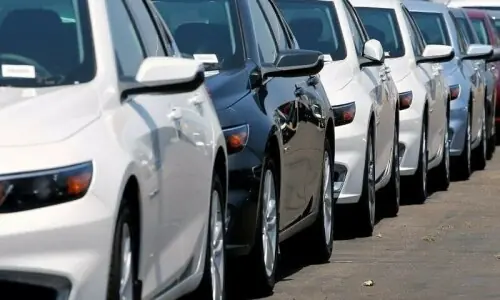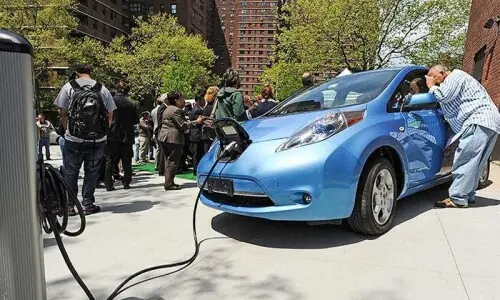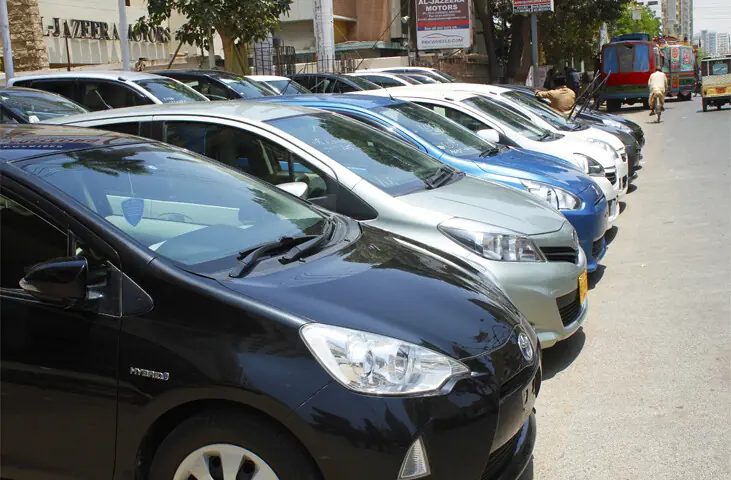


KARACHI: A proposal to increase the general sales tax (GST) on locally-made hybrid electric vehicles (HEVs) and plug-in-hybrid vehicles (PHEVs) has become a source of worry for assemblers.
The proposal envisages increasing GST to 18 per cent from the current 8.5pc with effect from July 1.
They said they had been hearing this signal from the relevant government departments that the 8.5pc GST would exist till June 30, 2026 as the current auto policy, loaded with incentives, is also expiring on the same date.
An assembler said the proposal to increase sales tax on HEVs and PHEVs could significantly alter vehicle-pricing dynamics as in Pakistan’s auto market, relative price positioning determines demand. “If hybrids lose their monetary advantage, the demand balance could shift,” he feared.
Any major change in tax incentives could influence both consumer demand and future investment decisions. “If the price gap between conventional vehicles and hybrids narrows, consumers may return to fossil fuel vehicles,” the assembler said. At the same time, he added, EV adoption could slow if the broader environment becomes uncertain.
Stakeholders say tax policy has historically acted as the central driver behind investment flows, model launches and consumer demand across the sector.
“Pakistan’s auto industry has effectively grown through policy design,” said a senior executive at an automobile assembler. “When tax structures change, the market direction changes with them.”
When stakeholders heavily invest in a sector due to incentives, the government pulls them back, leaving the investment as well as jobs at stake, he said.
Policy attracts investment
The Automotive Development Policy (ADP) for 2016-2021 had lured new investment, broken the long-standing dominance of three established automakers, offered duties of 10pc on imported spare parts and cut duties on locally-made parts to roughly 25pc, down from 50pc.
New investors were granted a five-year tariff protection window as well.
As a result, 15 new players, most of them Chinese or South Korean, committed investments of over $1.1 billion, with realised investment exceeding $1bn as assembly plants, dealerships and vendor networks expanded.
The number of passenger cars sold rose from 181,000 units in FY16 to over 216,000 units in FY18 and eventually peaked near 234,000 units in FY22.
Several new brands entered, SUVs became more prominent and the supplier ecosystem grew significantly.
The next phase of policy direction came with the Automotive Industry Development and Export Policy 2021-2026, which expanded the focus from import substitution to exports, technological advancement and sustainability.
Under the framework, duties on hybrid-exclusive parts were set at 4pc, plug-in hybrid parts at 3pc and EV components at 1pc, while sales tax on HEVs and PHEVs remained at 8.5pc. The tax differential played a key role in enabling hybrid adoption.
Published in Dawn, March 17th, 2026