Employees of SOEs, other govt-supervised bodies to face 5-30pc salary cut as part of austerity measures: PMO


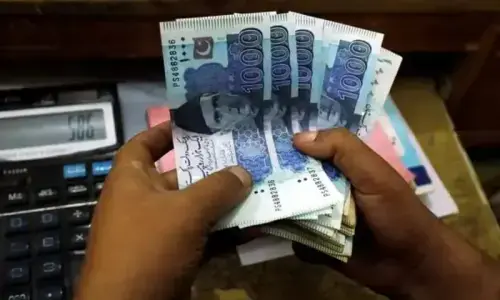
Employees of state-owned enterprises (SOEs) and autonomous institutions under government patronage would see their salaries cut by five to 30 per cent under the government’s austerity measures, which would go towards public relief, it was decided on Saturday.
The move adds to a host of austerity measures announced by Prime Minister Shehbaz Sharif on Monday in view of the global oil crisis triggered by the US-Israel war on Iran, which has hiked local fuel prices.
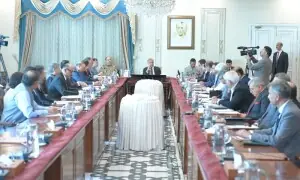
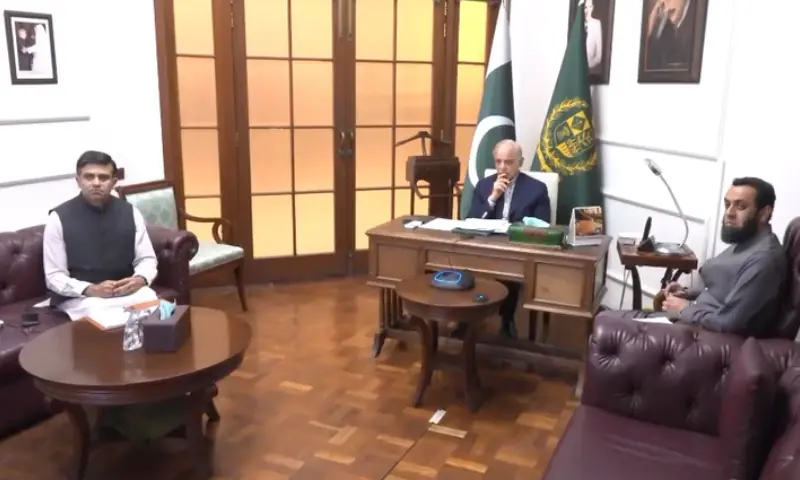
On Saturday, PM Shehbaz chaired a meeting reviewing the impact of petroleum product prices and the implementation of government austerity measures in view of the ongoing situation in the Middle East, a press release issued by the Prime Minister’s Office (PMO) said.
“It was decided in the meeting that, like government employees, there will be a 5-30pc cut in the salaries of employees of state-owned enterprises and autonomous institutions under government patronage,” the statement said.
It added that the funds saved as a result of all austerity measures would be used “only for public relief”.
The meeting was attended by Finance Minister Muhammad Aurangzeb, Petroleum Minister Ali Pervaiz Malik, Information Minister Attaullah Tarar, Minister of State for Finance Bilal Azhar Kayani, and other relevant senior officials.
Federal Board of Revenue’s (FBR) Chairman Rashid Mahmood Langrial was also present.
While reviewing formerly-announced initatives, the meeting decided that the four-day work week would not be applicable to law enforcement agencies (LEAs) and the FBR, who would carry out their duties as normal.
It reviewed measures that had been previously announced, reiterating that a third-party audit would be conducted in the next two months regarding the decisions to ground 60pc of government vehicles and to cut 50pc of the fuel allotted to government vehicles of all departments.
“The meeting was also briefed on the implementation of the government’s complete ban on the purchase of new vehicles and the ban on all other government purchases,” the PMO statement added.
In addition, the next two months’ salaries of cabinet members, ministers, advisers and special assistants (SAPMs) would also be “used as savings for public welfare”.
The meeting was also informed about the implementation of the decision to completely ban foreign visits of ministers, advisers and SAPMs, and instead prioritise teleconferencing and online meetings.
“The complete ban on foreign visits of government officers, ministers, ministers of state and special assistants will remain in place,” PM Shehbaz was quoted as saying.
The meeting also decided that corporations and other institutions with government representatives on their boards would not charge a fee for them to participate in the board, and that this fee would be included in the savings, it said.
“The premier also directed all Pakistani embassies around the world to celebrate the celebrations of March 23 with utmost simplicity,” the statement added, referring to Pakistan Day.
It said that the premier issued instructions that “the concerned secretaries will implement and monitor all these austerity orders and measures and will submit a report to the review committee on a daily basis”.
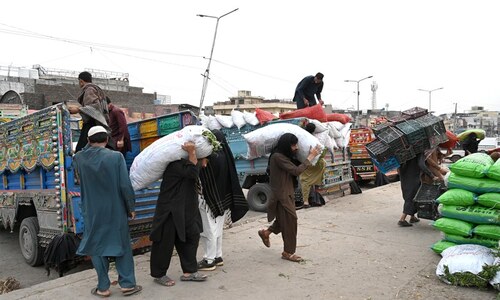
The US-Iran war, which began two weeks ago, has had a dramatic effect on the economy of Pakistan and the rest of the world, as the closure of the Strait of Hormuz has caused massive fuel price hikes.
The government had announced a Rs55 per litre increase in petrol and high-speed diesel prices last week, citing a surge in global oil prices.
On Friday, when the government was due to announce new prices under the new weekly revision plan, PM Shehbaz decided that the prices would remain unchanged despite the uptick in the international oil market.
‘Petroleum product stocks at comfortable levels’
Meanwhile, a meeting of the committee formed by PM Shehbaz to monitor petrol prices was held virtually. According to the Ministry of Finance, the virtual meeting was chaired by Finance Minister Aurangzeb.
“The committee undertook a comprehensive review of petroleum product stock positions across the country and was briefed on the current national inventory of crude oil and refined petroleum products, ongoing import arrangements, and supply chain logistics,” it said.
It added that the participants were also informed about cargoes currently en route as well as additional shipments being arranged to strengthen national reserves.
“The committee noted with satisfaction that petroleum product stocks remain at comfortable levels and that supply chains are functioning smoothly, with adequate arrangements in place to ensure continuity of supply in the coming weeks,” the ministry said.
It added that the committee also reviewed recent developments in global crude and refined petroleum markets, which had experienced “heightened volatility in recent days due to geopolitical developments in the region”.
“Members examined international price trends, benchmark crude movements, and refined product market dynamics, and discussed possible external scenarios and their potential implications for Pakistan’s energy sector and broader economy. It was noted that the government continues to closely monitor international market developments and is undertaking continuous scenario planning to safeguard domestic energy security and economic stability,” the ministry said.
The meeting also reviewed operational arrangements relating to crude imports, refinery operations, and maritime logistics. Relevant authorities briefed the committee on measures being taken to facilitate cargo movements, maintain optimal refinery throughput, and ensure the uninterrupted functioning of the petroleum supply chain.
“The committee emphasised the importance of maintaining close coordination among refineries, oil marketing companies, and relevant government institutions to sustain smooth product flows and nationwide fuel availability,” the ministry said.
Members were also briefed on the supply outlook for diesel, petrol, aviation fuels, and liquified petroleum gas. The committee noted that current supply levels and planned imports were expected to adequately support domestic demand in the coming weeks. It was observed that relevant authorities remained actively engaged in monitoring stock levels, shipment schedules, and distribution networks to ensure uninterrupted market supply, it added.
In addition to supply-side measures, the committee also reviewed a range of targeted fuel conservation and demand management options aimed at moderating import requirements during periods of international price volatility.
“Various potential measures relating to efficient fuel consumption and public sector conservation initiatives were discussed, with the understanding that responsible consumption can contribute to reducing pressure on imports while supporting broader economic stability,” it said.
Further, the meeting reviewed progress on strengthening monitoring mechanisms across the petroleum supply chain, including the development of a digital dashboard to enhance real-time visibility of stock levels, depots, and retail supply conditions. It was agreed that improved data integration and monitoring would further strengthen oversight and facilitate timely decision-making, it said.
The finance minister was quoted as saying that the government’s foremost priority remained ensuring the uninterrupted availability of petroleum products across the country, while minimising the burden on the public to the greatest extent possible.
“He noted that although global energy markets are currently experiencing significant volatility, Pakistan’s supply position remains stable due to proactive planning and close coordination among relevant stakeholders,” the ministry said.
Aurangzeb added that the committee would continue to closely monitor developments in international energy markets, domestic stock positions, and supply chain dynamics on a daily basis to ensure timely and coordinated policy responses. He reiterated that the government remained fully committed to maintaining market stability, safeguarding national energy security, and ensuring that supply chains remain uninterrupted during the evolving global situation, it said.