Situationer: Another Khamenei leads Iran
THE transition unfolded quietly, but carried consequences far beyond Tehran.
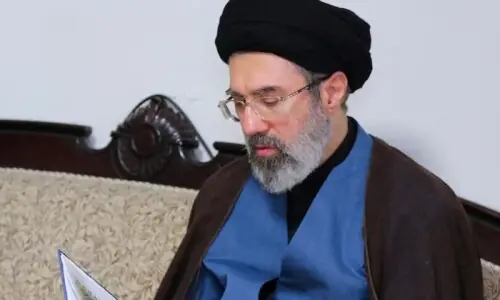
The tenth day of the US-Israel war on Iran began with Iran’s Assembly of Experts formally anointing Ayatollah Mojtaba Khamenei as the country’s new Supreme Leader.
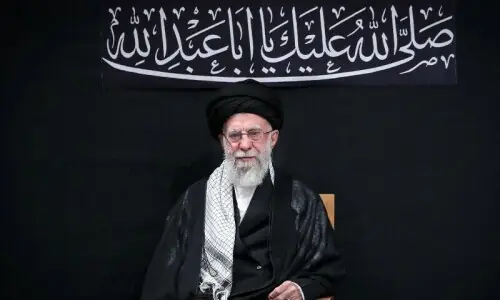
His elevation came days after his father Ayatollah Ali Khamenei, who presided over the Islamic Republic for more than three decades, was assassinated.
Following the tragedy, the Iranian system moved with remarkable speed to close ranks and install his son, signalling both institutional continuity and a consolidation of authority at a time when the country is under sustained military pressure.
It must be remembered that the choice was made not in a calm political climate, but amid an escalating war; one in which key government figures had been assassinated in the opening round. Under such circumstances, the political calculation in Tehran was simple — the country cannot afford a leadership vacuum.
Prior to his ascension to the top leadership slot, Ayatollah Mojtaba remained largely invisible to the outside world. He rarely appeared in public and held no formal government office. Yet, within the inner Tehran circles, he developed a reputation as his father’s trusted aide.
This perception led to controversies as well. His influence inside his father’s office, despite holding no formal position, fuelled speculation that a powerful informal network had developed around him, particularly through his close ties with the Revolutionary Guard Corps.
The controversy intensified following protests after the disputed 2009 Iranian presidential election, when reformist figures accused him of quietly backing the security establishment during the crackdown that followed.
While those allegations were never formally proven, they shaped an image of Mojtaba as a discreet but influential political operator within the inner structure of the regime.
Early years
Born in Mashhad around 1969, he grew up during the most turbulent years of the revolution. As a teenager he joined IRGC during the Iran-Iraq War. That phase of his life forged his relationships with military networks.
After the war, he moved into the clerical world, studying theology in Tehran and later in the seminaries of Qom, under the tutelage of senior jurists including Hossein Vahid Khorasani and Musa Shubairi Zanjani — scholars associated with the theological tradition that underpins the system of Velayat-i Faqih.
This combination of seminary training and proximity to the security establishment shaped a political personality that is unusual, even by Iranian standards.
According to the Encyclopaedia Britannica, outlets linked to Qom began referring to Mojtaba as an ‘ayatollah’ in 2022. He is, therefore, both a cleric and a figure of the revolutionary state. Moreover, the circumstances surrounding his elevation are unlike any previous transition in the country’s history.
Succession
The assassination of Ayatollah Khamenei in American and Israeli strikes triggered an immediate strategic crisis. Personally, the new supreme leader was also mourning the loss of his immediate family members — father, mother, wife and son, and some others in his extended family.
His appointment, therefore, signified emotional and political value, not only in Tehran, but in the broader circle of late Ayatollah Khamenei’s followers.
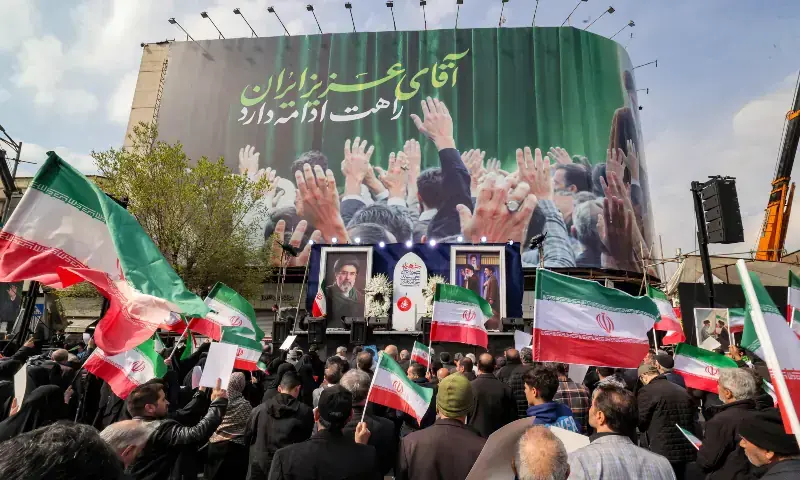
Within hours of the announcement, the country’s power centres moved to demonstrate unity behind the new leader. Senior clerics, political figures and military commanders publicly pledged allegiance.
The transition was presented as not a dynastic inheritance, but a constitutionally-sanctioned choice taken under extraordinary wartime conditions.
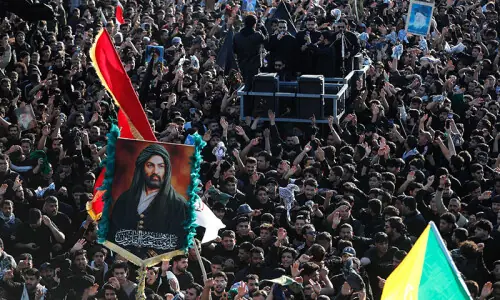
In major Iranian cities, massive gatherings were held to pledge allegiance to the new leader, suggesting public endorsement as well.
Foreign policy leanings and connections
Acceptance of the new leader extended beyond Iran’s borders as well. Actors aligned with Tehran’s regional network moved quickly to signal recognition.
From Hezbollah in Lebanon to allied militias in Iraq and Yemen, statements of allegiance reinforced the perception that the “Axis of Resistance” would continue to operate under a coherent command structure despite the shock of wartime succession.
International responses to the transition have reflected the geopolitical divisions surrounding the conflict.
China reacted with caution; with a spokesperson for foreign ministry saying the leadership change was “a decision made by the Iranian side in accordance with the country’s Constitution.”
Russia also quickly indicated its readiness to continue cooperation with Tehran, while Western capitals treated the development as confirmation that Iran’s political direction is unlikely to soften under pressure.
President Putin, in a message to Ayatollah Mojtaba, congratulated him on his election as the new supreme leader of Iran, saying: “I’m confident you’ll honourably continue your father’s work and unite Iranian people in the face of hardships and challenges.”
While Pakistan’s Foreign Office has yet to publicly articulate its position on the succession, a political response came from the Shia leadership.
Raja Nasir Abbas, leader of opposition in the Senate and head of the Majlis Wahdatul Muslimeen — the most prominent Shia political party — issued a strongly worded message congratulating Ayatollah Mojtaba Khamenei and praising the legacy of the late Iranian leader.
Published in Dawn, March 10th, 2026