0
0

PAKISTAN’S debt burden dominates economic debate. So does its education crisis. Yet these are too often treated as separate challenges. They are not. In the long run, Pakistan cannot solve one without solving the other. The country’s recent budgets rightly reflect the difficult task of restoring macroeconomic stability. Fiscal discipline matters. Reducing debt matters. But there is a danger in treating education as simply another expenditure competing for scarce public resources. It is, in fact, one of the investments that will ultimately determine whether today’s stabilisation succeeds.
This year’s federal budget allocates more than Rs8 trillion to debt servicing — by far its largest expenditure. That reality cannot be ignored. Pakistan must continue strengthening its public finances and creating the fiscal space needed for sustainable growth.
But another reality deserves equal attention. Pakistan remains among the lowest public investors in education in South Asia. Despite declaring an education emergency, recent federal and provincial budgets devote only modest development resources to the sector, much of which is ultimately absorbed by recurrent costs. Teachers’ salaries must, of course, be paid. But salaries alone do not improve learning. Children also need trained teachers, quality learning materials, functioning classrooms, digital access and support during the critical early years when reading skills are formed.
Education is, first and foremost, a fundamental human right. And it is foundational to the concept of development as individual freedom. But it is also one of the smartest economic investments any country can make. A child who learns is more likely to find decent work, enjoy better health, participate in civic life, adapt to a changing climate, and contribute to economic growth. Educated girls are more likely to delay marriage, earn higher incomes and raise healthier, better educated families. Few public investments generate returns across so many dimensions of national development.
Budgets must treat education as an investment in future prosperity.
For Pakistan, every child who leaves school without foundational learning represents more than an education failure. It is a lost opportunity — for that child, for the economy, and for the country’s future.
Too often, education is presented as another claim on the budget. It should instead be understood as part of Pakistan’s fiscal strategy. Countries do not achieve debt sustainability through fiscal adjustment alone. They achieve it by building productive economies that generate jobs, incomes and public revenues over time. That begins with investing in people.
Pakistan has already recognised the urgency of this challenge by declaring an education emergency. The question now is whether public budgets will reflect that same urgency. Budgets — and how they are delivered — reveal priorities more honestly than speeches or declarations. This does not require abandoning fiscal discipline or spending beyond available resources. It requires making better choices within them.
First, governments should protect education spending during fiscal consolidation — not only salaries, but also the development and non-salary investments that improve learning. These are often the first items to be deferred when budgets come under pressure, yet they are the very investments that determine whether children actually learn.
Second, provincial governments should ensure that education development budgets are released predictably and implemented fully. Delayed releases and und-er-execution reduce the impact of already limited resources.
Third, as fiscal space gradually returns, education should be among the first priorities for additional public investment. Pakistan’s young population is one of its greatest economic assets — but only if today’s children become tomorrow’s skilled workers, entrepreneurs and taxpayers.
There is no contradiction between fiscal responsibility and investing in education. On the contrary, they reinforce one another. A better educated workforce is more productive, more innovative and more resilient.
It strengthens economic growth, broadens the tax base and makes public debt more manageable over time.
Pakistan has declared an education emergency. The next step is to ensure that its budgets treat education not as a cost to be contained, but as an investment in the country’s future prosperity.
Countries do not repay debt with interest payments alone. They repay debt through productive economies, expanding opportunities and rising incomes. And productive economies begin in classrooms.
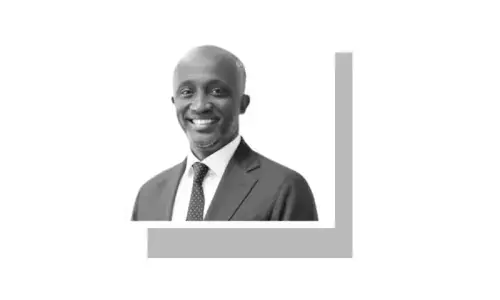
The writer is UN resident & humanitarian coordinator in Pakistan.
Published in Dawn, July 24th, 2026