1
1

• Seeks austerity strategy, orders crackdown on petrol hoarding
• Info minister urges public not to believe ‘speculation, rumours’
KARACHI: Prime Minister Shehbaz Sharif on Saturday directed the finance and petroleum ministers to visit the provinces and prepare a strategy in coordination with provincial governments for the conservation of petroleum products and their uninterrupted supply to the public.
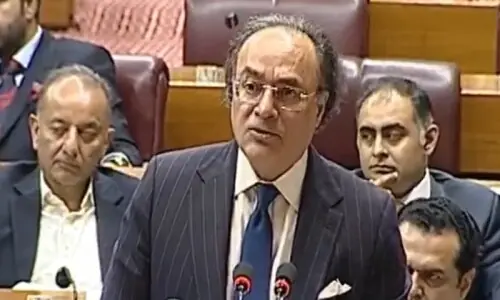
The directives came a day after the government announced a Rs55 per litre increase in petrol and high-speed diesel prices, only hours after PM Shehbaz and Finance Minister Muhammad Aurangzeb had assured the nation that petroleum reserves were sufficient and the situation remained under control.
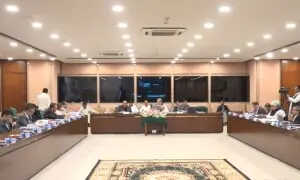
The fresh instructions were issued during a meeting chaired by the prime minister to review the country’s economic situation in the context of the evolving regional crisis, according to a statement issued by the Prime Minister’s Office (PMO).
Participants were briefed on the current global situation and its economic impact on the region. The PMO said the premier directed that a strategy based on austerity and savings be formulated in view of the global economic pressures arising from tensions in the region, with actionable proposals to be presented within 48 hours.
PM Shehbaz emphasised that the strategy should minimise the burden on the public while prioritising relief measures.
The prime minister was also briefed by a committee formed to assess the economic impact of the regional crisis. According to the PMO statement, the recent increase in petroleum prices had been made on the committee’s recommendation, with the aim of passing on the minimum possible burden of the global price hike to consumers.
He directed the committee to work actively and present practical proposals to ease the burden on the public at the earliest.
The prime minister also ordered strict action against hoarding and ordered that any petrol pump or company found creating artificial shortages should be immediately closed, its licence cancelled and legal proceedings initiated.
Meanwhile, Information Minister Attaullah Tarar, in a post on X, urged the public not to pay attention to “speculation and rumours”.
Mr Tarar recalled that Deputy Prime Minister Ishaq Dar, Finance Minister Aurangzeb and Petroleum Minister Ali Pervaiz Malik held a press conference on Friday night to explain the fuel price increase in light of the global situation.
“The government of Pakistan and the concerned ministries will continue to release accurate and verified information from time to time,” he said, adding that other countries were also facing similar pressures due to rising global oil prices.
The information minister said the prime minister had directed the formulation of an austerity strategy within 48 hours and tasked the finance and petroleum ministers with meeting the chief ministers of the four provinces to coordinate measures against hoarding.
“The prime minister has directed that there will be no leniency for those involved in exploiting the public, and the licenses of those violating the orders will be cancelled,” he said.
Fuel pricing mechanism
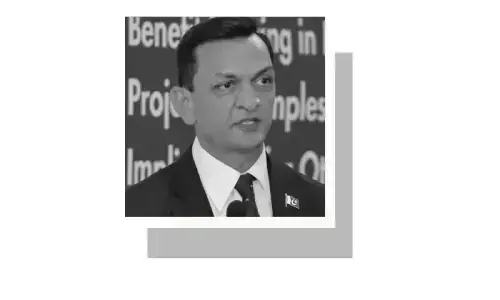
Separately, Adviser to the Finance Minister Khurram Schehzad, in a post on X, explained the mechanism used to determine fuel prices.
He said petrol and diesel prices were calculated on the basis of the average Platts benchmark rates during the pricing period, along with exchange rate adjustments, rather than the cost of a particular shipment purchased weeks earlier.
Mr Schehzad said oil companies were legally required by the Oil and Gas Regulatory Authority (Ogra) to maintain about 20 days of mandatory stock, a level that had recently been increased due to regional tensions.
“This means companies are continuously selling fuel while simultaneously buying new cargo at prevailing international prices to replenish the same inventory,” he said. “So, when a litre of fuel is sold today, it must be replaced with a litre purchased at current international prices to keep the reserve at required levels.”
He added that what was often described as “inventory gain” effectively disappeared because companies had to replenish stocks at higher prices.
“When international prices fall, companies are forced to sell inventory purchased at higher prices at lower regulated prices, resulting in significant inventory losses,” he said.
Published in Dawn, March 8th, 2026