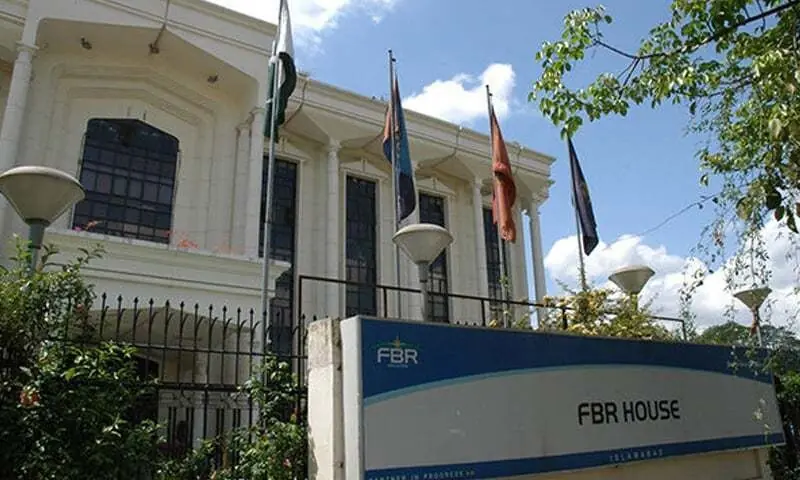


ISLAMABAD: The Federal Board of Revenue (FBR) has launched the design phase of a Digital National Cargo Tracking System (CTS) and an e-Bilty mechanism to curb smuggling, fake and flying invoices, and facilitate legitimate trade.
As part of the initiative, the FBR on Thursday signed a contract with a South Korean-based company to conduct the strategic feasibility assessment and develop the solution design for the CTS and e-Bilty mechanism. The company will complete the design work within six months.
The project, financed by the World Bank under the Pakistan Raises Revenue Programme (PRRP), is being led by the National Targeting Centre (NTC). It seeks to replace the traditional, manual, paper-based goods transport document, locally known as the ‘Bilty’, with a centralised, technology-driven electronic transport waybill known as the e-Bilty.
FBR Chairman Rashid Mahmood Langrial said the project will be implemented within 1.5 years after the completion of the design work. He said the implementation phase will involve multiple stakeholders.
System to be implemented in 1.5 years; e-Bilty mechanism to curb smuggling, boost revenues
He said the CTS and e-Bilty mechanism will help end sales tax fraud and curb smuggling. He said the system will play an important role in monitoring local production and documenting imported goods.
Under the system, each vehicle will be assigned a unique ID, visible from a distance and easily readable by installed devices. The details of every cargo will be linked to its ID and accessible to customs officers on the road.
Vehicles with a strong compliance record will be allowed to pass through a green channel and will not be subjected to physical checks on the road by customs officers. Such vehicles will also be recommended to other authorities for exemption from routine inspections.
Mr Langrial said vehicles in the yellow category will be subject to on-the-road physical checks. He said that every invoice issued will now have to be supported by evidence of transport movement, which will help eliminate the issuance of fake and flying invoices.
The chairman said the system will be implemented in phases. In the first phase, large companies and major importers will be brought into the system as they represent fewer players but account for large trade volumes. He said the system will initially operate voluntarily, but it will later become mandatory for all vehicles.
Currently, the reliance on manual checks by multiple agencies and paper documentation causes significant bottlenecks, prolongs transit times for legitimate traders, and creates opportunities for tax evasion and smuggling.
The envisioned CTS platform will enable the real-time tracking of commercial cargo from the point of origin to the destination. By generating an e-Bilty with a unique, instantly verifiable QR code, the system will allow Customs enforcement teams to efficiently segregate compliant from non-compliant cargo.
“This initiative is a cornerstone of our broader vision for a digital and transparent economy,” FBR chairman said. By integrating the CTS with existing systems like WeBOC, STRIVE (Sales Tax Real-time Invoice Verification), and the Anti-Smuggling Portal, “we are closing the loopholes that allow for fake sales tax invoices and mis-declaration of goods, the chairman said, adding this ensures a level playing field for honest businesses and secures the nation’s revenue”, he added.
Published in Dawn, March 6th, 2026