CDA seeks 45,000 saplings after felling 30,000 trees in Islamabad


 0
0
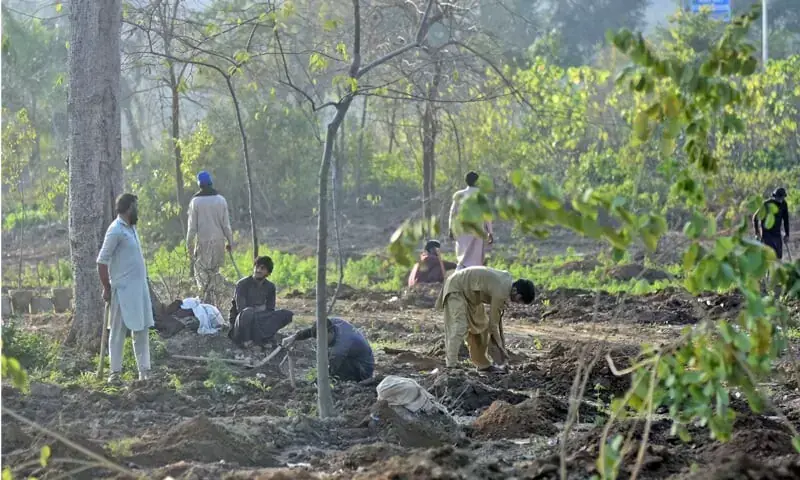

ISLAMABAD: The Capital Development Authority (CDA) has requested the Ministry of Climate Change to provide saplings to compensate for the 30,000 fully grown trees chopped in the federal capital.
In a letter to the ministry, the director environment of the CDA provided a list of indigenous trees the civic body requires for the spring plantation drive. The authority has requested 45,000 saplings of species including Arjan, Kachnar, Amaltas, Jacaranda, Tecoma, Siris (Shreen) and Phulai.
The request was made for the provision of plants for the spring tree plantation campaign as replacements for paper mulberry trees across Islamabad, which the authority described as an invasive species.
Four months ago, the CDA chopped nearly 28,000 to 29,000 fully grown trees. The civic body maintained that it had removed paper mulberry trees in line with orders of the Supreme Court of Pakistan.
Amid public outcry over the felling of thousands of trees, both the CDA and the Ministry of Climate Change maintained that paper mulberry trees, a major cause of allergies and linked to deaths among chronic asthma patients, had been cut following Supreme Court orders issued in 2023. In 2025, the order was again implemented to rid the city of the invasive species, which authorities said was not indigenous and posed health risks.
A number of trees were cut in the H-8 area where a park is being upgraded, while the cutting of decades-old trees also took place in Chak Shahzad for the construction of a dual carriageway for the CDA-DHA housing society. WWF-Pakistan field assessments and documentation provided evidence of the scale and impact of these operations, showing that not all tree removal was limited to paper mulberry or driven solely by public health concerns related to pollen and allergies. The findings underscored the need for structured, transparent and science-driven urban tree management.
Talking to Dawn, CDA Director Environment Akhtar Rasool said the list had been provided after a request from the climate ministry.
According to a CDA source, Musadik Malik had met CDA Chairman Muhammad Ali Randhawa, during which the issue of tree plantation was discussed.
However, a source in the Ministry of Climate Change said it was not the practice for the CDA to acquire saplings for plantation drives from the ministry. “CDA has its own nurseries and had never made such a request. Saplings provided for the Million Tree Tsunami campaign were from nurseries situated in provinces,” the source said.
Published in Dawn, March 6th, 2026