Lahore Police foil bid to storm US Consulate during protest


 0
0
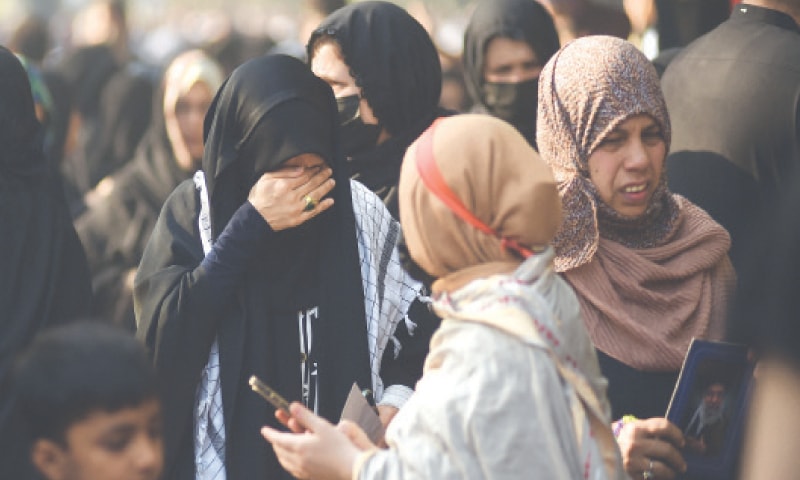

LAHORE: Hundreds of activists of Majlis Wahdatul Muslimeen (MWM) assembled outside the US Consulate in Lahore and tried to barge into the building catching the police off guards at around 11am.
However, a few policemen on routine duty around the Consulate managed to push back the activists protesting the US-Israel attack on Iran.
Meanwhile, the Punjab government on Sunday imposed Section 144 across the province for seven days banning assembly, gathering, procession/ sit-in of four or more persons and display of arms. The order shall remain in force for a period of seven days, unless modified or withdrawn earlier.
Some protesters divulged to Dawn that one of their colleagues scaled the boundary wall of the Consulate and was held up by the security guards. However, as police reinforcement came by that time, a police inspector talked to the Consulate security and secured release of the protester.
The MWM had planned the protest at 3pm. But its activists gathered at the venue much earlier.
Govt bans public gatherings over fears of sectarian unrest and after clash with protesters
Police have cordoned off the area as activists of the Tehreek Bedari Ummat-e-Mustafa are marching from Punjab Assembly to join them at the Consulate.
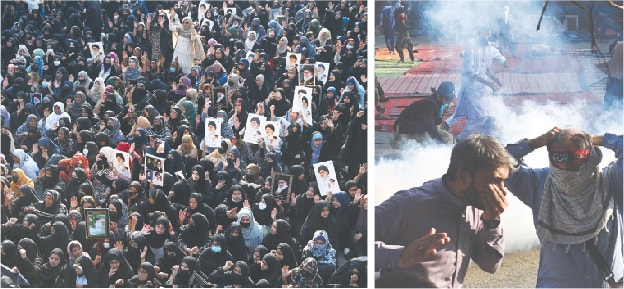
The protesters, including a large number of women, were carrying portraits of Iranian supreme leader Ayatollah Ali Khamenei and raising slogans against the USA and Israel. The martyrdom of Ayatollah Ali Khamenei has been widely condemned by people from all political parties and different walks of life.
Punjab Information Minister Azma Bukhari has said that the martyrdom has grieved the people of Pakistan. She said that the government has extended all-out diplomatic and moral support to Iran and condemned the uncalled for US-Israel attacks on the neighbouring country even in the United Nations. She appealed to the people to remain calm and peaceful while protesting the attacks.
PPP Punjab General Secretary Hassan Murtaza, parliamentary leader in Punjab Assembly Ali Haider Gilani, central deputy information secretary Munawwar Anjum, Barrister Amir, Zulfikar Badr and others have also condemned the US-Israel attacks on Iran that led to the martyrdom of Ayatollah Khamenei. They said the loss is very grave not only from the Iranian but also Pakistanis.
Jamaat-i-Islami activists offered funeral prayer in absentia for Ayatollah Khamenei in various towns, while central deputy emir Liaquat Baloch condemned the unprovoked US-Israel attacks on Iran.
Meanwhile, a complete ban has been imposed on carrying, display, or brandishing of all kinds of weapons (both licenced and unlicenced) or any destruction causing material in public places.
The Punjab home department issued the order in the wake of credible reports and intelligence from law enforcement and intelligence agencies indicating a serious and imminent threat to public peace, tranquility, and the safety of life and property across the province.
Since people have begun protesting the martyrdom of Ayatollah Ali Khamenei, the Punjab government has reportedly received multiple credible threat alerts regarding possible terrorist activities planned by hostile groups aimed at targeting minorities or Muslim scholars to trigger sectarian unrest. “Assemblies, rallies, gatherings, sit-ins, processions, demonstrations, jalsas and such activities could present a convenient target for such terronst attacks and the possibility of an untoward incident cannot be ruled out,” says the home department order.
The order says there is a strong apprehension that certain political, sectarian, or anti-social elements may engage in activities, assemblies, gatherings, or demonstrations that are likely to cause a breach of public peace, disturb the public order, and create a security risk for the general public and critical infrastructure.
The home department’s order has clarified that the prohibition of assembly of four persons or more will not apply to marriage ceremonies, funeral prayers, and burial processions as well as assemblies of officers/officials in government or semi-government offices for official duty; and courts of law.
The home department has also exempted personnel of law-enforcement agencies and security agencies on official duty from the ban.
Published in Dawn, March 2nd, 2026