Prolonged power outages disrupt life in GB
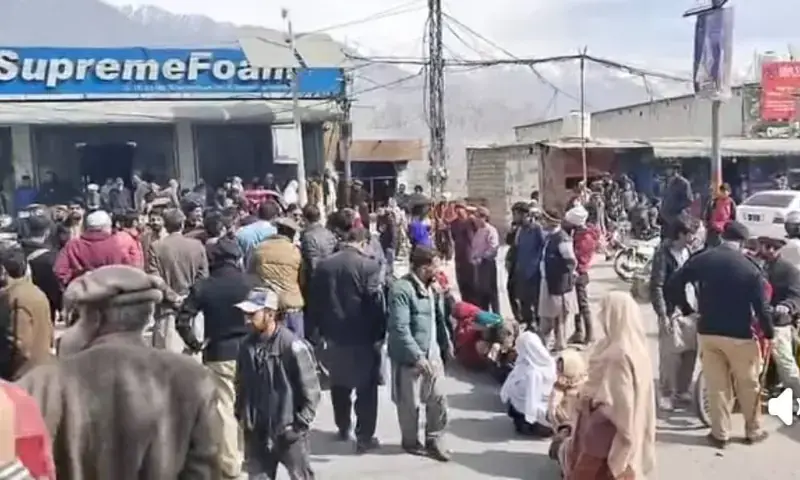
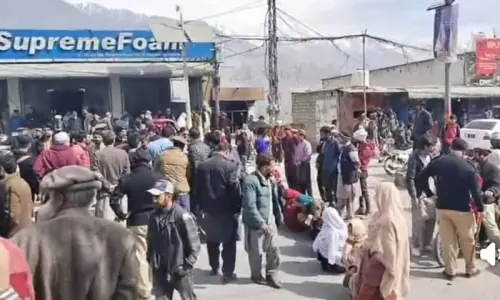
GILGIT: Residents in Gilgit took to the streets on Tuesday to protest prolonged power outages and consequent water shortages in various areas of the city, as other regions of Gilgit-Baltistan also reeled under loadshedding lasting more than 20 hours.
A large number of women and children were part of the sit-in staged at Nadir Chowk in Zulfiqarabad area of Gilgit, where protesters burnt tires and chanted slogans against the government for its failure to supply electricity and water, even during Ramazan.
Demonstrations were also staged in other areas of Gilgit-Baltistan.
According to protesters, life has come to a standstill with barely two hours of low-voltage electricity supply. Due to a lack of electricity, they said they could not even operate their water pump, leading to shortage over the past several days. “Life is at a standstill; it feels like we are living in the stone age,” protesters said.
Residents take to streets in Gilgit as ‘20-hour-long blackouts’ cause severe water shortage
A woman protester said their area was shrouded in complete darkness for the past 10 days, as the power transformer in their neighbourhood was not functional. The residents said they had to rely on private water tankers and most of them could not afford these tankers. They added that the locals, particularly women, were most affected by the situation.
A resident, Irfan Hussain, said it was shameful that the government could not provide electricity and drinking water to residents. He added that the crisis affected the local economy and tourism as well.
They blasted the government for its non-serious attitude and asked those at the helm to address their concerns.
The power outages also impacted those who rely on freelancing and remote work to earn income and left scores without work. According to residents, the cellular networks had also been affected as several mobile towers had become non-operational due to outages. A Pakistan Telecommunication Authority official told Dawn that mobile and internet services were sluggish since private networks could not afford to operate towers using power generators for long hours.
People in Skardu, Hunza, Nagar, Diamer, and other GB areas were also facing outages lasting more than 20 hours.
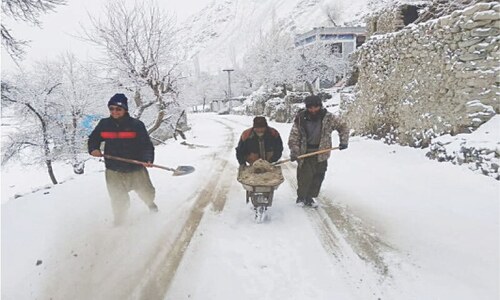
According to the GB Power Department, the electricity generation in the region depends on hydropower projects, and a decrease in water flow during the winter season impacts power generation. The situation improves after April.
Published in Dawn, February 25th, 2026