Dower must be paid immediately for marrying sans wife’s consent: LHC
• Verdict notes marriage remains legally intact as ‘mere assertion of oral talaq insufficient’
• Justice Abid Chattha observes dowry claims must be determined strictly on evidence, not conjecture
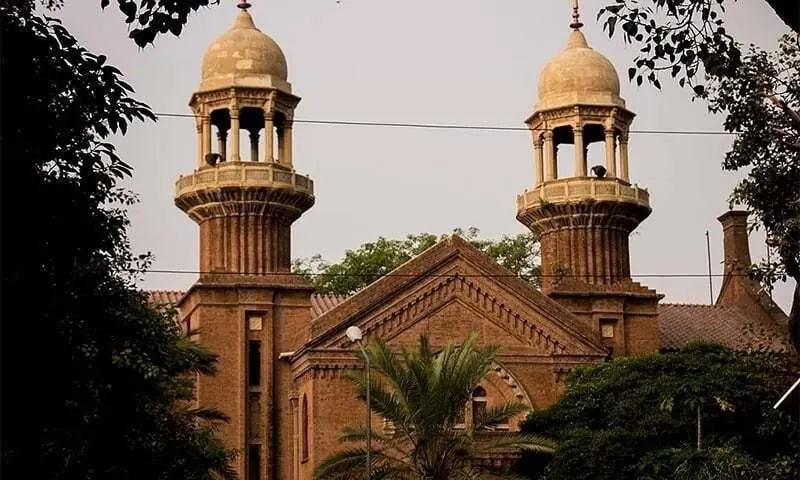
LAHORE: The Lahore High Court (LHC) has ordered a man to pay Rs1 million as deferred dower and monthly maintenance to his wife after holding that contracting another marriage without prior permission makes the entire dower immediately payable under the Muslim Family Laws Ordinance, 1961.
Justice Abid Hussain Chattha issued the judgement, deciding two cross writ petitions filed by Mehnaz Saleem and her husband Kashif Iqbal, challenging concurrent and appellate findings of a family court and additional district judge (the appellate court), Sialkot.
Ms Saleem had filed a suit seeking recovery of deferred dower (Rs1m), maintenance allowance, and dowry articles. The family court had partially decreed her suit, awarding Rs15,000 per month as maintenance for the Iddat period, Rs1m as deferred dower, and dowry articles or their alternate value of Rs1,000,500. Both parties filed appeals against the decision.
The appellate court dismissed the wife’s appeal and partially allowed the husband’s appeal, setting aside the maintenance and dower awards and reducing the alternate value of dowry articles to Rs400,000.
The matter was subsequently brought before the LHC.
On the issue of deferred dower, the LHC judge ruled that Section 6(5) of the Muslim Family Laws Ordinance created a statutory exception to the general rule that deferred dower became payable only upon dissolution of marriage.
The provision mandates that if a husband contracts another marriage without prior written permission of existing wife/wives or the Arbitration Council, he becomes immediately liable to pay the entire dower—whether prompt or deferred—to the existing wife.
Justice Chattha noted that the husband, in the present case, had contracted further marriages without obtaining the mandatory permission and had already been convicted on the wife’s complaint. His appeal against conviction had also been dismissed. In these circumstances, the judge held that the entire deferred dower of Rs1m became immediately payable. Justice Chattha observed that the marriage, solemnised on Nov 27, 2021, remained legally intact as no valid divorce had been established on record. The judge noted that there was no “divorce effectiveness certificate,” and mere assertion of oral talaq was insufficient.
Referring to the SC judgement in Ambreen Akram v. Asaullah Khan (2026 SCMR 1), the judge held that a wife’s right to maintenance flows unconditionally from a valid marriage and constitutes a binding legal duty.
The judge found that the wife had been separated within one month of marriage and there was no convincing evidence that she left the house without lawful cause. The husband had also contracted subsequent marriages without prior permission.
The judge, therefore, held the wife entitled to maintenance at the rate of Rs15,000 per month with effect from Dec 27, 2021, with a 10 per cent annual increase, until her lawful entitlement subsists.
Regarding dowry articles, the LHC judge restored the findings of the family court, holding that the appellate court had erred in reducing the quantum on the basis of generalised social assumptions about second marriages.
Judge observed that dowry claims must be determined strictly on the basis of evidence and not on presumed social patterns or conjecture. He maintained that the family court had properly appraised oral and documentary evidence and awarded only those articles that were satisfactorily proved, or their depreciated alternate value. Consequently, the judge dismissed the husband’s petition and partially allowed the wife’s petition, declaring her entitled to deferred dower of Rs1 million, maintenance at Rs15,000 per month and dowry articles as decreed by the family court.
Published in Dawn, February 15th, 2026