Key facts about the Mount Erebus
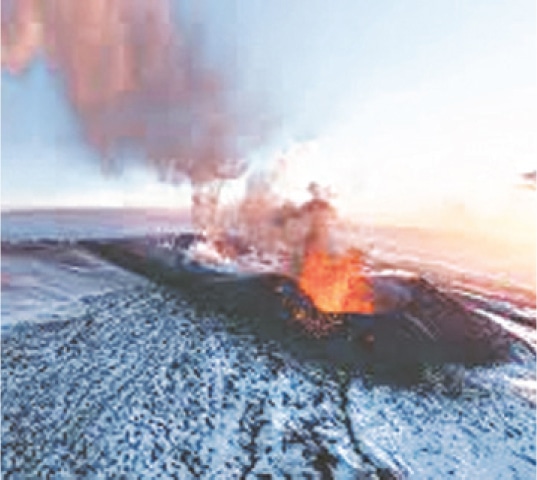
Persistent activity: The lava lake is one of only a few in the world, with magma rising from deep within the earth to create a “pocket of fire” in one of the coldest places on the planet.
Lava bombs: The volcano regularly experiences small Strombolian eruptions, which consist of gas bubbles in the magma causing it to eject rocks, or “bombs,” that can measure up to 10 meters in diameter.
Erebus crystals: The lava bombs ejected from the crater often contain large crystals of the mineral anorthoclase, which are surrounded by volcanic glass (obsidian).
Located on Ross Island in Antarctica, Mount Erebus is the southernmost active volcano with a persistent, red-hot lava lake that has been continuously active since at least 1972.
Unique gold emission: Researchers discovered that the volcano releases roughly 80 grams of solidified, microscopic gold particles into the air every day, which travel far with the volcanic gas.
Environment: The summit, with its 500-600 meter wide crater, is surrounded by extreme Antarctic cold (-40°F), yet the interior is a hot, churning, molten landscape.
Published in Dawn, Young World, February 14th, 2026