Merz urges US to ‘repair, revive trust’ with Europe
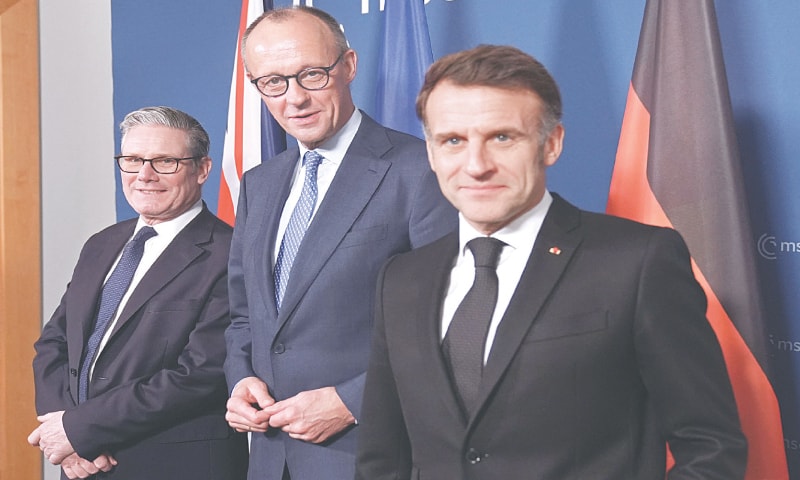
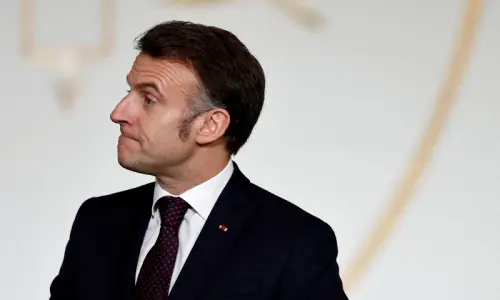
MUNICH: German Chancellor Friedrich Merz, in a speech to open the Munich Security Conference on Friday, called for a stronger Europe to reset its ties with the United States, wanting Washington to “repair and revive trust” in a dangerous new era of great power politics as the old global order crumbles.
Merz warned the US could not go it alone, but also said Europe must beef up its own defences and mentioned confidential talks with France on nuclear deterrence.
The speech underscored how European leaders are increasingly looking to carve an independent path after a year of unprecedented upheaval in transatlantic ties, while also striving to maintain their alliance with Washington.
German leader says even US won’t be able to ‘go it alone’ after end of old global order
Taking his cue from those warning that the international rules-based order was about to be destroyed, Merz said: “I fear we must put it even more bluntly: This order, however imperfect it was even at its best, no longer exists in that form.”
Switching to English at the end, the German chancellor said: “In the era of great power rivalry, even the United States will not be powerful enough to go it alone. Dear friends, being a part of Nato is not only Europe’s competitive advantage. It is also the United States’ competitive advantage.
“So let’s repair and revive transatlantic trust together.”
Rubio strikes conciliatory tone
US Secretary of State Marco Rubio also said transatlantic ties faced a “defining moment” in a rapidly changing world, but struck a more conciliatory tone that contrasted with remarks by Vice President J. D. Vance last year.
At the same gathering of top security officials last year, Vance had attacked European allies in a speech that marked the start of a series of confrontation with Washington’s partners, who face myriad threats from Russia’s war in Ukraine to massive ructions in global trade.
“I think it’s at a defining moment … the world is changing very fast right in front of us,” Rubio said before departing for Munich.
“The Old World is gone, frankly, the world I grew up in, and we live in a new era in geopolitics, and it’s going to require all of us to re-examine what that looks like and what our role is going to be,” he said.
“(The US is) deeply tied to Europe, and our futures have always been linked and will continue to be,” said Rubio, who is a potential rival to Vance for the 2028 US presidential race.
“So we’ve just got to talk about what that future looks like.”
Merz rejects Vance speech
This year’s meeting comes against a backdrop of multiple conflicts, including wars in Ukraine, Gaza and Sudan.
Transatlantic ties have long been central to the Munich Security Conference, which began as a Cold War forum for Western defence debate.
But the unquestioned assumption of cooperation that underpinned it has been upended.
Underscoring the damage, a YouGov poll of the six largest European countries showed favourability towards the US in Europe hitting its lowest since tracking began in 2016.
Published in Dawn, February 14th, 2026