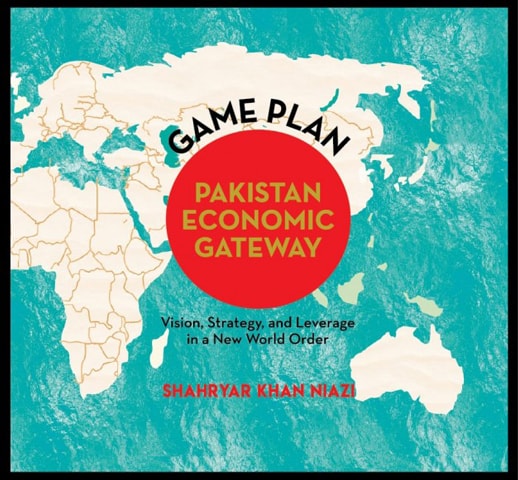
Game Plan: Pakistan Economic Gateway
By Shahryar Khan Niazi
Markings
ISBN: 978-9699748271
200pp.
The areas that constitute Pakistan have served as a gateway for many invaders of the Subcontinent, dating back to at least Alexander the Great’s entry into the region through the Khyber Pass. The trend continued with the Ghaznavids, the Ghurids and the Mughals.
At the same time, these areas have exported agricultural products to neighbouring regions and beyond for millennia. There is evidence that items produced during the Indus Valley Civilisation were sent to Mesopotamia (modern-day Iraq). Indus seals and artefacts such as beads and pottery have been discovered in Mesopotamia, while Mesopotamian goods, such as silver and woollen textiles, have been found at Indus sites.
From its inception, Pakistan has sought to create economic gateways with its neighbouring countries. In 1962, China decided to enhance cooperation with Pakistan by constructing the Karakoram Highway. Engineers from the Pakistan Army and their counterparts in China’s People’s Liberation Army completed the highway in 1979, and it was opened to the public in 1986. In 1964, Pakistan, working with Iran and Turkey, established the Regional Cooperation for Development (RCD) as a platform for economic, technical and cultural collaboration.
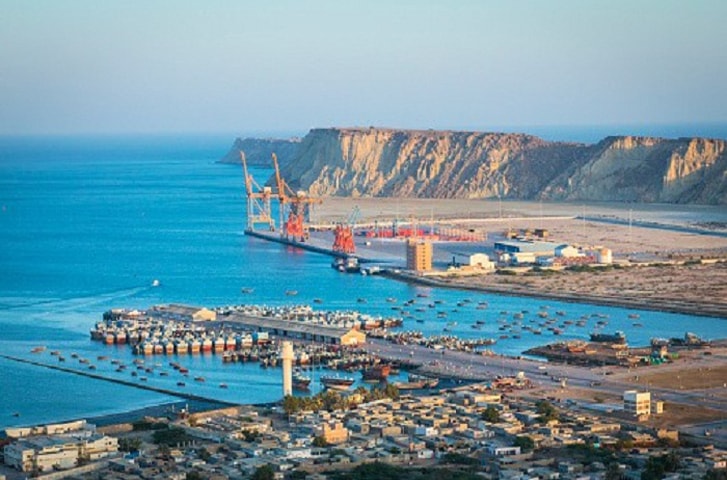
In 2015, China deepened its cooperation with Pakistan by launching the China-Pakistan Economic Corridor (CPEC). Gwadar Port provides Chinese products with a gateway to the Arabian Sea and the Gulf, vastly shortening the distance to markets in the region.
Game Plan: Pakistan Economic Gateway argues that Pakistan could do a lot more than it has so far. It can leverage its strategic location and become an engine of global growth, not just for itself. A series of 33 maps is presented in the book, detailing more than a dozen ‘corridors’ that would connect Pakistan with the world and facilitate trade between nations. The gateways provide a useful blueprint for policymakers to consider and debate.
A recent book argues Pakistan can leverage its strategic location and become an engine of trade and global growth, but seems overly reliant on idealism
Several intercontinental pathways are discussed, not just those connecting Pakistan with neighbouring countries or with the Gulf countries. Chagai in Balochistan is replete with mineral deposits that can be used to make batteries. The book asserts that Chagai can become the renewable energy capital of the world, with its renewable energy resources powering “the mining industry and creating a supply chain of low- and zero-carbon battery minerals.”
The Thar Desert contains one of the largest lignite coal deposits in the world. The author proposes creating the Thar Economic Corridor to allow India to import coal from Pakistan, generating export revenue for Pakistan. This would eliminate the need for India to import coal from elsewhere to fuel its power plants in four states. This sounds good in theory, but trade between the two neighbours is at a standstill and has never reached critical mass.
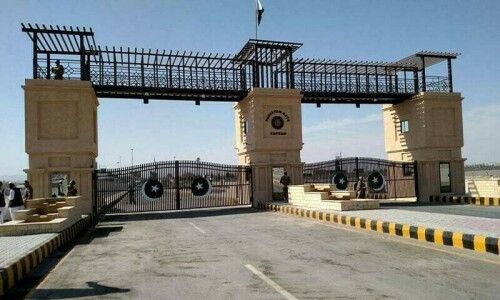
The Pakistan International Border Crossing initiative, according to the author, would cover all authorised international border crossings designed for trade, thus ensuring streamlined operations and encouraging regional cooperation. It would be supported by 14 dry ports and logistical hubs in 11 cities.
The Maritime Trade Corridor would connect the Eurasian continent and global markets, but it will require the creation of multiple ports in Balochistan, requiring billions of dollars. Where will the money come from? Even if it falls out of the sky, there is little evidence that the ports will ever be built. Persistent political tensions in the province have prevented Gwadar Port from yielding any tangible benefits. Indeed, they have even stymied CPEC’s progress.
The author is aware of the challenges that must be overcome before any of the gateways see the light of day. For example, the Samjhauta Express is an international passenger train service running between Lahore and New Delhi and the Thar Express operates between Karachi and Jodhpur. “However, despite their symbolic importance, both of these iconic trains have been suspended since 2019, highlighting the challenges that still lie ahead for regional connectivity.”
The South Asian Association for Regional Cooperation (Saarc) was established in 1985 at the behest of several smaller South Asian countries. India and Pakistan joined years later because of their chronic inability to sit side by side and discuss ways to enhance economic cooperation. Heads of state were supposed to meet annually, but have not done so since 2014. Most observers consider Saarc to be defunct. The South Asian Free Trade Area (Safta), created by Saarc in 2004, has made virtually no progress in the last two decades.
There is little doubt that enhancing its international trade would help Pakistan wean itself off foreign debt. However, there is little evidence that the world wants to live in peace with itself. Today, the world is roiled with conflicts on virtually every continent. The active war between Russia and Ukraine and the China-US rivalry, the Saudi-Iran rivalry, the Saudi bombings in Yemen, the tension between Israelis and the Palestinians, and the civil war in Sudan continue to dominate the headlines.
The Henry Kissinger and Zbigniew Brzezinski quotes cited in the book seem antiquated at a time when the New World Order is being replaced with chaos. The new wave of tariffs emanating from the US will impede, not accelerate, trade between nations. How will the gateways so meticulously sketched out in the book come to pass if nations don’t want to expand trade?
Why will Pakistan become the gateway when it is itself roiled with internal political tensions and suffers from a lingering dispute with India? Similar gateways could be created for any country in the world and, while a few do exist, most don’t, because politics gets in the way.
The book’s narrative flows smoothly and is richly augmented with maps. However, there is little quantification of the benefits that would flow from creating the gateways or the costs that would be incurred in creating them. Maybe these issues could be addressed in a future edition of the book. Even with these caveats, the book is a must-read for those seeking to understand how trade can enhance Pakistan’s economy.
The reviewer is the author of Rethinking the National Security of Pakistan: The Price of Strategic Myopia.
X: @ahmadfaruqui
Published in Dawn, Books & Authors, February 8th, 2026