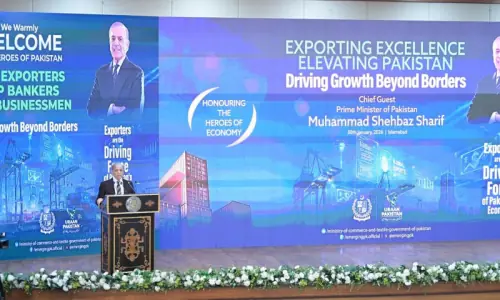
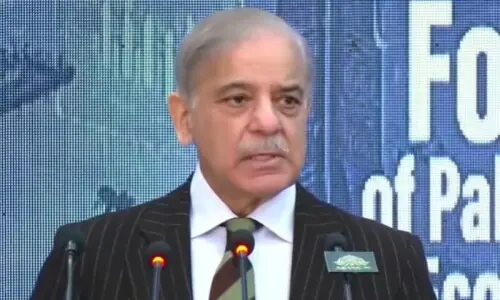
THE generous relief package recently announced by Prime Minister Shehbaz Sharif for an industry burdened with high energy prices, elevated financing costs and an excessive tax burden was a necessary intervention. The move should help to ease cost pressures on producers, bolster domestic productivity and shore up export competitiveness.
With competition intensifying globally — particularly after India’s free trade deal with the EU, which threatens Pakistan’s preferential advantage — the government had no option but to move swiftly to improve exporters’ ‘competitiveness’ to maintain the market share. The package, welcomed by the business community, consists of a cut of Rs4.04 per unit in electricity prices, reduction in wheeling charges to under Rs9 per unit and a decrease in the cost of export refinance to 4.5pc from 7.5pc.
The total size of the relief, however, is unclear as are the steps the government intends to take to offset the resulting revenue loss. It is also not clear if the shortfall will be passed on to other consumers, or if the government will subsidise industry from the budget. This intervention comes on the heels of the State Bank’s decision to slash the cash reserve requirement for banks — a move aimed at injecting additional liquidity into the system to push private sector credit for supporting growth. Together, these steps signal a desire to pivot from stabilisation to growth.
The relief is nonetheless undermined by conflicting signals from the state itself. Even as industry welcomed the package, foreign investors complained that the FBR had issued demand notices for payment of the super tax following the court ruling upholding its legality. This underscores the fact that subsidies cannot substitute for long-delayed structural reforms to improve the investment climate and export competitiveness.
Subsidised energy and credit, and symbolic gestures like blue passports for leading exporters, may help save the current exports. But it will not address the deeper weaknesses: low productivity, regulatory unpredictability, high taxation, weak contract enforcement and a narrow product and market base. Past experience shows that subsidies — a way of compensating businesses for the economy’s inefficiencies — have never boosted productivity or exports.
That said, the government must proceed with restraint as it reorients its economic policy towards growth. A premature or poorly coordinated growth stimulus could jeopardise the country’s hard-won, still fragile macroeconomic stability. The economy’s transition to growth hinges on its ability to expand exports and attract non-debt-creating foreign private investment. These goals cannot be achieved through ad hoc policies and subsidies. Pakistan’s growth challenge lies in comprehensively implementing deep-seated policy and governance reforms aimed at sustainably alleviating the business environment rather than subsidising producers and exporters when under pressure.
Published in Dawn, February 2nd, 2026