SC unhappy with archaic police terms in Sindh

• Holds that Bakhidmat Janaab SHO has no legal status; also Faryaadi and Muddai should be discontinued as they reflect colonial mindset
• Explains SHO is servant of the public, not the other way around
• Wants use of legally accurate local language alternatives
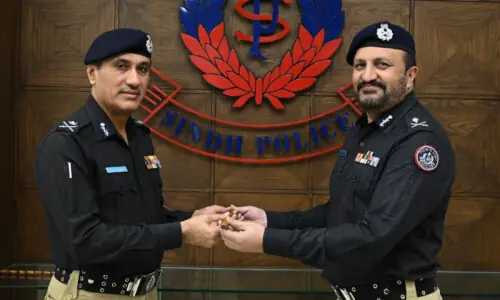
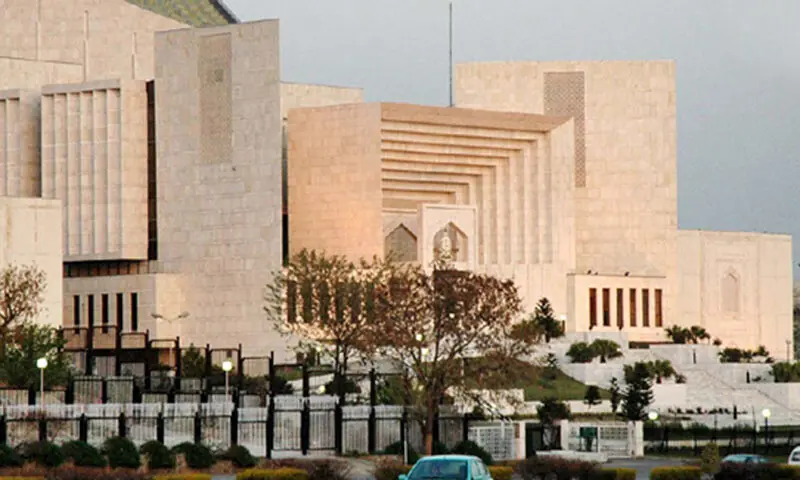
ISLAMABAD: Taking exception to archaic expressions common in Sindh, such as Bakhidmat Janaab SHO, the Supreme Court ordered on Friday that the term be discouraged, noting that it had no legal sanction and that a simple address as Janaab would suffice.
The court observed that applications addressed to police officials using Bakhidmat Janaab SHO incorrectly implied that the citizen was at the service of the station house officer.
In fact, the court explained, the SHO was at the service of the citizen.
The court added that such terminology reflected a colonial mindset, in which subjects of the state approached authorities as a matter of mercy rather than as a right.
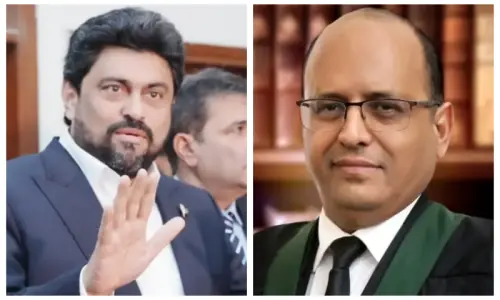
Authored by Justice Salahuddin Panwhar, a member of the three-judge SC bench, the court had taken up an appeal against a July 2, 2021, order of the Sindh High Court’s Hyderabad bench, which had upheld the life sentence of a petitioner, Muhammad Bux alias Shahzaib, under Section 302(b) of the Pakistan Penal Code for the murder of Muhammad Abbass in August 2017.
Headed by Justice Muhammad Hashim Khan Kakar, the SC bench, however, rejected the appeal.
During the hearing, the court noted the use of expressions such as Bakhidmat Janaab SHO, as well as Faryaadi and Muddai, in police proceedings. It ordered that police practices be brought in line with Articles 4, 9, 10-A, and 14 of the Constitution.
Alternatives
The court stated that the use of the terms Faryaadi or Muddai in police proceedings should be discontinued. It added that appropriate and legally accurate alternatives should be used, including Itlaah Deendhar or Shikayat Kandhar in Sindhi, and Itlaah Dahinda in Urdu, to reflect the true legal status of the person furnishing the information.
The judgment explained that describing a citizen as a Faryaadi was legally misconceived and constitutionally impermissible, as it demeaned the individual by portraying them as a seeker of favour rather than a rights-bearing individual invoking the protection of the law.
It added that such terminology undermined the dignity of the citizen, which was inviolable under Article 14 of the Constitution, and weakened the concept of equal protection under the law.
Justice Panwhar observed that police officers were public servants entrusted with constitutional and statutory duties. “They are bound to protect life, liberty, and the security of person, values at the core of Article 9 of the Constitution,” the verdict read.
“Police officer are required to serve the citizens as they are remunerated from public funds. Citizens approach the police as a matter of right, not as a charity grace or indulgence. Any institutional practice that reverses this relationship erodes public confidence in the rule of law and weakens constitutional governance,” it added.
The SC noted that the continued use of Faryaadi reflected an outdated and unconstitutional mindset, in which public authorities were seen as rulers rather than servants of the people — a notion explicitly rejected by the Constitution.
It continued that expressions such as Faryaadi and formulaic salutations like Bakhidmat Janaab SHO were remnants of a colonial and pre-constitutional paradigm. “Despite the constitutional transformation brought about by the Constitution of 1973, vestiges of this mindset regrettably persist through institutional habit,” the judgement regretted.
Published in Dawn, January 31st, 2026