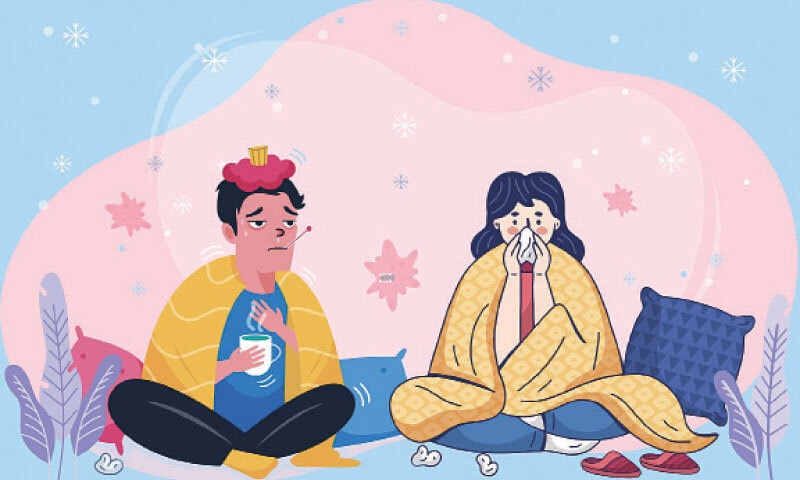

It happens each year and with ever-increasing intensity: there are long spells of no rainfall coinciding with the transition in weather from summer to winter. Smog engulfs many areas across the country, and people — youngsters and elders — get sick.
This sickness results in students being absent from school and lagging behind in the preparation of their exams. It is, hence, important that we mitigate the risk and adopt preventive strategies because, in the prevailing circumstances, the weather conditions are not expected to get any better.
Listen to what your body says
It is common to observe that many youngsters do not wear warm clothes — not because they don’t feel the cold, but because they think they will look odd. When their friends are not wearing sweaters and jackets, they don’t either, even if they are shivering. This is something that ends up making them sick.
Remember, everyone has a different physique and body metabolism. Some people feel the cold weather more intensely; some feel it to a lesser degree. So, it is important to dress not according to how others do, but according to what gives you comfort. Wear a hoodie if you feel the need, even if the temperature is not very low. And while many of you may put on a jacket, remember to also cover your head with a woollen cap, without worrying about your hair and looks.
Seasonal illness affects thousands each year. While the weather cannot be controlled, our response to it can be, and simple preventive habits can make all the difference
And if you feel excessively cold on a sunny day, or the other way round, it is time to consult a doctor.
Adopt cough and sneeze etiquette
All of us must have seen many people cough and sneeze in marketplaces, walkways, schools and colleges, and other public gathering areas. Many diseases spread via respiratory droplets, and the chance of acquiring one of these diseases is higher in the ongoing weather conditions.
You do not have control over your urge to sneeze or cough. However, you can follow respiratory etiquette to prevent the spread of germs. Always keep a tissue paper or handkerchief, and use it to cover your nose and mouth while coughing and sneezing.
Many people use their hands in place of a tissue paper for this purpose. That is not the right approach because, if you unintentionally put your fingers in your mouth, the germs can be reintroduced into your body. In case you do not have a handkerchief or tissue paper, use the sleeve of your shirt or jersey to sneeze or cough into.
Use PPE, as required
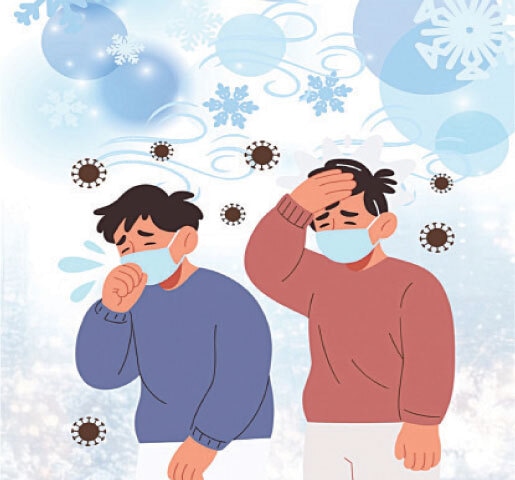
In continuity with the former point, it is also important to use personal protective equipment (PPE) as and when required. If there is a lot of smog, wearing a mask and glasses can minimise respiratory and eye diseases resulting from it.
Also, if you have the flu, wear a mask in public, especially when you go to school or to some public gathering, such as for prayer in a mosque. This will prevent the spread of germs to other people.
Wash hands frequently
Washing of hands frequently is not limited to the ongoing weather, but applicable on each day of the year. There are many germs in our surroundings, in the air and on things we touch. So our hands are the part of our body that come most in contact with such germs. And when we eat or touch our face with dirty hands, the germs invariably enter our body. This can be avoided by frequent hand-washing.
In the context of hand-washing, there is a common misconception. Many people think that using a sanitiser will suffice and there is no need to wash hands with soap and water. However, a sanitiser is only recommended if there is no visible dirt on the hands. If the hands are soiled, they should be washed properly.
Many pathogens gain entry via the oropharyngeal route and cause diseases. Washing hands, especially before eating food, is the only way to prevent this from happening.
Take good care of your hygiene
Winter differs from summer in the sense that there is not much sweating in the former season unless one engages in strenuous activity. This is why many people do not bathe or change clothes as often as they do in summer. In most cases, there is nothing wrong with this approach. However, negligence should not be involved in this aspect. Good hygiene is equally important in winter as it is in summer.
We see people experiencing dandruff and coarse, dry skin in winter. At times, this dryness results in itching and even bleeding due to excessive scratching. This should never happen. Such weather demands frequent use of lotions and ointments, and this is something each one of us should keep in mind.
Moreover, we are now entering the transitional phase of the season, making this an even more critical and much-needed time for attention.
Exercise caution while buying eatables
Homemade food should always be a priority for each one of us. There is no guarantee about the food served in restaurants or by vendors, and a long list of diseases caused by such food exists. However, if you happen to dine outside, always keep a few points in mind.
Instead of buying food from a random street vendor, prefer reputable restaurants; at least they maintain some check on the quality of the food they serve. Secondly, it is better to dine at a restaurant that is frequented by many customers daily, as compared to one that remains vacant for days. In the former case, there is a higher probability that you will be served fresh food rather than food that has been leftover for several days. Lastly, cooked or roasted foods should be preferred over uncooked ones, because heating destroys many germs.
Avoid over-zealous use of OTC medications
Once again, this is something that happens round the clock: people self-medicate for the slightest ailments. If someone has a headache that can easily be relieved by drinking a glass of water and getting some rest, that person still asks for a painkiller. Also, in many households, as soon as someone gets the flu or a sore throat, antibiotics are started without a second thought.
First and foremost, this injudicious use of antibiotics has resulted in antibiotic resistance. Diseases like typhoid are now becoming very difficult to treat because of this resistance. Secondly, all medicines have side effects, whether it is a painkiller or an anti-allergy. Medicines should only be used when the benefits outweigh the risks and when other conservative options to manage the illness have been tried without success. This is something that should always be kept in mind.
Take note of the danger signals
In our society, it is a common dilemma that patients go to hospitals at a very late stage of illness. Diseases that can be easily resolved within days become extremely difficult to treat because of this attitude. Therefore, it is important that each one of us recognises a few common danger signals that warrant urgent medical attention.
If you have a fever that is high-grade and worsening instead of resolving, experience breathing difficulties, or have fainting spells, do not delay seeking expert help.
To sum up, while weather conditions are not in our control, we can certainly avoid disease and maintain a healthy lifestyle by adopting some basic strategies. Prevention is better than cure; instead of spending time and money on treating illness, not letting diseases take hold in the first place should be the preferred approach.
Published in Dawn, Young World, January 31st, 2026