‘They forced us’: PM Shehbaz says Pak-Afghan trade blockade result of Kabul’s inaction against terrorists


 3
3
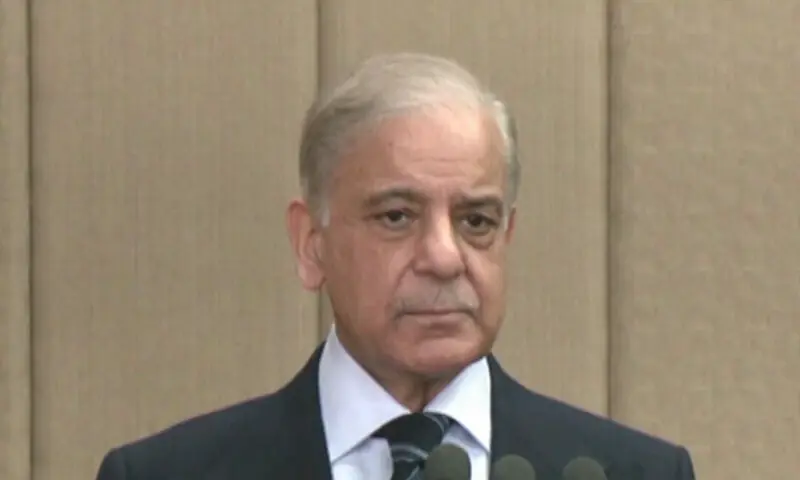

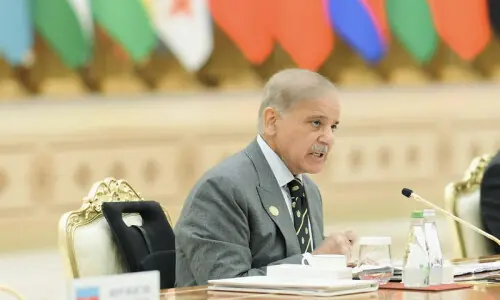
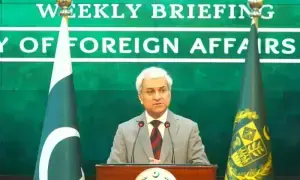
Prime Minister Shehbaz Sharif on Tuesday said Pakistan was “forced” to halt all trade with Afghanistan due to Kabul’s inaction against terrorists operating from its soil.
The Pak-Afghan border has been closed for trade since mid-October 2025, when border clashes erupted. Successive rounds of talks on counter-terrorism mechanisms failed to produce a workable solution despite mediation by Turkiye and Qatar.
“There is a complete blockade of Pak-Afghan trade. It should not have been there, but they forced us,” the premier said while addressing a national workshop event in Islamabad.
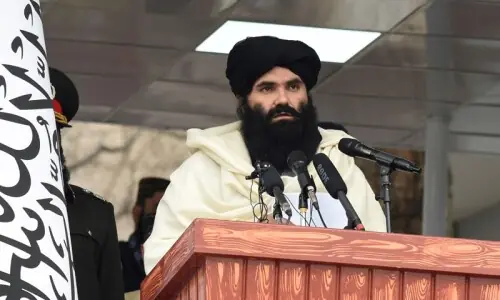
“This time, it must be decided whether Afghanistan wants to live peacefully or not […] They are our brothers and sisters. If the interim Afghan government does not have an interest in this (peace with Pakistan), they should at least have mercy on its people and not oppress them.”
“Rest assured, we will keep trying our best,” the prime minister added.
While trade data shows that the border closure has hit Afghanistan far harder than Pakistan, exporters and the business community have raised concerns over the losses being faced by them.
“It is our neighbouring country, we have to live forever […] what is good for Afghanistan is good for Pakistan, and vice versa,” the prime minister remarked.
He called it unfortunate that the past and the incumbent Afghan governments “did not cherish the hospitality” offered by Pakistan.
The premier added that while international aid was received for the four million Afghan refugees in Pakistan, the country also had to use its own resources.
He further said that Pakistan did no favour to the Afghan people but fulfilled its responsibilities.
“But the way they are paying us back is very upsetting,” the prime minister added.
PM Shehbaz noted that the 2020 Doha Accords were “very clear” in stating that Afghanistan will rein in terrorist activity in the country and will not allow any terrorist to operate from their territory.
Recalling ministers’ various meetings held with Afghan leaders, the premier lamented, “But they did not adhere to a single one of our recommendations.”
Recalling the Pak-Afghan border clashes of October 2025 and the subsequent rounds of talks that failed, he said, “Nothing came of it. We had only one demand that you commit to rein in all terrorist outfits and proxies, whether it is the TTP, BLA, or the resources provided to them by India’s support.”
“Unfortunately, they did not make any serious commitment,” he added.
‘Terrorism resurged after 2018’
In his address, the premier also spoke at length about Khyber Pakhtunkhwa and the surge in terrorism.
Calling the province a “beautiful region” of Pakistan, he praised its people, saying they “never hesitate to sacrifice their lives for their country”.
“Whatever happened as a result of the Afghan war is before you,” the premier said, noting that Pakistan welcomed refugees from across the border and allowed them to live here “like a family”.
“[But] what did Pakistan get in return?” asked the prime minister.
He recalled that “thousands of innocent Pakistanis” lost their lives to terrorism, and that “political forces sympathetic to KP” made sacrifices.
“By 2018, terrorism had been completely eradicated, and everyone knew this was achieved through great sacrifices,” PM Shehbaz said.
He pointed out that in the wake of the 2014 Army Public School attack, the armed forces and the government decided that there would be “no good or bad Taliban”. “Today, there is no such distinction,” the premier asserted.
“But after 2018, what was the reason that this menace resurged?” he asked, adding that “we all know the answer very well”.
“Numerous terrorists were released from Swat, and thousands of people were brought from Afghanistan to live in Pakistan. This was the main reason terrorism resurged in the country,” PM Shehbaz said.
“Today, terrorism has once again dealt a major blow to Pakistan’s development and prosperity, particularly in Balochistan and Khyber Pakhtunkhwa, as well as in other areas.”
“Every day, there is a terrorist incident somewhere,” he added.
While hailing the fact that there could be “no greater sacrifice” than that made by soldiers, he regretted that hatred was being spread on social media and that an “evil attempt is being made to defame the martyrs”.
“They spew venom against Pakistan in chorus with the country’s enemies across the border,” the prime minister said, adding that the nation would continue its fight against terrorism until it is completely eradicated.
Centre’s ties with KP
During his address, the prime minister was also asked about the “disengaged” youth of KP and the Centre’s steps to include them in the national discourse.
“There is a cold war ongoing between the federal government and the KP government. This statement does not align with the facts,” he said.
The premier said he had spoken by phone with KP Chief Minister Sohail Afridi on the day he was elected and had offered him his “full support” for the development and prosperity of the province.
“He thanked me. [But] after that, he did not contact me again,” PM Shehbaz noted, recalling that he had again invited the KP CM to work together during his address in Chitral later.
He affirmed that the Centre was engaged with the youth, pointing out multiple steps being taken by the IT ministry to upskill the youth.
“Pakistan will only develop when all four provinces have an equal part in it,” the prime minister said during his address.
“Without going into any political argument, I want to say that if you compare KP’s journey of prosperity and development over the past 10 years with that of Sindh, Punjab or Balochistan, the truth will become clear,” he remarked.
Noting that resources were allocated to the provinces under the National Finance Commission (NFC) Award, the premier lamented that corresponding development could not be seen “in some places, including KP”.
“What the reason for that is remains another painful question that we must reflect on and answer.”