KP business community raises alarm over prolonged border closure
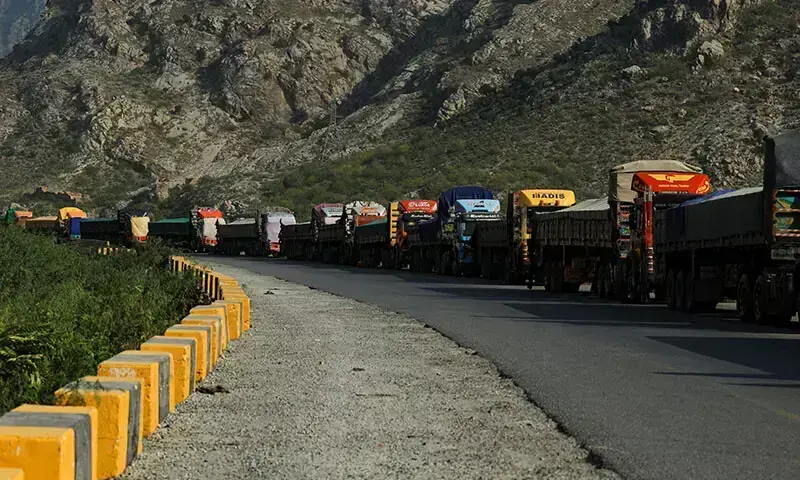


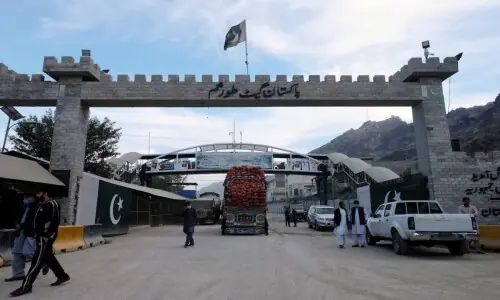
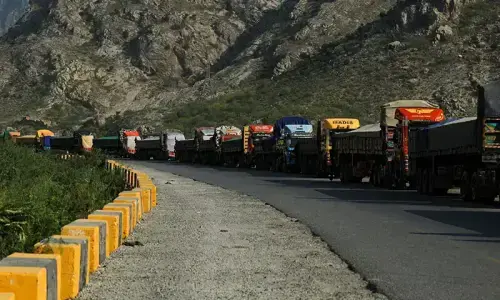
PESHAWAR: The prolonged closure of trade routes between Pakistan and Afghanistan for over three months inflicted massive economic losses running into billions of rupees at both national and regional levels, business leaders said here on Sunday.
They said that the suspension of cross-border trade severely affected exports, bilateral commerce, transportation businesses and government revenue, dealing a major blow to the country’s economy in general and Khyber Pakhtunkhwa’s in particular, where the business community largely depended on trade with Afghanistan.
The views were expressed by senior vice-president of Pakistan-Afghanistan Joint Chamber of Commerce and Industry Ziaul Haq Sarhadi and Sarhad Chamber of Commerce and Industry representative Manzoor Ellahi in a joint press statement issued here.
They said that Khyber Pakhtunkhwa had been disproportionately impacted due to its geographical proximity to Afghanistan, strong ethnic and commercial ties and heavy reliance on cross-border trade. More than 90 per cent of Pakistan’s exports to Afghanistan passed through Khyber Pakhtunkhwa Customs stations, primarily via the Torkham border crossing, they added.
Pakistan-Afghanistan bilateral trade has declined by 53pc
According to the businessmen, the province has suffered an estimated export losses of Rs2.5 billion due to halted shipments of goods including cement, textiles, pharmaceuticals, construction materials and agricultural produce. In addition, KP has lost nearly Rs2.5bn in revenue during the first five months of the current fiscal year owing to reduced trade activity and lower customs collections.
They said exporters in the province were incurring losses exceeding $4 million daily, with stranded goods worth billions of rupees. Perishable goods spoiled, while medicines and raw materials expired, resulting in irreparable financial losses.
They added that Afghan transit trade to Central Asia, which previously involved 4,000 to 5,000 consignments annually, had declined sharply, adversely affecting the logistics and transport sectors as well as related revenues in the province.
Highlighting broader economic consequences, the businessmen warned that prolonged border closure was leading to industrial shutdowns and job losses. They claimed that up to 90pc of KP’s industrial sector depended on Afghan markets for exports and imports and continued disruption could result in widespread factory closures, large-scale unemployment and heightened regional insecurity amid growing economic distress.
Referring to the transport and labour sectors, they said thousands of truck drivers, labourers and daily wage workers in border areas had lost their livelihoods, while commercial activity in markets across Peshawar and other cities had slowed significantly. Farmers and traders had also suffered heavy losses due to spoilage of fruits, vegetables and other perishable goods.
They cautioned that the long-term consequences could be more severe, as Afghanistan was increasingly diverting its trade to Iran and Central Asian states, potentially resulting in the permanent loss of markets for KP-based businesses.
Citing a recent report, they said Pakistan-Afghanistan bilateral trade had declined by 53pc year-on-year, falling to $594 million during the first half of the ongoing fiscal year (2025-26) from $1.26bn in the corresponding period of the previous fiscal year, largely due to the closure of border crossings.
Published in Dawn, January 12th, 2026