Dandelion-style tank defence targets drones

A Russian company has patented a new tank protection system designed to defend against FPV drones, giving armoured vehicles a dandelion-like appearance. The system uses flexible metal rods fitted around the tank to trigger drones before they strike the hull.
The multi-tiered, branching structure features thinner rods on top and thicker ones below, connected by detachable couplings. However, no tanks equipped with the system have yet been seen on the battlefield in Ukraine.
Experts say the design could be effective against FPV drones but would offer little protection against anti-tank missiles or aerial bomb drops. The system is expected to be tested by Russian forces under real-world conditions.
Cashier surprised with $1.7m gift

Ed Bambas, an 88-year-old grocery cashier in Michigan, was handed a cheque for $1.7 million after a young Australian social media influencer launched a fundraising campaign for him.
Bambas, who began working at Meijer at 82 following the death of his wife, explained in a viral TikTok video that he continued working out of financial need.
The campaign, led by 22-year-old Sam Weidenhofer, raised enough to clear Bambas’s $225,000 debt, with the remaining amount left for him to use as he chooses. Overwhelmed by the response, Bambas plans to work a few more weeks before retiring.
Diver lives with rare decompression injury

A Peruvian diver has lived for more than a decade with severe swelling caused by decompression sickness after a diving accident in 2013. Alejandro “Willy” Ramos Martínez was forced to surface rapidly from a depth of over 30 metres off the coast of Pisco when a passing boat damaged his oxygen hose.
The sudden pressure change caused nitrogen bubbles to form under his skin, mainly in his chest and arms, leaving his body permanently swollen. Doctors could reduce only part of the trapped gas, as surgery is too risky because the bubbles are attached to muscles and organs.
The condition is extremely rare, as decompression sickness usually causes pain or nerve damage rather than visible deformities.
China repairs major road overnight
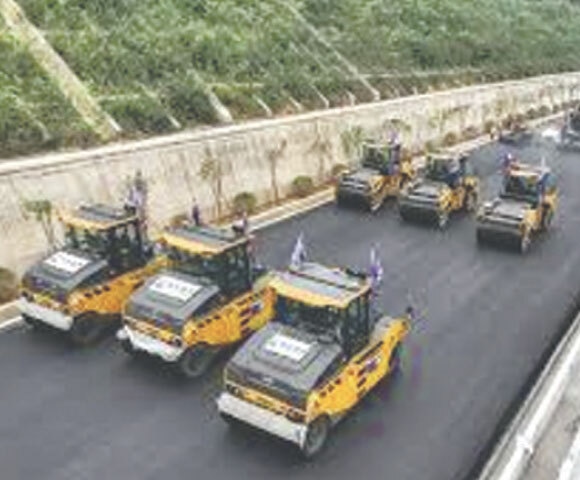
Road workers in Beijing repaired a 2.4-kilometre stretch of the busy Fourth Ring Road in just six hours, laying around 8,000 tonnes of asphalt in a single night — a job that would normally take days and require lengthy closures.
To avoid traffic disruption, the work was carried out overnight, allowing the road to reopen before morning commuters arrived. The feat has been widely shared online as another example of “China speed”, a phrase used to describe the country’s rapid construction and infrastructure work.
Published in Dawn, Young World, January 17th, 2026