Lahore’s air quality improves despite less rain, govt claims


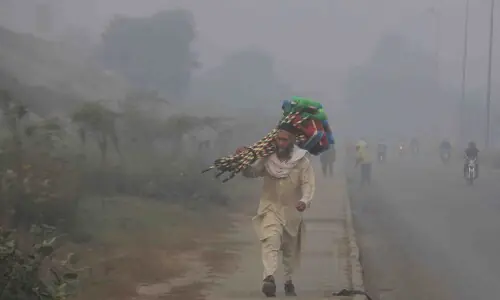
LAHORE: Lahore recorded a consistent improvement in its Air Quality Index (AQI) in 2026 compared to 2025 despite below average rainfall and dry weather conditions during the current season, the Punjab government claimed, relying on an analytical report on Monday.
According to a report of the Environment Protection and Climate Change Department, Lahore recorded consistent improvement in its AQI in 2026, compared to 2025. It notes that the city’s overall AQI improved by 58 points from October 2025 to Jan 10, 2026, reflecting a positive shift in environmental trends. Out of 102 days during the 2025-26, air quality remained better for 60 days, with overall improvement of 20pc.
The report shows month-wise progress, with AQI improving by eight points in October, 192 points in November and 13 points in December. In January, during the first 10 days alone, the AQI showed an improvement of 28 points compared to the same period last year.
In October 2025, the average AQI stood at 205, compared to 213 in October 2024, with 16 days classified as having better air quality. November 2025 saw a major improvement, with the average AQI dropping to 261 from 453 in November 2024, a reduction of 192 points, and 23 days recorded as better air quality days.
In December 2025, the average AQI was 247 compared to 235 last year, while 14 days still fell in the better air quality category. During the initial 10 days of January 2026, the average AQI was recorded at 192, down from 220 during the corresponding period last year. Seven out of nine days showed improved air quality, with an overall improvement of 33 points.
The report attributes the improvement to the government measures taken on the directives of the chief minister, including indiscriminate action against smoke-emitting vehicles, substandard fuel and industrial emissions.
It states that data-driven policy-making, enhanced field monitoring and an effective penalty system have contributed to reducing air pollution.
Further measures included strict enforcement of environmental laws, inter departmental coordination, deployment of smog squads and the use of modern equipment to ensure timely action at pollution hotspots. Traffic control initiatives and industrial regulation also played a key role in curbing the spread of smog.
The report adds that during the 2025 smog season, there was a noticeable reduction in days falling in the hazardous category.
Minister of Environment Protection and Climate Change Marriyum Aurangzeb termed the protection of public health the top priority of the government. She said that reforms and modern monitoring systems had been introduced to ensure the provision of clean air to citizens.
Published in Dawn, January 13th, 2026