THE Beijing summit between US President Donald Trump and his Chinese counterpart Xi Jinping was never likely to produce a grand result. Too much mistrust has accumulated, and the disputes dividing Washington and Beijing now extend far beyond tariffs.
Yet the meeting still mattered because both sides met with an interest in preventing relations from becoming even more volatile at a moment of widening global instability. The summit’s economic outcomes were limited but not insignificant.
China reportedly agreed to expand imports of American agricultural goods and renew approvals for US beef exporters, while both governments signalled their willingness to continue negotiations over tariffs and market access. These steps may provide some reassurance to businesses rattled by years of tariff escalation and supply-chain disruption.
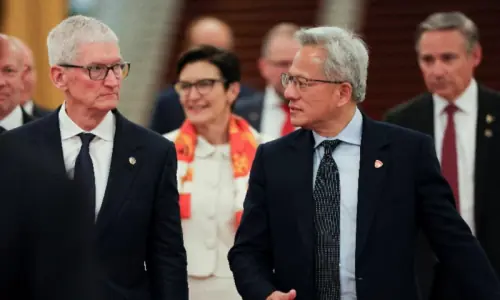
Still, the absence of a major trade breakthrough was striking given the scale of the US delegation. Senior economic officials travelled alongside executives from major US technology, manufacturing and financial firms, many of whom had hoped for clear progress on investment conditions and commercial curbs. Instead, several of the understandings announced later were described by Beijing itself as preliminary.
The most contentious issues remained untouched. Washington’s restrictions on advanced semiconductors and AI-related technology remain in place, while China continues to hold leverage over rare earths and industrial supply chains critical to global manufacturing.
Both economies remain intertwined, yet both are trying to reduce dependence on the other. That contradiction now sits at the centre of the relationship.
The summit also produced limited alignment on the Middle East crisis. Both sides reportedly agreed on the importance of keeping the Strait of Hormuz open and preventing further disruption to global energy supplies as the Iran conflict continues to unsettle markets.
Washington also appeared to secure tentative Chinese support for discouraging further regional escalation and preventing Iran from advancing its nuclear ambitions. While these understandings remained broad, they show recognition in both capitals that a wider regional conflict would have economic consequences far beyond the Middle East.
Taiwan, however, remains the issue with the greatest potential to destabilise the relationship. Mr Xi reportedly warned Mr Trump against crossing Chinese “red lines” on the island’s status and urged him not to let US-China ties fall into the “Thucydides Trap”, the idea that rivalry between a rising power and an established one can slide into conflict.
The message reflected Beijing’s growing insistence that strategic competition should not become a path towards confrontation. That may ultimately have been the summit’s central purpose.
Washington and Beijing are no longer pursuing genuine strategic trust. What they appear to be seeking instead is something narrower but perhaps more realistic, which is enough restraint and communication to stop rivalry from hardening into direct conflict.
Published in Dawn, May 17th, 2026