

Pakistan’s remittance story has its roots in the US’s long-standing entanglement with oil markets and its support for Israel. In 1973, Arab members of Opec imposed an oil embargo on the US in retaliation for that support.
The resulting shock saw oil prices jump from around $3 to nearly $12 per barrel, according to the Association for Diplomatic Studies and Training. The sudden influx of petrodollars supercharged growth across the Gulf that required large volumes of blue-collar labour.
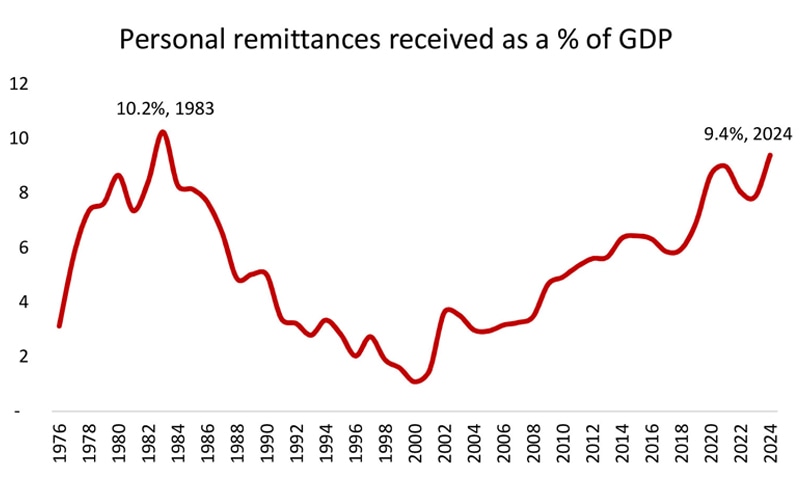
In Pakistan, this coincided with a period of sweeping nationalisation under Zulfiqar Ali Bhutto, which pushed unemployment higher. Pakistani labour moved in large numbers to the region, driving remittances to a peak as a percentage of GDP in 1983.
Since then, while Arab states continue to flex their oil muscle, Pakistani labour is less welcome. Yet, the country’s reliance on consumption-oriented remittances has only deepened as exports remain stagnant.
Today, Pakistan’s dependence on remittances, however, has hardened into a structural vulnerability.
Published in Dawn, The Business and Finance Weekly, January 12th, 2026