Protests erupt in GB over caretaker cabinet appointments
• Parties, civil society reject interim set-up over lack of representation; question fairness of upcoming polls
• Demonstrators block River Road; eight arrested
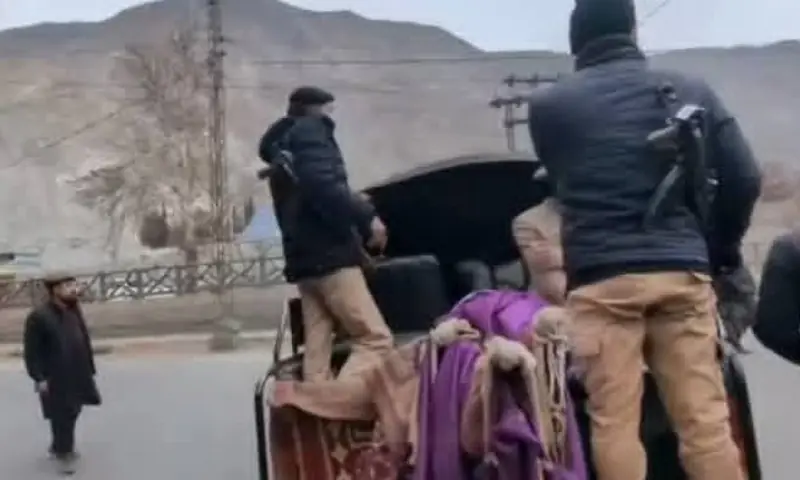
GILGIT: A protest organised by the GB Youth Movement was held outside the Gilgit-Baltistan Chief Minister Secretariat in Chinarbagh on Saturday against the appointment of alleged controversial personalities in the GB caretaker government.
Political and civil society members also announced protests in Ghanche, Nagar and Shigar districts over the lack of representation in the caretaker cabinet.
Protesters alleged that several controversial individuals, who had been part of previous governments and were affiliated with political parties, had been appointed to the GB caretaker cabinet. They said the inclusion of such figures in the caretaker cabinet was part of an attempt at poll rigging in the upcoming GB general elections and was unacceptable. The protesters demanded representation of educated youth and neutral individuals in the caretaker cabinet.
They announced a sit-in protest until the decision to appoint the cabinet members was revoked. During the protest, demonstrators blocked River Road in the Chinarbagh area. Later, Gilgit police arrested eight protesters, including the chairman of the GB Youth Movement.
GB Youth Movement Chairman Azfar Jamshed said that unless the youth were taken into confidence in the formation of the caretaker provincial cabinet, protests would continue not only in Gilgit but also by GB youth living in other provinces of the country.
Political leaders from the PPP, PML-N and civil society members in Ghanche, Nagar and Shigar districts strongly rejected the appointments made without representation from their districts. Former GB Assembly member Sultan Ali Khan, Awami Action Committee Ghanche leader Zakir Hussain Kazim and Mohammad Iqbal rejected the caretaker cabinet.
Mr Kazim termed the non-representation of Ghanche district in the caretaker government as fuelling anxiety and frustration among the people of the district. “This fuels a sense of deprivation among the people of the border area, which may have far-reaching negative effects in the future,” he added.
He said appointing three people from a single district while ignoring three other districts raised serious questions about discrimination and the prospects of free and fair elections. He announced protests if the decision was not reviewed.
Similarly, political leaders from Nagar, including PPP’s Muhammad Ali Akhtar, PML-N’s Javed Hussain and Sajjad Hussain, strongly reacted to the non-representation of Nagar in the caretaker cabinet. They said that despite Nagar’s importance, ignoring its representation was discriminatory and announced resistance until equal representation was ensured.
Political party representatives said that only favoured individuals from certain areas had been appointed to the caretaker cabinet, making the election process suspicious.
Meanwhile, the PML-N, PPP, GB Awami Action Committee and other political parties condemned the arrest of protesters and demanded their immediate release.
Earlier, the appointment of the caretaker set-up had been mired in controversy, as PML-N GB president and former chief minister Hafeezur Rehman had raised concerns over the inclusion of certain individuals in the cabinet. He said the caretaker cabinet should include representation from all districts and ethnicities of the region, but alleged that some appointees were affiliated with political parties and belonged to specific areas.
Mr Rehman expressed concern that the inclusion of controversial figures could raise questions about the fairness and transparency of the upcoming elections. He said it was previously agreed that the 14-member caretaker cabinet would include representatives from all 10 districts and that no individual who had previously been part of a government or affiliated with a political party would be appointed. He said recommending members from certain constituencies and districts and appointing controversial individuals violated the agreed criteria for a caretaker government.
Published in Dawn, January 4th, 2026