War & memes

THE four-day conflict between Pakistan and India in May had the world on tenterhooks as it threatened to transform into a much larger and much more devastating war. Thankfully it was it was decided enough was enough, a ceasefire was called and of course, as we have been reminded repeatedly, we have US President Donald Trump to thank for that.
Apart from the disruption and loss of life, the war resulted in the biggest marketing campaign for Chinese warplanes and air-to-air missiles. And a not-so-glamourous one for the French. While historians recorded the seconds and the minutes of the battles, people, on the other hand, created memes for popular history.
The government in Pakistan undid the restrictions on social media. And the results were spectacular. Instead of giving in to anxiety, the freedom had Pakistanis weaponising sarcasm, unleashing a viral wave of hilarious, biting memes that exposed absurdity with humour. Karachiites especially weren’t forgiving of their civic facilities.
As the conflict magnified in proportion, Indian media blared the Indian navy’s ‘attack’ on Karachi. It was fake news, but enough to give Karachiites a moment to shine online. Social media lit up with memes, transforming geopolitical tension into digital satire. Pakistani netizens often mocked Indian media and political narratives, joking that the only thing ‘under attack’ was credibility itself — poking fun at panic-driven coverage.
But perhaps the standout meme of the conflict was a Chinese creation that mocked the Indians, through a hilarious song and dance with New Delhi’s jets front and centre.
Standing with the oppressed
ONE of the largest efforts to break the Israeli stranglehold of Gaza was made last year in October by the Sumud Flotilla. Activists from all across the globe were on board to draw attention to Gaza’s plight. A total of 500 participants in 40 to 50 vessels were part of the flotilla. Famous personalities included Greta Thunberg, Mandla ‘Nkosi’ Mandela and Ada Colau (former mayor of Barcelona). Among them was Pakistan’s very own ex-senator Mushtaq Ahmad Khan.
A senior Jamaat-i-Islami leader, he was arrested by the Israeli forces soon after they intercepted the flotilla. Senator Mushtaq’s detention highlighted concerns over the treatment of peaceful activists in international waters and reignited debate about the legality and humanitarian impact of the Gaza blockade. Mr Mushtaq described the experience as difficult but reaffirmed his commitment to advocating for Palestinian rights through peaceful means. The incident has resonated strongly in Pakistan, sparking discussions about international activism, diplomatic constraints, and the role of political leaders in global human rights causes.
E-challans & traffic chaos
KARACHI’S chaotic traffic underwent a modern change in 2025 with the introduction of e-challans. People had complained over the years that drivers get away with crimes simply because of the incompetence of those managing the traffic. In order to finally do away with the complaints, a modern traffic enforcement system, aimed at promoting discipline and reducing corruption through digital monitoring, was introduced. And it worked. Cameras were soon catching and penalising drivers not wearing seatbelts. Speeding was curtailed. Cars were snapped standing at the signal, behind the line. A positive step toward smarter urban management was finally here. However, its implementation has sparked public frustration, especially when viewed alongside the city’s severely broken road infrastructure.
Karachi’s roads are riddled with potholes, uneven surfaces, uncovered manholes, and poorly marked diversions. Overflowing sewage, broken traffic signals and faded lane markings are major obstacles to orderly traffic. Motorists are often forced to swerve, slow abruptly or cross lanes simply to avoid damage to their vehicles. In such conditions, e-challans are sometimes issued for unavoidable actions, such as lane violations or sudden stops, leaving drivers feeling penalised for circumstances beyond their control.
Many citizens argue that enforcing traffic laws without fixing roads creates an unfair burden. Broken roads also contribute directly to traffic congestion and accidents. Vehicles stuck in damaged patches slow down entire corridors, increasing the likelihood of violations and fines. Though the e-challan system was applauded, many want the road network to be improved as well. Many citizens believe that traffic discipline cannot be achieved through enforcement alone; it must be supported by safe and functional infrastructure.
Cricket & cross-border politics

THE cricket Champions Trophy 2025 in February ended prematurely for the hosts, Pakistan. A heavy defeat in the opening match versus New Zealand was the start of an ominous journey. One in which they had to play their match against India outside the country. The final too, which India eventually won. The tournament had already been dented with India’s refusal to travel to Pakistan. A deal was reached and Pakistan agreed to play India at a neutral venue and reciprocated when an ICC tournament happened in India. However, this was definitely nothing compared to what came later.
During the Asia Cup in September, hosted by Pakistan, played in the UAE, in the shadow of the May conflict between Pakistan and India, the men in blue refused to act gentlemanly. Before the start of the tournament, India threatened to boycott Pakistan. Then when it did play them, three matches, all of which India won, the players were instructed not to shake hands with the men in green. When India won, they refused to collect the trophy from president of the Asian Cricket Council Mohsin Naqvi, who is also chief of the Pakistan Cricket Board and the country’s interior minister.
The cricket world was flabbergasted. The gentleman’s game was no more. The trophy is still with the ACC chief and India continues to insist that they will not receive from Mr Naqvi. Still despite the shenanigans, the excitement of the rivalry is one of the most sought-after sporting moments in the field as well as on TV. The match result still makes headlines. Everyone’s looking forward to a good game of cricket. And nothing else.
Socialist Zohran to lead capitalist New York
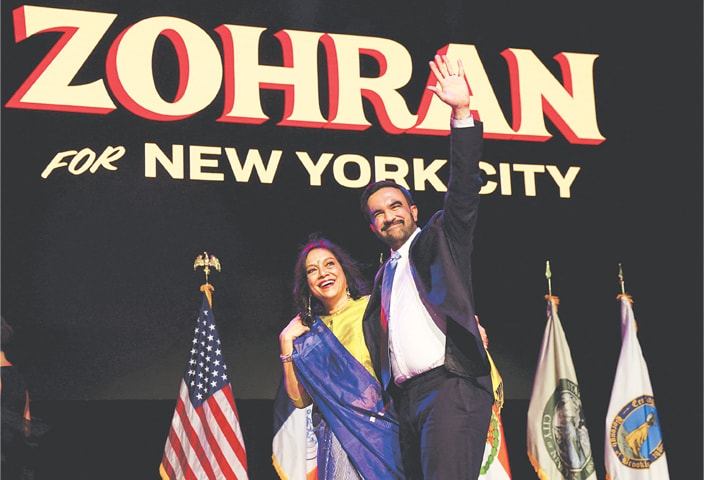
ZOHRAN Kwame Mamdani, the 34-year-old self-described democratic socialist, won the historic election for the post of mayor New York in November 2025. He will take the oath of office on January 1, 2026.
Mamdani, a member of the New York State Assembly, representing Queens, ran on an affordability and equity platform that resonated with diverse voters and secured broad support across progressive coalitions. However, his tenure is also marked by controversy, including criticism over his stance on Israel, where he has refused to change his views. His willingness to take on Donald Trump further elevated his popularity graph in a city that both he and his adversary call home.
Born in Uganda to Indian-American filmmaker Mira Nair and academic Mahmood Mamdani, Zohran’s rise symbolises a generational shift in urban politics. His leadership will be closely watched as he navigates policy priorities and community concerns in America’s largest city.
Expanding tariffs
SOON after starting his second term in January, US President Donald Trump set up strengthening the US economy through questionable measures. Imposing tariffs on friends and partners remains a central and contentious feature of his administration’s economic policy.
A sweeping tariff regime continues to reverberate beyond US borders, reshaping trade relationships and economic performance worldwide. Countries with deep trade ties to the US, such as Canada and Mexico, have faced sharply higher costs on key exports like automobiles, energy and agricultural products, adversely affecting economic growth prospects and potentially leading to job losses. China and India have reduced purchases of American crude, LNG and coal amid rising costs. European Union exporters, particularly in sectors like automotive and agriculture, have reported competitiveness challenges under higher American tariffs.
Pakistan, though in the US’s good books, too was on the receiving end. The textile sector is especially vulnerable. For a brittle economy this is especially troublesome. Efforts to negotiate tariff reductions and diversify export markets are seen as essential to mitigate these impacts.
Reciprocity was expected. China ignored US soybean farmers. India went about seeking trade deals elsewhere. American energy products saw a sharp decline in Asia as trade tensions doubled down. ‘America First’ import duties produced a mixed international response and significant economic effects. As the policy unfolds, debates intensify over whether tariffs are a tool for protecting American industries or a catalyst for higher consumer prices, supply chain disruptions and geopolitical friction.
Valley of the blind
PAKISTAN’S internet connectivity in recent years has faced repeated disruptions, highlighting the growing gap between rising digital dependence, the resilience of national infrastructure and the needs of national security, and 2025 was no different. With an estimated 125 million broadband users and internet penetration crossing 50pc, digital connectivity has become critical to economic and social activity. However, frequent slowdowns, outages and service quality issues have affected users across the spectrum, from households to enterprises and government services.
These disruptions have carried a measurable economic cost. Industry estimates suggest that internet shutdowns and slowdowns have cost Pakistan over $1.5 billion annually in lost productivity, disrupted e-commerce and reduced export earnings from IT and freelancing. Pakistan’s freelance economy alone, comprising nearly 1.5m workers and generating around $2-3bn in annual revenues, is particularly vulnerable to unreliable connectivity.
At the same time, Pakistan continues to aim for the ambitious move toward 5G spectrum, despite structural challenges in the telecom sector. The exit of a major international operator such as Telenor, which served over 45m subscribers, has raised concerns about investor confidence and market sustainability. While policymakers have indicated plans for a 5G auction, the sector continues to grapple with high taxation, declining average revenue per user (ARPU) and limited fibre penetration.
The contrast between ongoing internet disruptions and aspirations for 5G underscores a critical challenge for Pakistan. While 5G represents a forward-looking vision for connectivity and economic growth, its success depends on addressing foundational issues such as network stability, fibre infrastructure, policy consistency and investor confidence. Bridging this gap will be essential if Pakistan is to transition from managing connectivity challenges to fully realising the benefits of advanced digital technologies.
Passing the baton
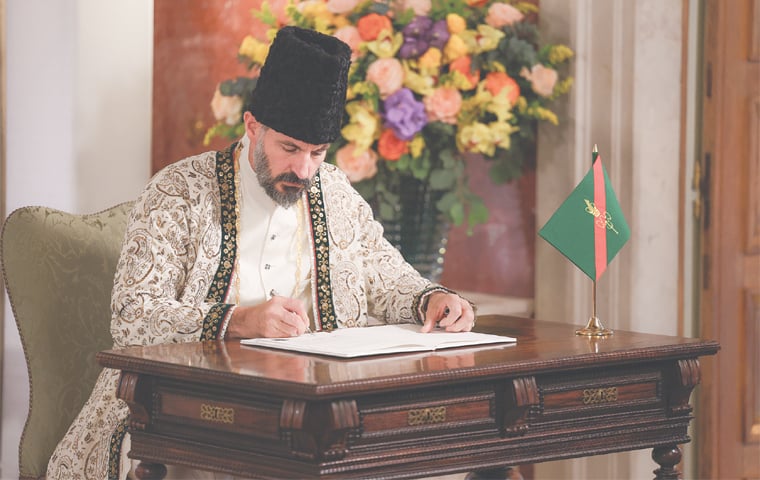
PRINCE Karim Al-Hussaini, Aga Khan IV, the 49th leader of the Ismaili Muslims and a globally renowned humanitarian, passed away at the age of 88 in February. His death was widely mourned across the world, including here in Pakistan where his decades-long contributions to development and social welfare left a lasting impact. Following his death, Prince Rahim assumed the mantle as the 50th hereditary Imam of Ismaili Muslims during the takht nashini ceremony held in Lisbon, Portugal.
Aga Khan IV served as the hereditary Imam of Ismaili Muslims for nearly 67 years. In Pakistan, his work through the Aga Khan Development Network transformed lives through initiatives in healthcare, education, rural development and poverty alleviation, particularly in Gilgit-Baltistan, Chitral, Sindh and other regions. Leaders across the political spectrum paid tribute, acknowledging his deep attachment to Pakistan and his role in uplifting marginalised communities.
Prime Minister Shehbaz Sharif expressed condolences, calling his passing a “colossal loss” and praising him as a man of vision, faith and generosity whose contributions brought hope and progress to communities in need. International leaders and figures, including UN Secretary-General Antonio Guterres, also paid tribute to his legacy of service and compassion.
Prince Karim Al-Hussaini was laid to rest in the Egyptian city of Aswan. His funeral at the Ismaili Centre in Lisbon was earlier attended by more than 300 guests, including Finance Minister Muhammad Aurangzeb, then Canadian prime minister Justin Trudeau, Portuguese President Marcelo Rebelo de Sousa, leaders of the Ismaili community and other dignitaries.
MNCs’ exit and cooling of economy
IN recent years, several multinational corporations (MNCs) have exited Pakistan or scaled down their operations citing a need for global restructuring and lack of business in the country. However, the exits have raised concerns about the country’s economic environment.
Names like Procter & Gamble, Microsoft, Careem, and Yamaha all left or reduced their presence in 2025. These exits came on the heels of major economic, political and as a result operational crises that the country faced. Experts said high inflation, currency devaluation and declining purchasing power have reduced consumer demand, making it difficult for international companies to maintain profitability. Energy shortages and supply chain problems, especially in a post-Covid scenario, have also impacted the market.
Policy inconsistency and regulatory uncertainty, frequently fluctuating taxation policies and compliance requirements have increased operational costs for multinational firms. Many companies found it difficult to plan long-term strategies in an unpredictable policy environment.
The exit of MNCs has economic consequences, including job losses, reduced foreign direct investment, and a decline in technology transfer and global best practices. However, this situation also highlights the need for structural reforms. By ensuring policy stability, improving ease of doing business, and supporting investor-friendly measures, Pakistan can work towards restoring confidence and attracting multinational companies in the future.
Catholics elect a new leader
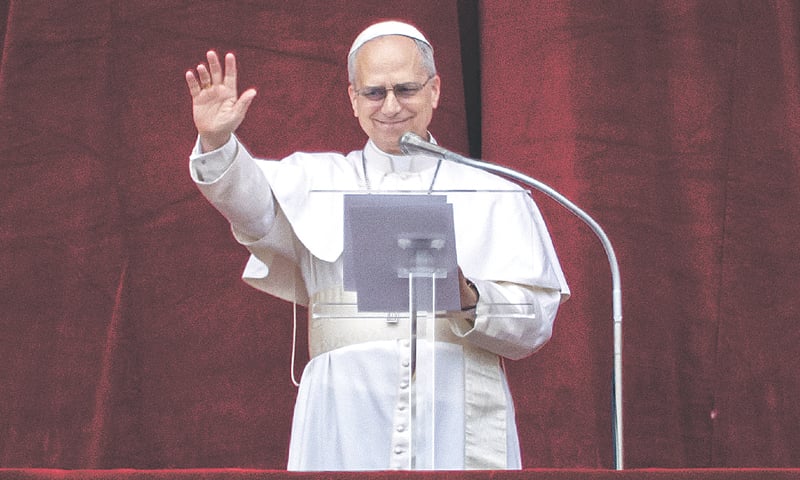
CARDINAL Robert Prevost was elected in a surprise choice to be the new leader of the Catholic Church, taking the name Leo XIV, becoming the first American pontiff in May. He became the 267th Pope after the death of Pope Francis, who was the first Latin American Pope and had led the Church for 12 years.
Pope Leo appeared on the central balcony of St Peter’s Basilica around 70 minutes after white smoke billowed from a chimney atop the Sistine Chapel, signifying that the 133 cardinal electors had chosen a new leader for the 1.4 billion-member Catholic Church.
Aged 69 and originally from Chicago, Prevost spent most of his career as a missionary in Peru and became a cardinal only in 2023. Ahead of the conclave, some cardinals called for continuity of his predecessor’s work. Pope Francis enacted a range of reforms and allowed debate on divisive issues such as women’s ordination.