NEW DELHI: India’s navy boasts aircraft carriers, submarines, warships, and frontline vessels of steel, as it spreads its maritime power worldwide.
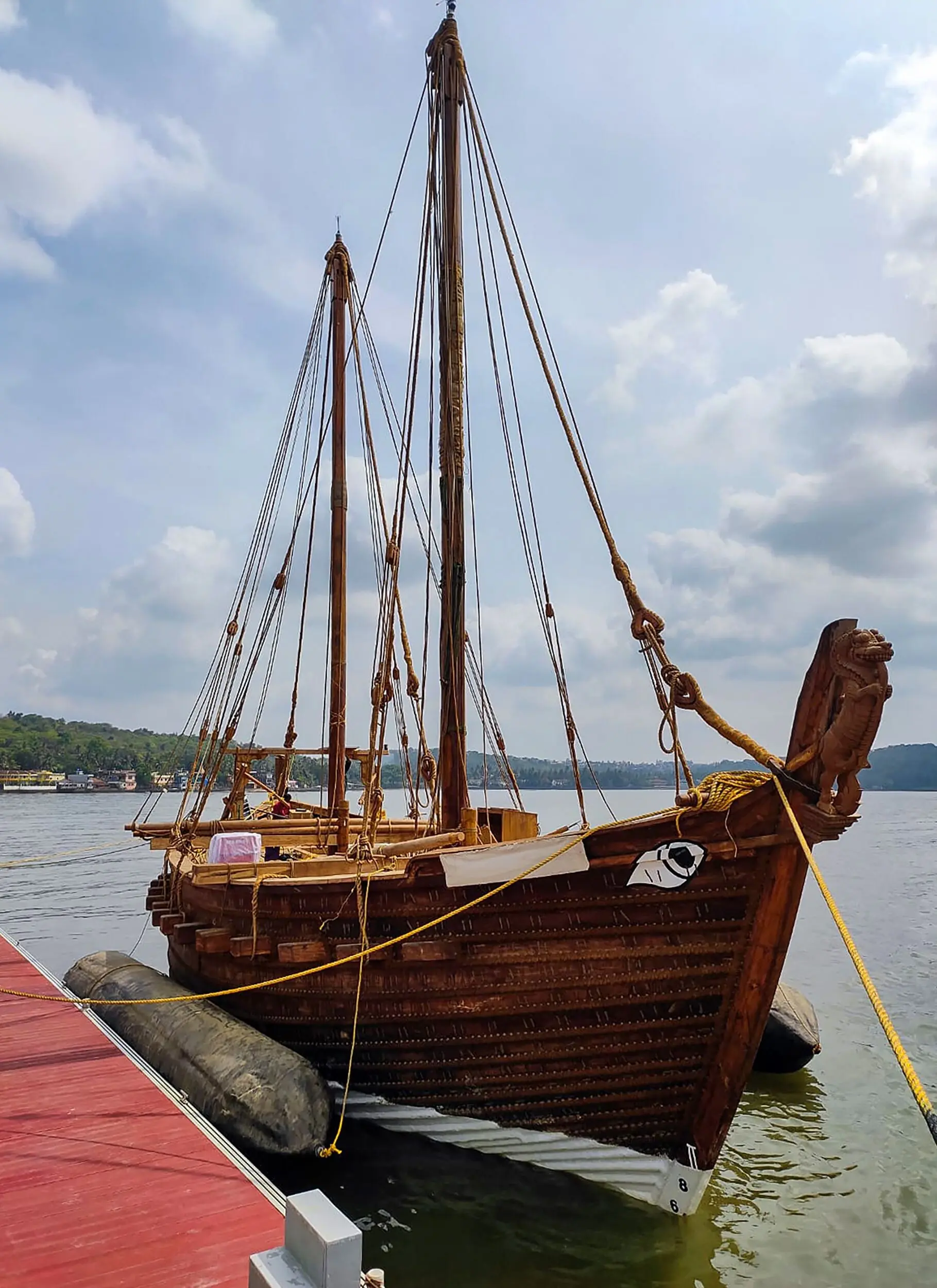
But none of its vessels is as unusual as its newest addition, which set sail on its maiden Indian Ocean crossing on Monday — a wooden stitched ship inspired by a fifth-century design, built not to dominate the seas but to remember how India once traversed them.
Steered by giant oars rather than a rudder, with two fixed square sails to catch seasonal monsoon winds, it heads westwards on its first voyage across the seas, a 1,400-kilometre (870-mile) voyage to Oman’s capital Muscat.
Named Kaundinya, after a legendary Indian mariner, its 20-metre (65-foot) long hull is sewn together with coconut coir rope rather than nailed.
“This voyage reconnects the past with the present,” Vice Admiral Krishna Swaminathan said, flagging the ship off from Porbandar, in India’s western state of Gujarat, on an estimated two-week crossing to the Arabian Peninsula.
“We are not only retracing ancient pathways of trade, navigation, and cultural exchange, but also reaffirming India’s position as a natural maritime bridge across the Indian Ocean.”
It evokes a time when Indian sailors were regular traders with the Roman Empire, the Middle East, Africa, and lands to the east — today’s Thailand, Indonesia, China, and as far as Japan.
“This voyage is not just symbolic,” Swaminathan added. “It is of deep strategic and cultural significance to our nation as we aim to resurrect and revive ancient Indian maritime concepts and capabilities in all their forms.” The journey is daunting. Its builders have refused modern shortcuts, instead relying on traditional shipbuilding methods.
The ship’s 18-strong crew has already sailed north along India’s palm-fringed coast, up from Karnataka to Gujarat.
“Our peoples have long looked to the Indian Ocean not as a boundary, but as a bridge carrying commerce and ideas, culture and friendship, across its waters,” Oman’s ambassador to India Issa Saleh Alshibani said.
Published in Dawn, December 30th, 2025