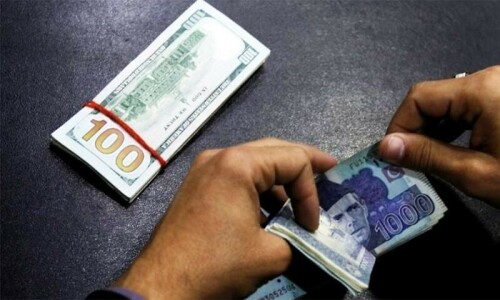
The rupee in 2026
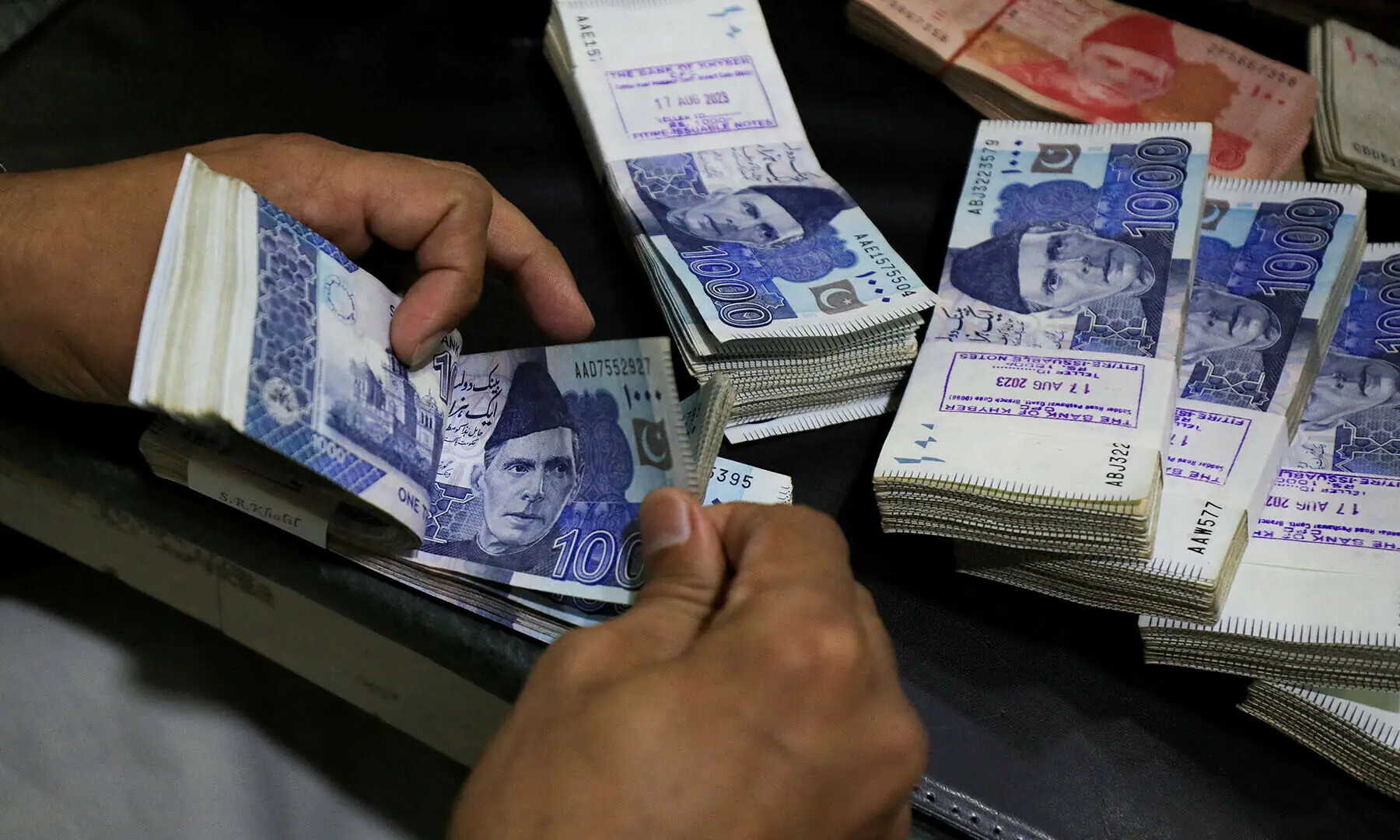
Who remembers 1998, when Pakistan’s currency market broke down?
The trigger was nuclear testing and the sudden pullback of external financing. The foreign exchange (FX) market melted, confidence evaporated, and multiple exchange rates emerged. You may call that a black swan.
But Pakistan’s FX crises did not end there. If we look at the major episodes that followed in 2008, 2018, and 2022, a clear pattern appears. What actually triggered past crises was political instability and policy paralysis, oil price spikes and inflation surges, and geopolitical shocks, along with International Monetary Fund (IMF) breakdowns.
In each case, the initial trigger came from outside the FX market. The rupee was not the cause; it became the transmission channel. Once these shocks hit, they exposed vulnerabilities that already existed, such as the elevated inflation, wide current account deficits, weak reserve buffers, slow interest rate adjustments, and, of course, the absence of credible IMF anchors.
Under the current SBP regime, the rupee remains an important optic, but reserves now anchor policy credibility
However, exposure alone did not create a crisis. What followed determined the outcome.
Sentiment — how stress became crisis
The turning point came when sentiment shifted. As confidence weakened, flows slowed, and expectations changed abruptly. The rupee’s behaviour at that stage became sentiment-driven, not valuation-driven. At that point, policy responses mattered enormously. Instead of allowing early adjustment, the response in all three episodes followed a familiar path: defend the rupee, burn the reserves, delay decisive action.
This combination transformed manageable stress into a crisis, setting off speculative hoarding. By the time the adjustment occurred, it was forced, disorderly, and credibility-destroying. This is why Pakistan’s FX history is marked by steep devaluations, not smooth depreciation.
Reserves — the regime going into 2026
Under the current State Bank of Pakistan (SBP) regime, supported by the IMF, the focus of macro management has shifted. The rupee remains an important optic, but reserves now anchor policy credibility.
That implies three important changes. First, the exchange rate is allowed to move, in both directions, rather than being held at a specific level. Second, the SBP intervenes to smooth volatility, not to defend the rupee at the cost of reserves. And third, periods of FX strength are used to rebuild buffers, not to signal stability.
This regime materially lowers the probability of a repeat of past devaluation episodes. But it also caps upside. The objective is to view the rupee through the lens of reserve strength, which, if maintained, can resist speculative pressure.
In this framework, reserves absorb shocks, remittances provide durable support to the external account, and import compression manages excess demand. ‘Danda’, through short-term administrative measures, is used to curb hoarding and speculative pressure.
Volatility may still occur, but with adequate reserves, it becomes reversible rather than destabilising.
What comes next?
Rupee dynamics into 2026 will be driven less by valuation gaps and more by a small set of structural forces. Inflation and interest rate differentials will define the underlying drift; Political continuity will determine whether policy credibility holds; External financing capacity and fiscal discipline will shape balance-of-payments risk; and reserve accumulation behaviour will limit how far volatility can travel.
Meanwhile, the trade balance will be influenced by oil prices and regional export competitiveness, even as geopolitical developments and global recession risk impact flows and sentiment. So how will the rupee perform in 2026?
Bear case: the new playbook
This scenario reflects political disruption, fiscal slippage, or renewed stress with the IMF. Inflation pressures re-emerge, and reserve accumulation stalls.
The rupee weakens more sharply. However, unlike past episodes, the adjustment happens earlier. The central bank does not burn through reserves to defend the rupee. In the short term, the ‘danda’ is deployed through administrative and compliance measures, as seen in July when the rupee briefly depreciated toward Rs285 to a dollar. Over the medium term, import compression is used to weaken demand, as observed as recently as last month.
With a flexible exchange rate and a clear focus on preserving reserves, step devaluations become far less likely, even under stress.
Base case: inflation sets the long-run drift
Over any medium horizon, the rupee broadly follows the inflation differential. Pakistan’s inflation trend is still meaningfully higher than that of the US. Even assuming gradual disinflation, the gap remains around five per cent.
That implies a gradual depreciation over the year, consistent with inflation differentials, rather than a sharp or disorderly adjustment.
In this scenario, the rupee weakens steadily, without triggering stress in reserves or confidence. This is the scenario markets would be more comfortable with.
Bull case: stability with buffers
This scenario assumes relative political continuity, an intact IMF framework, and a stable geopolitical environment. Fiscal discipline holds, external financing remains available, and bond and multilateral inflows support faster reserve accumulation.
In this environment, the rupee may trade firmer for extended periods. However, the upside remains capped by reserve accumulation objectives and export competitiveness. Stability improves, but growth, unfortunately, sits on the back burner. Given recent trends, this is the most likely near-term scenario.
The writer is CEO of financial market data platform Tresmark.
Published in Dawn, The Business and Finance Weekly, December 29th, 2025