In 1956, Walter Lang directed The King and I, a film from Hollywood set in 19th century Siam (Thailand), which was based on a musical produced a few years before. That musical was inspired by a novel which was derived from a memoir, written originally in 1860 by Anna Leonowens. In the film, Anna is played by Deborrah Kerr and the King Mongkut of Siam is played by Yul Brynner.
It was one of the most beautiful films I watched in my childhood. I loved it because it was full of costumes, songs, suspense and drama. I just simply loved Brynner’s rendition of “et cetera et cetera et cetera”, which had a unique air to it. Perhaps, my parents liked the film more because of the dynamics and intricacies of human relationships that they could understand, which I cannot even now, and the ability of a common teacher to speak truth to power with a certain subtlety, so that she could continue to speak and finally prevail.
I still remember the scene where Siam is shown far bigger on the map of the world than it actually is. How power oscillates between illusion and reality remains true everywhere to this day, including in our country.
In Pakistan, the history of censoring and censuring ideas, thoughts, creative arts and literature is as long as the country itself. Some may rightly argue that this has been the case with larger humanity since forever. There are things that the power, the emperor, the commander, the judge and the cleric would not like to hear, see, smell, sense or believe. Those in their service will remain tools to implement the will of their masters.
That is true for any part of the world, no doubt. However, there are states and societies whose level of acceptance of multiple views and tolerance for dissent has increased manifold during the last century and had also incrementally increased during the last few decades in the latter part of the 19th century. Pakistan, meanwhile, remains one of the colonial successor states of British India, with all its permanent institutions, such as the bureaucracy, judiciary and military, being colonial heritage.
We, along with our institutions, economic classes and social attitudes are still struggling to be a modern republic. But, in the meantime, we remain a myopic state that continues to harbour an intolerant society. This society has become increasingly brutal since the colonial masters passed the baton of running the state to the ‘Brown Sahibs’, which was later passed on to the sword arm of the state.
The late journalist and author Zamir Niazi (1932-2004) wrote multiple books, including three that particularly archive and chronicle curbs on media freedoms in Pakistan from the very beginning. His book The Web of Censorship also includes some instances of censorship imposed on creative art forms, including films. Thanks to Niazi and a few others — including those who wrote reports for the Pakistan Federal Union of Journalists (PFUJ) over the years — the history of journalistic freedoms is recorded until a few years ago, if not in its entirety, at least to a significant extent.
When it comes to artistic freedoms, from Saadat Hasan Manto to Ustad Daman to Ghani Khan to Habib Jalib to Sheikh Ayaz to Fahmida Riaz to Sarmad Khoosat to Adeela Suleman, we know of so many creative people who were subjected to bans and censorship, besides being publicly vilified by both conservative segments of society and the state apparatus and often put through degrading and inhumane treatment.
Until now, however, no researcher or writer has taken stock of and properly compiled these demeaning events, insulting incidents, prison terms and psychological tensions artists have been subjected to, caused by choking them socially and economically, and the overall shabby treatment meted out to artists and the literati in Pakistan. It is about time some of our young academics or scholars take up the challenge to chronicle and analyse the past and present of artistic freedoms in Pakistan.
In 1982, I had my first brush with censorship at a personal level. I was in my early teens and wrote a humorous piece for the school magazine. When the magazine was published, I found that the word ‘bureaucrat’, used sarcastically somewhere in the text, had been replaced by the word ‘broker’. It was ridiculous but somewhat amusingly made sense. I thought it was a proofing mistake. But it was not, as one my teachers explained later.
A few years later, I became an active participant of a students’ programme run on Radio Pakistan. Sometimes, a poem that I had recorded was not aired. No one told me why until Apa Ismat Zehra became the producer. She was the niece of leading fiction writer Intizar Hussain. She told me that my poems were not aired because they contained some words that were banned on the radio.
Around the same time in the mid-1980s, when I started writing essays and short stories for a news magazine, older students from a religious party — brandishing firearms — asked me to refrain from writing. In the mid-1990s, during one of the democratic interludes we think we had, a poem written by me was picked up by musician Najam Sheraz who composed and sang it. Both the audio and video were banned on Pakistan Television, citing the reason that it went against the “economic interests” of the country. There have been so many other incidents since.
Censorship definitely injures but it fails to overcome.
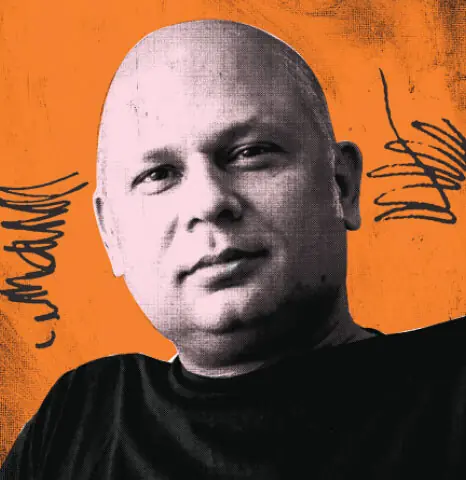
The columnist is a poet and essayist. His latest collections of verse are Hairaa’n Sar-i-Bazaar and No Fortunes to Tell
Published in Dawn, Books & Authors, December 28th, 2025