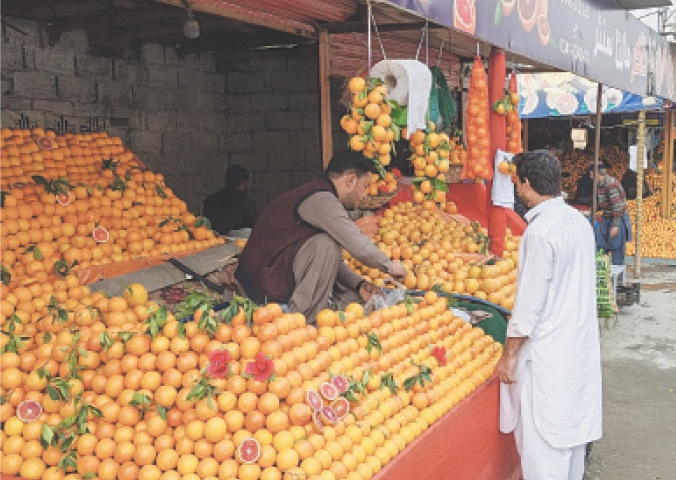
LOWER DIR: As winter grips Khyber Pakhtunkhwa, demand for locally grown oranges has surged across the Malakand division, particularly in Rabat, the main trading hub for citrus fruit from Dirand other parts of the province. However, traders and agriculture officials warn that declining production threatened supplies despite rising prices and expanding markets.
Oranges from Lower Dir are widely known for their sweetness, aroma and high juice content. Rabat’s red-blood oranges, in particular, dominate winter markets and attract buyers from across the province including tourists travelling to Kumrat, Chitral and Upper Dir.
Traders in Rabat told Dawn that 30,000 and 35,000 oranges arrive daily during the peak season, generating sales worth up to Rs8 million on certain days. Most of the fruit is sold locally, while a sizable quantity is dispatched as gifts to Punjab and Sindh and informally exported to the Middle East, Europe and the United States.
Shakarullah, an orange dealer with over 35 years of experience in Rabat market, said the demand had increased steadily over the years but orchard output was shrinking. “There was time when Rabat alone met the region’s entire demand. Now supply is short and prices are rising every season,” he said.
Another trader, Farmanullah, said Rabat oranges were sweeter, less acidic and juicier. The quality keeps demand high even when prices go up, he added.
The district director agriculture Lower Dir, Sajjad Hussain, said orange orchards currently cover 355 hectares across the district, producing 1,946 tonnes oranges last year. However, he attributed the declining trend to commercialisation, climate change and rapid construction along the Panjkora River.
Shad Nawaz Khan, a local farmer, complained that orange orchards on the bank of Panjkora River were washed away by flash floods in 2010. Since then, he added, neither the government nor the agriculture department did anything to rehabilitate the destroyed gardens in Khall and Rabat.
“Centuries-old orchards have been replaced by markets, houses and plazas. People now prefer quicker sources of income rather than long-term investment in horticulture,” he said, adding that orange cultivation still supported thousands of families in peripheral and mountainous areas.
Oranges these days are sold for Rs2,500 to Rs2,800 per hundred, but prices climb to Rs4,000–5,000 by April and May when produce from other regions disappears. Trader Saeedullah said Rabat oranges fetch higher prices late in the season because they ripen later than citrus grown in Mardan, Nowshera and Hazara.
Agriculture experts say developing climate-resilient orange varieties and restoring irrigation infrastructure are key to sustaining production.
Published in Dawn, December 20th, 2025