Witness to History
By Shamshad Ahmed Khan
Jahangir’s World Times
ISBN: 978-969-664-192-6
664pp.
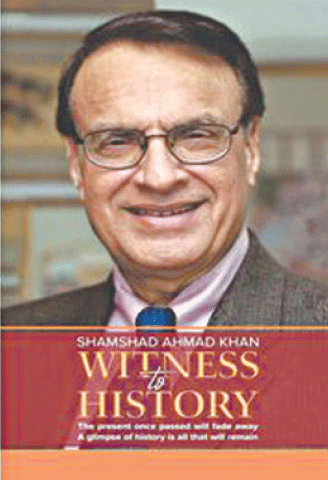
In the long line of notable Pakistani diplomatic memoirs, from Agha Shahi to Jamsheed Marker and Sheharyar Khan, few aspire to the literary range of Shamshad Ahmad Khan’s Witness to History. The book blends a travelogue, anecdotes and policy history with a moral essay.
Published in September 2025 and at over 600 pages, it is a chronicle, an apologia and a meditation — an effort to capture not only what the author witnessed but what it all meant. Khan, who served as foreign secretary from 1997 to 2000 and, earlier, as an envoy in Seoul, Tehran and at the United Nations, writes from a vantage point spanning the decades from Partition’s aftermath to the nuclearisation of South Asia and the post-9/11 reshaping of the global order.
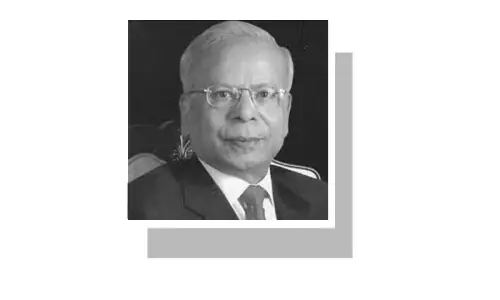
The book opens with a thoughtful foreword/essay by Riaz Mohammad Khan, a distinguished former foreign secretary (2005-2008), who situates Shamshad Khan’s memoir within the evolution of Pakistan’s diplomacy. Far from being perfunctory, Riaz Khan’s essay balances collegial warmth with critical distance, underscoring the value of such personal recollections in preserving the institutional memory of a service that has witnessed the nation’s most turbulent decades.
It sets a reflective tone for what follows — a dialogue between two seasoned practitioners on history, policy and conscience. That, in the end, makes the foreword an integral — not incidental — part of the book.
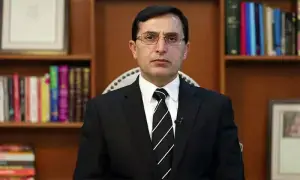
Former foreign secretary Shamshad Ahmed Khan’s memoirs are a chronicle, an apologia and a meditation — an effort to capture not only what the author witnessed but what it all meant
Shamshad Khan’s ambition is clear: to not merely be an observer but a witness — in the moral and historical sense — on how a man’s memory becomes a nation’s mirror. This ‘double consciousness’ gives the book both its authority and its limits.
The opening chapter, ‘Paradoxical Century’, reveals his method. He writes less as a memoirist than as a historian-diplomat and offers an orientation by surveying the 20th century. For younger readers, it provides invaluable context; for specialists, it may feel hackneyed.
When he turns from world history to the Subcontinent, the prose gains heat. Partition is his emotional axis. His recollection of a family train journey from India to Pakistan — “dazed and destitute men, women and children… crying with joy at Lahore Station” — is among the book’s most affecting moments. It anchors his conviction that Pakistan’s creation was both a moral necessity and a historical vindication, shaping his later judgements on the nuclear tests and the wars with India.
Khan recounts the resumption of dialogue with India, the drafting of the Composite Dialogue framework with his Indian counterpart Salman Haidar, and the tense weeks of May 1998, when India’s nuclear tests forced Pakistan to decide whether to respond in kind. His account has the immediacy of a man in the cabinet room.
From these origins, he traces the making of a professional diplomat: formative years at Government College Lahore, entry into the Foreign Service in 1965 and postings that map Pakistan’s external relations — Tehran, Dakar, Paris, Washington DC and New York. Each chapter fuses portraiture with policy reflection.
The book’s real weight lies in the chapters on his tenure as foreign secretary, during which the witness stands closest to power. Khan recounts the resumption of dialogue with India, the drafting of the Composite Dialogue framework with his Indian counterpart Salman Haidar, and the tense weeks of May 1998, when India’s nuclear tests forced Pakistan to decide whether to respond in kind. His account has the immediacy of a man in the cabinet room. He casts himself as the clear voice urging immediate Pakistani tests to restore strategic balance, arguing that hesitation would have invited dangerous miscalculation.
Equally compelling is his reconstruction of the aftermath — the [American Deputy Secretary of State] Strobe Talbott dialogues, the US sanctions and the 1999 Lahore Summit that briefly promised reconciliation before Kargil undid it. Khan writes with a lawyer’s clarity and a participant’s sorrow. He neither condemns nor absolves the military establishment but lets the tension between the Foreign Office and Gen Musharraf’s command speak for itself. The message is unmistakable: diplomacy was repeatedly undone by adventurism and mistrust.
Witness to History also broadens its view to regional cooperation. The section on the Economic Cooperation Organisation (ECO), where Khan served as secretary-general after the Soviet collapse, is a neglected highlight. His account of persuading six newly independent Central Asian republics to join ECO captures a rare moment of constructive initiative in Pakistan’s diplomacy. It shows how vision can coexist with bureaucratic pragmatism — a refreshing contrast to the security obsessions that dominate official discourse.
Khan’s English, shaped in the 1950s, has a polished Edwardian rhythm — balanced clauses, moral adjectives and a faint sermonising tone. Yet, beneath the decorum, runs genuine emotion: a quiet ache for a country that, in his words, “never became the Pakistan its founders dreamed of.”
The concluding ‘Epilogue’ lifts the memoir on to another plane. Quoting T.S. Eliot’s The Hollow Men and the Urdu poet Ahmad Nadeem Qasmi, he laments Pakistan’s “moral and spiritual bankruptcy.” From an envoy, he becomes a penitent citizen and the political memoir transforms into a moral testament. The book, a combination of history and homily, becomes part Edward Gibbon, part Mirza Ghalib. By ending with poetry rather than policy, Khan restores a measure of grace to a narrative heavy with disillusion.
The book’s strengths are clear: an in-depth, first-hand experience, lucidity of style and the candour of a civil servant willing to name both achievement and failure. Its weaknesses are structural — an excessive length, repetitions, and an occasional assumption that proximity equals insight. Readers seeking psychological depth or self-doubt may find the narrative somewhat official and defensive. Yet, both impulses arise from one conviction: that bearing witness is a civic duty.
Ultimately, Witness to History stands not only as the record of a career but as the conscience of an era. Khan writes with the gravity of someone who has seen his nation’s moments of glory and disgrace. The book is most persuasive when it stays close to documents and decisions; it is most moving when it steps back to ask, in Qasmi’s haunting line, whether people can still recognise the light they once carried.
For all its digressions, this memoir remains a formidable contribution to Pakistan’s political literature — a chronicle of service, disillusion, and enduring hope from a man who was, in every sense, a witness to history.
The reviewer is a retired diplomat living in Washington DC. For more information, visit his website: www.javedamir.com
Published in Dawn, Books & Authors, December 21st, 2025